After the Strikes: What the US-Iran Talks Are Really About
A week of US-Iran diplomacy has moved oil, gasoline and prediction markets in the same direction — down. The substance behind the headlines is thinner, and more contested, than the price action suggests.
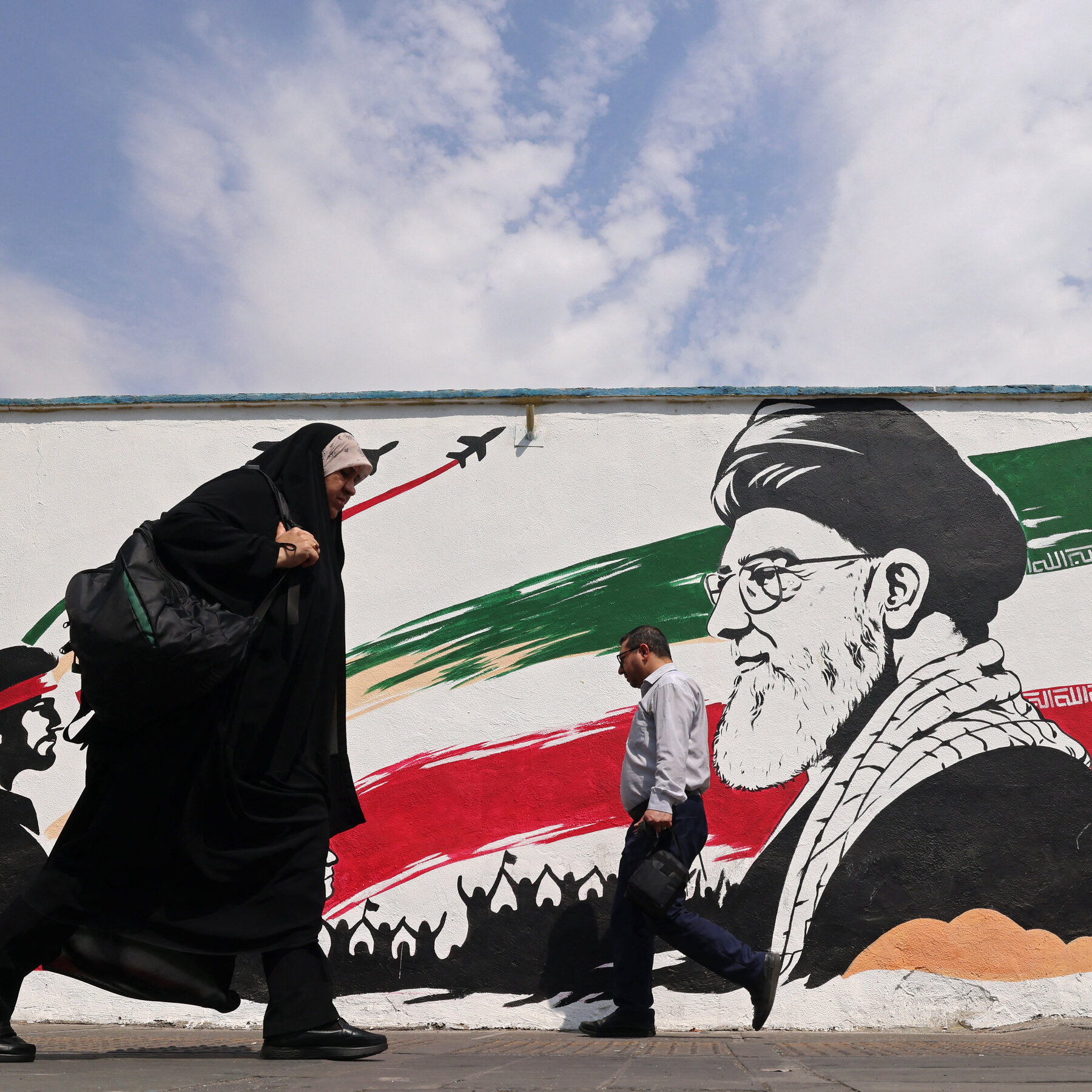
Three things happened on 22 June 2026 that, taken together, capture where the war with Iran actually stands. At 13:10 UTC, an Iranian military-linked Telegram channel declared that "this war proved one thing: Iran is on the right side of history." A little more than an hour earlier, Ukrainian wire TSN reported that oil prices had "changed dramatically" after the latest round of US-Iran negotiations. And on the same morning, the parent of the New York Stock Exchange announced a joint venture with the crypto exchange OKX to build tokenized financial market infrastructure — a piece of plumbing that, in normal times, would dominate the business press and is here being reported almost in passing.
The sequence is the story. The shooting in Iran is no longer setting the price of oil; the diplomacy is. The crypto exchange is no longer a sideshow to the regulated equity world; the regulated equity world is building directly on top of it. Both moves are happening in the same week because the underlying conditions — a war that is unwinding, a sanctions architecture that is relaxing, a dollar-based financial stack that is being quietly re-engineered — are all moving in the same direction.
What follows is not an argument that the war is over, that the oil market is calm, or that tokenization has won. It is an argument that the wires are misreading what is actually being negotiated. The headlines are about enriched uranium. The price action is about gasoline. The structural story is about the plumbing of the dollar system, and whether the United States can rebuild the offshore dollar architecture faster than its adversaries can build around it.
What the wires say is happening
The 22 June read across mainstream financial wires is that a diplomatic process is underway, that oil is repricing lower, and that the worst-case scenarios for the conflict are being marked down. The most concrete data point in the public record is from the prediction market Polymarket: as of 21 June 2026 at 14:03 UTC, the implied probability that Iran agrees to surrender its enriched uranium stockpile by the end of the year stood at 22 percent. That is roughly one-in-five — low enough to count as skepticism, high enough to count as a non-trivial bet that the deal lands.
The price action is more decisive. On 21 June 2026 at 14:01 UTC, the market-data account Unusual Whales reported, citing The New York Times, that the average price of US gasoline had fallen below $4 a gallon for the first time since the early days of the war with Iran. TSN, citing the talks themselves, reported "dramatic" moves in crude the same day. The direction is unambiguous: less war premium in the barrel, less fear premium at the pump.
The honest framing is that the war premium and the deal premium are moving in opposite directions, and the market is currently pricing the deal.
What Iranian state-adjacent sources are saying
The Telegram traffic from inside the Iranian system tells a different story, and it is worth taking seriously on its own terms rather than as a propaganda artefact. The IRIRAN_Military channel's 13:10 UTC post on 22 June is not a denial of negotiations or a claim of battlefield victory. It is a claim about historical legitimacy — that Iran, having absorbed the strikes, is positioned to dictate the terms of whatever comes next. The implicit message is that any agreement reached at the table will be the agreement Tehran was prepared to accept in June 2026, not the agreement Washington hoped for in 2025.
This matters because it changes the plausible shape of a deal. A surrender-of-uranium outcome — the 22 percent Polymarket scenario — is structurally incompatible with the framing the Iranian military-political complex is broadcasting. A longer, more technical arrangement — limits on enrichment levels, intrusive inspections, time-bounded verification windows — is not. The market is pricing a clean outcome. The messaging out of Tehran is consistent with a messier one.
The counter-narrative to keep on the table: that Iranian state-adjacent channels overstate the regime's confidence as a matter of internal political signalling, and that a deal could still land on terms that read, in Iranian framing, as tactical flexibility rather than capitulation. That reading is consistent with the same data.
The gasoline number and what it really means
The sub-$4 gasoline print is being read as a vindication of the diplomatic track. The reading is correct in direction and somewhat misleading in mechanism. Retail gasoline prices reflect three things: the crude price, the crack spread (the margin between crude and refined product), and the time lag between the wholesale market and the pump. The crude leg has clearly moved on the talks. The crack spread is a function of refining capacity and seasonal demand, not diplomacy. And the time lag is the reason the pump number is only now catching up to a wholesale market that has been softening for weeks.
What the gasoline number actually tells us is not that the war is ending. It is that the wholesale oil market has decided the war is becoming more tractable — a softer, weaker claim that is nonetheless doing real work in household budgets. A family filling up in June 2026 is paying less than they paid in May 2026, and they are right to associate the relief with the headlines about talks. They would be wrong to assume the relief is structural.
The structural condition that produced the spike — concentrated supply, concentrated shipping chokepoints, a Strait of Hormuz that the Iranian military has spent a decade preparing to threaten — has not changed. The price has changed because the probability of a near-term use of that capability has come down. That is a probability revision, not a risk elimination.
The tokenized NYSE and the dollar plumbing
The third item in the cluster is, in the long run, the most consequential. On 22 June 2026 at 12:42 UTC, the Telegram channel CryptoBriefing reported that the owner of the New York Stock Exchange and the crypto exchange OKX have formed a joint venture to build tokenized financial market infrastructure. The wire framing is that this is a fintech story: faster settlement, 24/7 markets, programmable collateral. The structural framing is harder.
Tokenization at the level the NYSE parent is now operating is not an upgrade to the existing dollar system. It is a rebuild of the layer that sits between the dollar and the rest of the world. The offshore dollar architecture — correspondent banking, Eurodollar markets, the SWIFT messaging layer, the custody chains that underpin dollar-cleared trade — is the actual mechanism by which dollar hegemony operates. A tokenized settlement layer run by a US-regulated exchange operator and a large offshore crypto venue is, in effect, a sanctioned fast lane for moving dollar-denominated value around the existing architecture, with new rules about who can settle what, and when.
This is the under-appreciated story of the week. While the wires were watching uranium inspectors, the regulated core of US capital markets quietly extended itself into the rails that the crypto industry has spent a decade building. The Iranian negotiations are the visible negotiation. The settlement-rail negotiation is the invisible one, and it is moving faster.
What remains uncertain
The sources available for this piece are thin in three places, and the gaps are worth naming. First, the actual content of the US-Iran talks — beyond the fact that they are happening and that oil has moved — is not in the public record in any verifiable form. The 22 percent Polymarket number is a market-implied probability, not a leaked text. Second, the precise mechanism by which the NYSE-OKX joint venture will be regulated, and which jurisdictions will treat tokenized NYSE-settled instruments as equivalent to existing securities, is not yet specified in any source this publication has reviewed. Third, the Iranian military-political messaging on 22 June is a sample of one channel at one timestamp; it is consistent with a posture, but it is not a posture read.
A reader should walk away with three calibrated beliefs, not three certainties. That the war premium in oil is being marked down because the diplomatic process has reduced the probability of a near-term escalation, not because the underlying risk has been eliminated. That the Iranian regime is signalling confidence rather than capitulation, which is consistent with a deal that is more technical and less complete than the headline framing suggests. And that the most consequential financial-infrastructure move of the week is happening on a settlement rail, in a Telegram post, with no political coverage to speak of — which is itself a signal about where the center of gravity in US financial power is shifting.
The next test is the gasoline number in July. If the pump price stays below $4 through the seasonal demand peak, the market's read will have been validated. If it snaps back, the Polymarket 22 percent will look generous in retrospect. The tokenized NYSE story will not wait for either. It is being built now, and the rails it lays down will outlast whichever way the uranium question is resolved.
This piece was framed against three threads that the wire services did not connect: an Iranian military signal, a Ukrainian energy report, and a tokenized-settlement announcement. The structural read is Monexus's own; the price data is Polymarket and The New York Times via Unusual Whales; the diplomatic framing is the wires' own.
Wire provenance
This editorial synthesis draws on the following public wire/social posts:
- https://t.me/IRIran_Military
- https://t.me/TSN_ua
- https://t.me/CryptoBriefing
- https://x.com/unusual_whales/status/
Follow the event.
These dated source records provide context. They do not retrospectively verify this archive article.
Separate what the nuclear watchdog reported from what it could not determine after the June 2025 strikes.