Vance's 'very good day' in Bürgenstock: what the US-Iran talks actually produced
JD Vance declared a 'very good day' in Switzerland. Iranian state media, by contrast, called it a foundation for technical work. The two framings are not the same story — and the gap between them is where the deal will live or die.
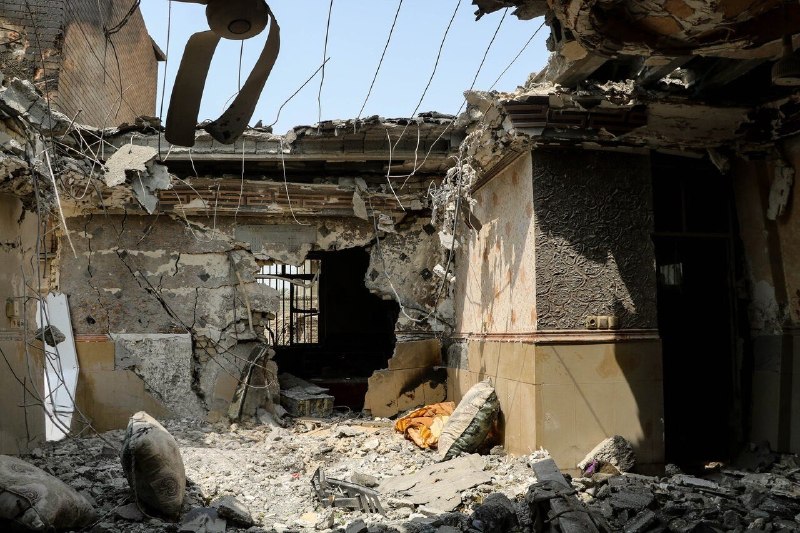
At 11:34 UTC on 22 June 2026, with the Swiss lakeside morning still dry and the resort's tiered terraces casting long shadows over Lake Lucerne, US Vice President J.D. Vance walked to a lectern at Bürgenstock and pronounced the previous day a success. "Yesterday was a very, very good day," he said, according to a Telegram channel affiliated with Abu Ali Express, which posted his remarks at 11:49 UTC. "We made significant progress. We did exactly what was needed." Within minutes, the open-source intelligence account OSINTdefender, posting at 11:36 UTC, amplified the same line — that "a lot of progress" had been made, that the atmosphere was constructive, that the technical tracks would continue. A third feed, the Iranian outlet Fars News International, posting at the same minute, offered a different texture. Yes, technical negotiations would continue during the week, Fars reported. But a "good foundation" had been laid. And a mechanism was being created to remove mines from the Strait of Hormuz.
The three bulletins — an American readout, a Western OSINT echo, an Iranian state-aligned readout — are not in conflict, exactly. They are aligned in the way that opening-day communiqués between estranged powers tend to be: jointly optimistic, jointly vague, jointly thin on the items that will actually determine whether the talks end in a deal. Read together, however, they sketch a negotiating picture that is more fragile, and more interesting, than Vance's tone suggests.
What the American side is selling
Vance's framing, picked up and re-broadcast by OSINTdefender, is the public-facing one: momentum, a shared sense that the calendar is now working for both delegations, and an expectation that the technical staff can take the next pass on the dossier without ministerial-level involvement for the next several days. The implicit message to the domestic American audience is that the Trump administration's diplomatic opening on Iran is producing returns — that the second-tier architecture (special envoys, working groups, third-party hosts) is functioning as intended, and that a return to formal-deal architecture of the kind that defined the 2015 era is back on the table without the political cost of that earlier cycle.
What Vance did not say is at least as informative as what he did. There is no reference, in either of the two Western bulletins, to the specific items the American side is known to be pushing in this round: the question of uranium enrichment on Iranian soil; the scope of any sunset clauses; the sequencing of sanctions relief; the question of IAEA monitoring access to sites that have been off-limits since 2021. The Western feed is treating these as known unknowns, items that will become legible in the technical track. The risk of that treatment is that it is also the read-out the 2015 deal produced in its opening week, and the gap between the 2015 opening and the 2019 collapse is a story the participants are obviously aware of.
What the Iranian side is selling
Fars's bulletin is the more revealing document. Three details stand out, and the first is the most important: a mechanism to remove mines from the Strait of Hormuz. This is not a nuclear-track item. This is a security-track item, raised by Tehran in a context where, in past rounds, Iranian officials have used the strait's chokepoint status as leverage. The fact that the Iranian state-aligned outlet is volunteering a "mechanism" language on the day the American vice president is claiming progress is itself a tell. Tehran is offering a concession — or at least the language of a concession — in a domain that is not the nuclear file. That is a classic negotiating move: trade a non-nuclear concession for a nuclear one. The American side, in the two Western bulletins, does not acknowledge the trade.
The second detail is structural. Fars characterises the outcome as a "good foundation" rather than progress. In Iranian diplomatic vocabulary, that is a specific register — it implies that the political principals have agreed on a process rather than on substance, and that the technical delegation has been authorised to work within an envelope. It is not the same as Vance's "we did exactly what was needed." It is closer to: the principals have agreed to let the technicians work.
The third detail is timing. Technical negotiations will "continue during the week." That sentence is doing a lot of work. It is, on its face, a confident statement of continuity. It is also a hedge — the Iranian side is not committing to a ministerial-level second round in Switzerland. The next meeting, in this reading, is not Vance-to-Foreign Minister; it is working-level staff in a third city, probably not on camera.
The gap between the readouts
The story of the next ten days is in the gap. Vance's "very good day" and Fars's "good foundation" describe the same 24 hours, but the American version is ministerial and presentational, while the Iranian version is procedural and procedural-and-trade. Two separate frames of what counts as success are coexisting in the same news cycle. Both can be true. Both are also the kind of framing that drifts the further one gets from the lectern.
For the American audience, the dominant read through Tuesday will be that the second Bürgenstock round delivered, that Vance's trip was worth it, and that the diplomatic channel is open. For an Iranian domestic audience, the dominant read will be that Iran extracted a non-nuclear concession — the language around Strait of Hormuz mines — in exchange for procedural goodwill on the technical track, and that the country's negotiating position has held. Both are reasonable summaries of a day on which no one released a paragraph of agreed text.
What the structural frame actually says
Strip out the readouts and the underlying question is the same one that has defined the US-Iran file since 2018: whether the two sides can find a deal structure in which Iran retains a civilian enrichment programme and the United States retains a verification regime tight enough to satisfy a domestic political base that has, on the Republican side, spent eight years arguing that the original 2015 deal was structurally inadequate. Vance is the first senior US principal in this cycle to make that argument publicly tractable rather than rhetorically maximalist. The shift is real, and the Bürgenstock talks are evidence of it.
What the structural frame also says is that deals in this corridor are built on the long, dull, deniable work of the technical track, and that the work is most likely to succeed when neither side is performing for its base. The two readouts on 22 June are both performances. The technical track, by contrast, is not a performance. The question is whether the technical track can move fast enough — and the Strait of Hormuz mechanism can be specific enough — that the next ministerial round inherits a document rather than a vibe.
Stakes and what to watch
If the Bürgenstock process holds, the most concrete near-term deliverable is a working-level accord on the Strait of Hormuz de-mining framework, the location and personnel for the next round of technical talks, and a quiet reciprocal release of frozen Iranian funds against an IAEA-verifiable rollback of enrichment at specified sites. The political value of any of these, to either side, depends on whether it can be announced as a win. The Strait item is the most easily packaged as a mutual win: a shipping-security outcome with no nuclear overtones.
If the process breaks, the most likely fracture point is over enrichment scope. American domestic politics has hardened on the question of zero enrichment on Iranian soil; Iranian domestic politics has hardened on the question of any cap below the level of a civilian programme. Vance's "we did exactly what was needed" line is the kind of formulation that buys the principals political space at home, but it does not, on its own, bridge the two positions. A deal that survives this round will have to bracket the enrichment question and resolve it in a final phase, which is what the 2015 process did and what the 2019 collapse then undid.
The next ten days will tell. A working-level meeting in a third capital, an IAEA visit to a previously off-limits site, or a reciprocal sanctions-easing gesture would all be evidence that the technical track is moving. A second ministerial summit in a fourth country, with a communique that names the enrichment cap, would be evidence of something larger. Vance's optimism is a necessary input. It is not, on its own, the output.
This publication treats the Vance readout as the lead headline and the Fars bulletin as the primary Iranian-side counterweight; the OSINT channel is treated as a Western amplificatory feed rather than a primary source. The Strait of Hormuz de-mining item, which is the most concrete piece of substantive news in the day's three bulletins, is given more weight than the headline-level progress language because it is the only item any of the three sources identified by name.
Wire provenance
This editorial synthesis draws on the following public wire/social posts:
- https://t.me/abualiexpress
- https://t.me/osintlive
- https://t.me/FarsNewsInt
- https://en.wikipedia.org/wiki/Strait_of_Hormuz
- https://en.wikipedia.org/wiki/2025%E2%80%932026_Iran%E2%80%93United_States_relations
- https://en.wikipedia.org/wiki/B%C3%BCrgenstock_Resort
- https://en.wikipedia.org/wiki/International_Atomic_Energy_Agency
- https://en.wikipedia.org/wiki/Joint_Comprehensive_Plan_of_Action
Follow the event.
These dated source records provide context. They do not retrospectively verify this archive article.
Separate what the nuclear watchdog reported from what it could not determine after the June 2025 strikes.
- https://t.me/abualiexpress
- https://t.me/osintlive
- https://t.me/FarsNewsInt
- https://en.wikipedia.org/wiki/Strait_of_Hormuz
- https://en.wikipedia.org/wiki/2025%E2%80%932026_Iran%E2%80%93United_States_relations
- https://en.wikipedia.org/wiki/B%C3%BCrgenstock_Resort
- https://en.wikipedia.org/wiki/International_Atomic_Energy_Agency
- https://en.wikipedia.org/wiki/Joint_Comprehensive_Plan_of_Action