JD Vance's ceasefire caveat and what it tells us about the Iran framework
A throwaway line from the US vice president in Switzerland has travelled further than the framework it was meant to explain. Reading it carefully is more revealing than the briefing slides.
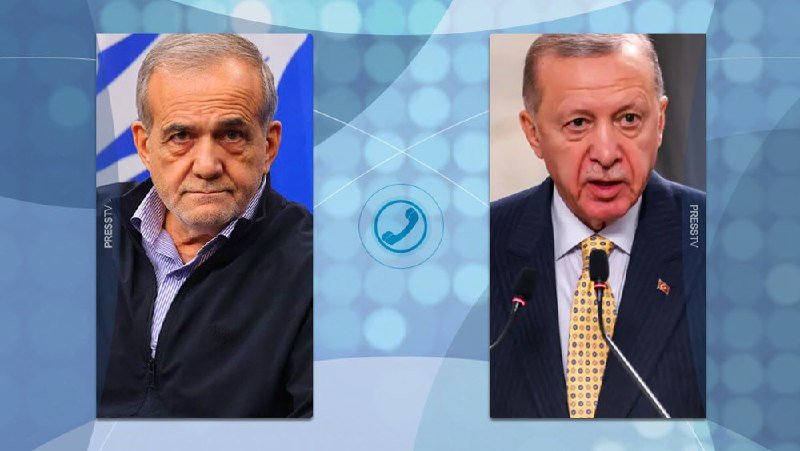
Sometimes the most consequential line of a press appearance is the one the speaker did not mean to land. At the Burgenstock resort on 22 June 2026, US Vice President JD Vance stood before reporters to explain the proposed US-Iran framework, and offered this characterisation: "sometimes these ceasefires just mean you're shooting a little bit less." The line was first circulated by Iran-aligned outlets Fars and The Cradle within minutes of the appearance, and by 11:36 UTC it had crossed into English-language feeds as a Trump-attributed formulation, with the Vice President framing it as a faithful rendering of the president's own view of de-escalation diplomacy.
The remark matters less for what it reveals about Tehran and more for what it reveals about Washington. A negotiating partner who tells the world, on the record, that a ceasefire may simply be a quieter phase of the same fight is not selling confidence; he is managing expectations downward. Read against the substantive content of the Burgenstock talks, the comment tells us how the administration wants the framework to be received, and how little it expects the public to be reassured by it.
The line, in context
Vance's "shoot a little less" formulation was offered as realism, not as threat. The Vice President was arguing, per The Cradle's clip of the appearance, that the negotiations had established "the necessary coordination" to keep channels open between Washington and Tehran even where the two sides continued to disagree. The framing treats escalation management as the ceiling of what diplomacy can deliver, not as a transitional phase toward a durable arrangement. That is a defensible posture inside a White House that has spent years telling voters that forever-wars are a mistake; it is a less defensible posture for a counterparty weighing whether to wind down proxy capabilities, release frozen assets, or accept intrusive inspections in exchange.
The Iranian readout, as carried by Fars, treated the Vice President's line as confirmation rather than criticism — a reading that the Iranian side had long suspected a ceasefire was code for managed pressure. State-aligned media in Tehran has spent two decades building an interpretive frame in which US diplomacy is a tempo adjustment, not a strategic shift. Vance, on this evidence, has confirmed that frame in English.
What the framework actually is
The thread context does not give us the framework's text. The Cradle's reporting describes a "proposed framework between Iran" and the United States negotiated at Burgenstock, with the Vice President indicating that coordination has been established, but no specific commitments, verification timelines, or reciprocal steps appear in the materials available. That absence is itself the story. A deal whose contours can be summarised by a vice-presidential aside, rather than by a joint statement or a secretary of state's read-out, is a deal still being negotiated in the camera shots as much as in the conference room.
What we can verify from the clips is narrow: there is a US-Iran track meeting at a Swiss venue on 22 June 2026; the Vice President used the appearance to lower expectations about what "ceasefire" entails; the Iranian state-aligned press carried the remark without contestation. The substantive content — sanctions sequencing, nuclear constraints, regional de-escalation, prisoner files — remains unverified by any source item available to this publication.
The structural read
Strip away the venue and the participants, and the Burgenstock appearance fits a familiar template. When a great power bargains with a regional adversary it cannot defeat cheaply and cannot simply absorb, the diplomatic language tends to drift toward euphemism: "de-escalation," "tactical pause," "understanding." Vance's "shoot a little less" is the plain-English version of that diplomatic dialect. It tells allies and adversaries alike that the United States is not committing to a peace dividend — it is committing to a quieter phase in which leverage continues to be applied.
This is also, fairly read, what the Iranian negotiating posture has assumed for years. Tehran has historically demanded sanctions relief and security guarantees in exchange for restraint; a US counterpart who openly describes restraint as optional is, from Iran's vantage, signalling that the price it intends to extract will be high. The Burgenstock line therefore narrows the deal space. It reassures an American audience that no naïve peace is being signed; it tells an Iranian audience that the price of any pause will be paid up front.
What remains contested
The thread context does not give us the Iranian government's own characterisation of the framework, only the readout carried by Fars and The Cradle. It does not tell us whether the framework includes any nuclear-file commitments, what happens to IRGC Quds Force-linked assets and personnel in the region, or whether oil-licensing arrangements are tied to compliance milestones. It does not tell us whether the Israeli government, which has historically acted as a spoiler on US-Iran rapprochement, has been consulted or merely informed. Until those questions are answered by primary-source read-outs from the State Department, the IAEA, or the Iranian foreign ministry, "framework" remains a description of intent rather than of substance.
It is also worth registering that Vance's line travelled through state-adjacent channels first. Fars is an Iranian state outlet; The Cradle is an openly Iran-sympathetic publication based in Beirut. Their amplification of the remark is not, in itself, evidence that the framework is hollow — but it does mean that the version of the Vice President's words now circulating across the Middle East is the version those outlets chose to carry. The English-language clip matters; the Farsi-language and Arabic-language framing of it will matter more.
Stakes
If "shoot a little less" is the operating definition of the framework, then the framework is a tempo arrangement, not a settlement. Tehran gains time and a partial sanctions thaw, if one follows; Washington retains the option to ratchet back up if compliance is judged inadequate. The risk is not that the deal collapses on signing. The risk is that it persists at a low grade of violence for years, with each side able to claim it is honouring the deal because the deal does not, by Vance's own definition, require them to stop.
That outcome would suit several constituencies. It would suit an American administration that wants the file off the front page without paying a political price for it. It would suit an Iranian government that wants sanctions relief without structural concessions. It would not suit Gulf states seeking durable de-escalation, nor Israeli planners who prefer either a full deal with teeth or a clearer countdown to confrontation. Reading Vance's aside carefully, those are roughly the constituencies whose preferences are visible in the framework — and those whose are not.
The honest summary is that we know what was said at Burgenstock and not, on this evidence, much more. What was said is itself the story.
Desk note: Monexus is working from clips carried by Fars and The Cradle, plus the Vice President's own appearance; we have not yet seen a US State Department read-out or a joint statement. Where this article asserts substance, it is sourced to those clips; where it cannot, it says so.
Wire provenance
This editorial synthesis draws on the following public wire/social posts:
- https://t.me/farsna
- https://t.me/thecradlemedia
- https://t.me/TheCradleMedia