Words before ink: Vance's action-or-nothing warning lands before a Friday deal that does not yet exist
American negotiators and Iranian counterparts remain in Switzerland, but the framework Vice President Vance keeps demanding has not been put on paper. Friday's scheduled signing is closer to a deadline than a deal.
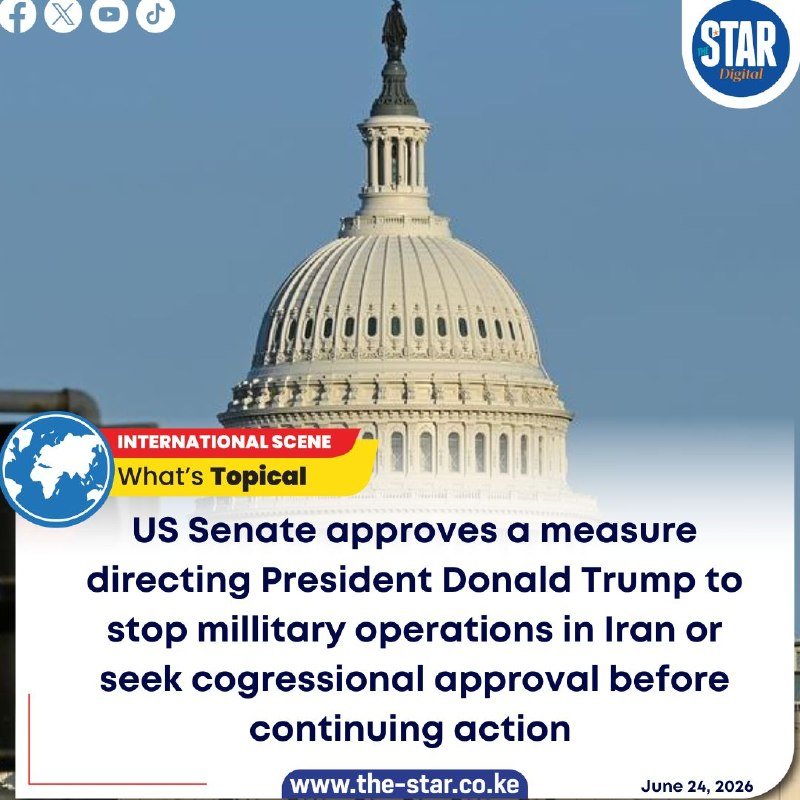
Vice President JD Vance left a hard mark on the diplomatic choreography surrounding Geneva on 22 June 2026. According to Middle East Eye's live wire, Vance told reporters that any commitments Iran makes must be backed by actions, "not words," a line that lands less like diplomacy and more like a precondition. The same report confirms American and Iranian negotiating teams remain in Switzerland, ostensibly to put final shape on an accord whose formal signing is scheduled for Friday in Geneva. The two data points sit awkwardly together: teams still at the table, while the senior US political figure in the file publicly signals he does not trust the table.
The throughline is not hard to draw. The Trump-era negotiating posture on Iran has never been content with declarations, however emphatically delivered. The June 2025 twelve-day war set the floor of what Washington calls an acceptable Iranian posture: verifiable limits on enrichment, full inspection access, and an end to the regional proxy architecture. Tehran, for its part, has continued to insist that cooperation with the International Atomic Energy Agency (IAEA) — confirmed in the same Middle East Eye wire at 21:13 UTC — is the legitimate deliverable, not a substitute for sanctions relief or a rewriting of the regional security architecture. The Vance statement functions as a one-line summary of that gap.
Three things are worth separating. The first is the existence of a Friday signing. The second is the substance of what gets signed. The third is whether the substance survives contact with the US Senate, Iranian parliament, and the regional actors who are not in the room. Middle East Eye's wire at 20:56 UTC carries a fourth, easily missed item: Turkish President Recep Tayyip Erdoğan warning of efforts to undermine the US–Iran deal. That is not atmospheric commentary. Ankara has equities in both directions — energy transit, Kurdish file, NATO friction with Moscow, and a posture toward Tehran that runs warmer than Riyadh or Abu Dhabi would prefer. A Turkish warning of sabotage points to a non-trivial probability that someone in the regional chain reads the agreement as a problem worth disrupting before Friday.
The pattern here is the one Washington has tried, in varied registers, to break: an Iranian negotiating style that releases language while preserving optionality. From the American vantage point, the last several agreements of this kind have looked like orderly withdrawals of concessions in slow motion. From the Iranian vantage point, the same agreements looked like calibrated surrenders extracted under sanctions pressure and Israeli strike cover. Both readings are partly correct, which is exactly why the same drama keeps re-staging itself in different hotel suites. Vance's framing — actions, not words — is the American translation of a long-running complaint: that the deliverable from Tehran arrives in Tehran's preferred register of diplomatic vocabulary, not in the register of dismantled centrifuges and IAEA inspector access.
The mechanism on the table is the same one that has carried every iteration of this file since 2015: IAEA verification as the substrate, sanctions architecture as the leverage, and a political understanding about the regional balance of force layered on top. What is different now is the verification floor. Post-June 2025, any deal the United States signs is being asked to do more than certify the absence of a nuclear weapon; it is being asked to certify the absence of a recurring pathway to one. That is a categorically harder ask, and it is the reason Vance's "not words" line carries the weight of a veto rather than a flourish. Tehran's continued cooperation with the IAEA, which the Iranian side reiterated in the same wire on 22 June, is necessary rather than sufficient.
The stakes sort cleanly. If Friday produces a signed text with teeth — snap-back triggers, sequenced relief, third-party verification beyond the IAEA — the regional balance shifts toward Saudi Arabia, the UAE, and Israel, all of whom have reason to treat a re-anchored non-proliferation regime as a stabilising fact. If Friday produces a framework light on enforcement, the same actors read it as a long pause before the next escalation, and the path that runs through Tel Aviv, Washington, and the Strait of Hormuz remains the dominant operating environment. Iran, in either case, will judge the document by whether it returns hard currency and unlocks oil-export capacity under something other than the existing sanctions web. The political appetite in Washington for a second, softer agreement is thin, and Vance's own tone on 22 June suggests the administration is preparing to walk rather than sign in name only.
What remains uncertain — and the live wire is candid about this — is whether the Friday date is a deadline or a stage-set. The Middle East Eye live blog at 22:04 UTC reports the Geneva venue and the Vance caveat in adjacent paragraphs, without resolving whether a Friday text exists in draft form or whether the day is reserved for a political statement that defers the hard questions. Sources do not specify the size of the negotiating delegations, the agencies represented on each side, or whether the IAEA Director General will be physically present at the signing. Those details matter, and they are precisely the details that separate a real accord from a photo opportunity.
The reasonable read is that Vance is doing two jobs at once. He is signalling to Tehran that the deliverable must be technical rather than rhetorical. He is also signalling to a domestic audience — including members of his own party — that any accord worth the name will arrive with inspection access and dismantlement commitments, not with communiqués. The risk of the second register is that it crowds out the space the Iranian side needs to claim a win in front of its own base. Negotiations collapse not because the gap is unbridgeable but because neither side can carry the deal home. That is the failure mode the Turkish warning gestures at, and it is the failure mode Friday will be testing.
Monexus framed this as a verification story, not a peace-deal story, because that is what the public evidence supports. The wire so far carries venue, tone, and political posture — not yet a text.
Follow the event.
These dated source records provide context. They do not retrospectively verify this archive article.
Separate what the nuclear watchdog reported from what it could not determine after the June 2025 strikes.