From silver screen to statehouse: Vijay's Tamil Nadu victory and the celebrity-to-power pipeline in Indian politics
Tamilaga Vettri Kazhagam's decisive state assembly win caps a political ascent that began in front of the camera — and tightens the contest for the DMK, AIADMK and BJP in Tamil Nadu.
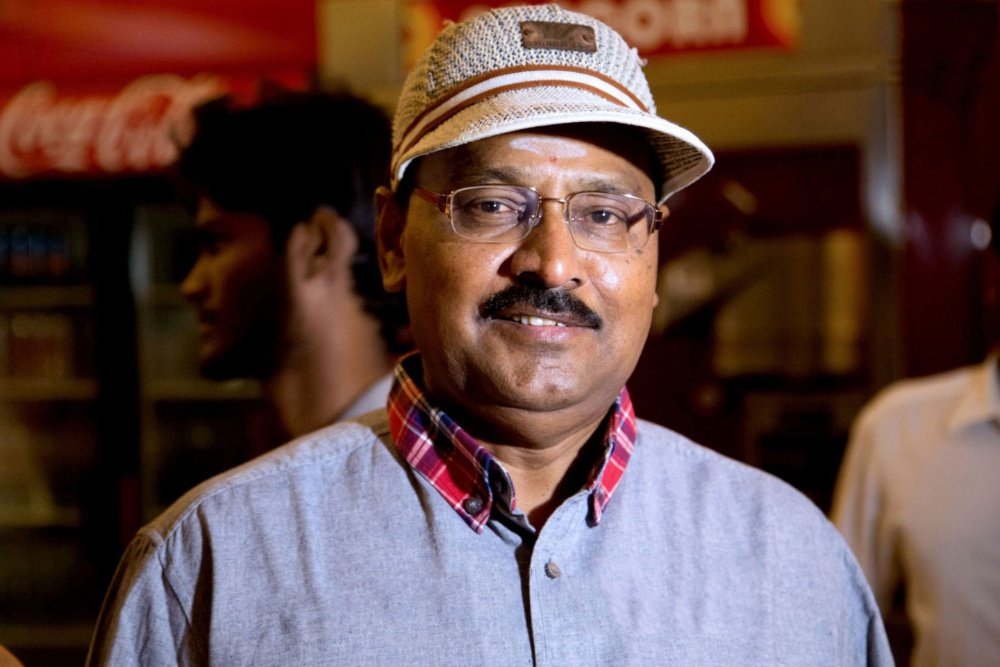
Actor-politician Vijay's Tamilaga Vettri Kazhagam (TVK) has unseated the Dravida Munnetra Kazhagam (DMK) from power in Tamil Nadu, delivering a verdict that goes well beyond state-level politics. According to The Indian Express, published 2026-06-22 at 07:52 UTC, the win came in an election fought on familiar Tamil themes — Dravidian identity, regional autonomy, and a wariness of New Delhi's cultural reach — but it was sealed by something less abstract: a screen persona that, in the words of one veteran observer, "built a near-familial trust" with voters long before the ballots were counted.
The result matters because the celebrity-to-power pipeline in Indian politics is no longer a curiosity; it is a structural feature. Vijay joins a roster that includes M.G. Ramachandran, M. Karunanidhi, N.T. Rama Rao, Jayalalithaa, and, more recently, Kamal Haasan and Pawan Kalyan — figures whose camera presence translated, with varying success, into ballot-box arithmetic. TVK's victory is the sharpest example yet of a third force upending the DMK–All India Anna Dravida Munnetra Kazhagam (AIADMK) duopoly that has defined the state since the late 1960s, and it does so in a year when the Bharatiya Janata Party (BJP) has been working to expand its southern footprint.
The screen-to-ballot-box arc
Vijay's political rollout has been unusually deliberate by Indian standards. Unlike actors who have drifted into politics as a post-stature career, Vijay built a parallel organisational structure for TVK well before declaring his candidacy publicly. The Indian Express's profile, published 2026-06-22 at 07:52 UTC, traces the strategy: family-rooted fan clubs converted into booth-level committees; film promotions reframed as state tours; charitable foundations recast as welfare outreach. The result, the paper argues, was a party that could present itself as a clean break from the patronage networks that have come to define both Dravidian majors.
What the framing makes clear is that the "pookie" persona — a screen register of boyish warmth Vijay cultivated in early films — was never incidental. It was a long-run voter-identification project. Indian celebrity politics, in this reading, is not the imposition of stardom on a polity; it is the harvesting of pre-existing affective capital.
What the DMK–AIADMK duopoly lost
The Dravidian parties built their modern coalitions on three pillars: social justice rhetoric, regional-language cultural pride, and a dense network of local-level patronage. TVK has now demonstrated that those pillars can be reproduced by a new entrant in a single electoral cycle, with the help of disciplined messaging and a charismatic front man. That is a structural threat, not a cyclical one. The DMK in particular — already weakened nationally by the loss of its 2024 Lok Sabha momentum in the south — now has to defend a state government from an opposition with fresher faces and a tighter media operation.
The AIADMK, by contrast, was the bigger loser in proportion to its starting position. Having already ceded the principal opposition role to TVK, it now risks sliding toward regional irrelevance, particularly if the BJP decides that its resources are better deployed in Kerala or Andhra Pradesh in 2029. For the BJP, the question is whether to treat TVK as a potential ally — the route it has preferred in the past with regional parties of convenience — or as a competitor to be contained.
The structural pattern across Indian states
Read against the wider map, Vijay's win sits inside a recognisable pattern. The 2024 Lok Sabha result saw actor-politicians and entertainment figures consolidate or expand their footprint in Telangana, Andhra Pradesh, and West Bengal; the rise of a serious TVK challenge to the Dravidian majors is the natural southern extension. The Indian state's electoral architecture — first-past-the-post with state-level identity as a primary cleavage — is unusually hospitable to a recognisable face that can claim, in the words of one analyst cited by The Indian Express, that "the camera already showed you who I am."
The risk, and the contested point, is whether affective capital survives the transition to governance. Jayalalithaa's tenure ended in the long shadow of corruption cases; N.T. Rama Rao's second term was curtailed by a defection engineered by Chandrababu Naidu; Kamal Haasan's Makkal Needhi Maiam remains a marginal force despite two election cycles of trying. Vijay enters Fort St. George with a larger mandate than any of those figures managed in their debut, but the same structural hazards — administration without a machine, a legislature without experienced bench depth, and an opposition already sharpening knives — apply.
The counter-read and what remains contested
The dominant frame is that TVK's win is generational — a younger Tamil voter, less bound to the DMK's mid-1990s social-justice lexicon, more fluent in Instagram-era celebrity politics, choosing a fresh face. A reasonable counter-read, and one the DMK will make in the post-mortem, is that the result is a coalition-collapse effect: an AIADMK in disarray split the anti-incumbent vote enough to let TVK sweep the centre. The Indian Express's coverage, as of 2026-06-22 at 07:52 UTC, does not settle this question; the available reporting foregrounds Vijay's organisational preparation and screen-to-statecraft arc, and gives less weight to incumbent-fatigue and opposition-split dynamics. Both are probably true in some measure, and the relative weight will only become clear in by-elections and the 2029 Lok Sabha cycle.
A second uncertainty is how the BJP responds. The party has a working relationship with the AIADMK and a growing footprint in Tamil Nadu's Hindu-majority hinterland; a TVK government in Chennai complicates both. New Delhi can either compete, court, or coexist — three quite different strategies, each with downstream consequences for the 2029 general election.
Stakes over the next three years
If the dominant frame holds, three things follow. First, the DMK–AIADMK duopoly in Tamil Nadu is over, and the 2031 state election will be a three-way contest with the BJP as a real southern player for the first time. Second, the celebrity-to-power pipeline becomes an explicit template, accelerating recruitment from Tamil, Telugu, and Kannada film industries in the run-up to 2029. Third, the federal-government-versus-state-government axis on issues from the National Eligibility-cum-Entrance Test (NEET) — itself the subject of a separate Indian Express report on 2026-06-22 at 06:52 UTC documenting an exam-cheating incident — to Governor–Chief Minister friction will be tested in a state government that has no institutional memory of working with the Union.
For the BJP, the immediate calculation is whether TVK is a co-option candidate or a structural rival. For the DMK, the calculation is how to rebuild a cadre machine whose social-justice vocabulary no longer differentiates it. For Vijay personally, the test is whether the same screen instinct that won him a state can survive four years of coalition management, bureaucratic warfare, and a media that will start looking for fractures.
The Indian voter, having decided that stardom is a credential, will now judge whether it is a competence.
Desk note: Monexus reads TVK's 2026 win as a structural break in Tamil Nadu's two-party system — comparable in significance to the 1967 anti-Congress wave, but driven by celebrity capital rather than linguistic mobilisation — and treats The Indian Express's profile as the primary source for the Vijay-arc framing, with the broader contest read against the 2024 Lok Sabha pattern.
Wire provenance
This editorial synthesis draws on the following public wire/social posts:
- https://en.wikipedia.org/wiki/Tamilaga_Vettri_Khazagam