The WhatsApp succession and the quiet reordering of Big Tech's centre of gravity
Meta has tapped an Indian founder to run its two-billion-user chat service, a move that looks like a personnel shuffle and reads as a realignment of where the platform's centre of gravity now sits.
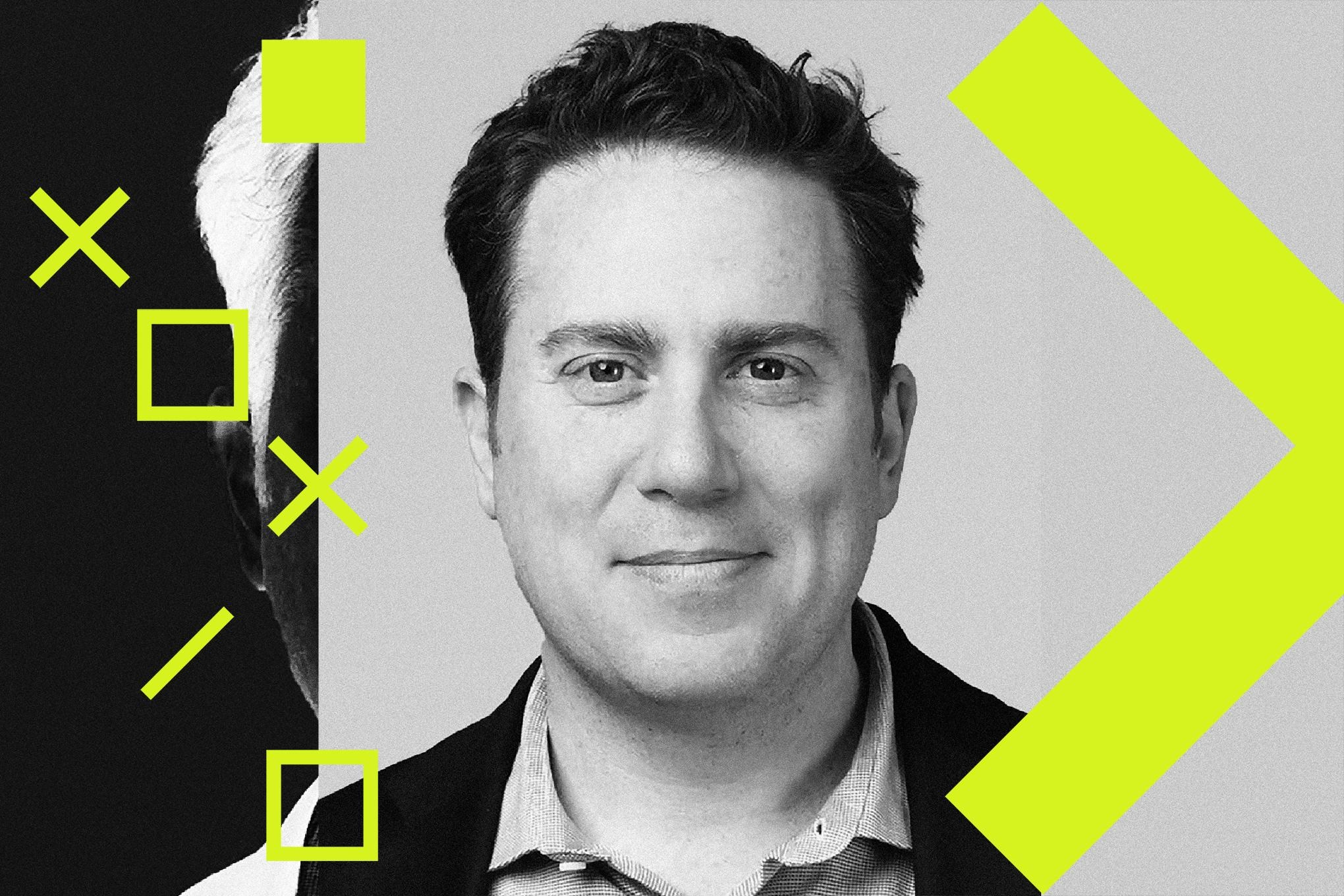
On 22 June 2026, Meta confirmed that Will Cathcart, the long-serving head of WhatsApp, would step aside, and that the two-billion-user messaging service would pass to Kunal Shah, the Indian founder of the credit-card rewards and lending platform CRED. Reporting from Reuters and TechCrunch framed the move as both a transition and a concession: Cathcart shifts to a broader role at Meta, while Shah, a founder of one of India's most closely watched fintechs, leaves his own company to take the seat. The switch lands at a moment when WhatsApp is no longer simply a chat app but the principal distribution surface for digital commerce, payments, and customer service across South Asia, Latin America, and large parts of Africa, and when Meta's growth, in revenue and in active users, is increasingly drawn from outside North America.
The personnel change reads, on its face, as a routine executive succession. The substance is more interesting. Meta is putting an operator with deep experience in Indian consumer finance and product-led growth at the head of a product whose most consequential expansion runway runs through Global South markets. That is a strategic statement, not a calendar item.
The Cathcart decade and the WhatsApp that got built
Under Cathcart, who took over WhatsApp in 2019 after a long stretch inside Facebook's ranks, the service shed most of the residual reputation baggage of its 2014 acquisition era. End-to-end encryption was completed in 2016, became universal in 2021, and has since been hardened against legal pressure in jurisdictions from Brazil to the United Kingdom. Voice notes, video calls, status, channels, and most recently a fuller payments and business-messaging layer were added during his tenure. The product, in short, became a full super-app substrate without ever taking the explicit super-app label.
What Cathcart did not do is, in retrospect, equally significant. WhatsApp's commerce layer in India, the United Payments Interface integration that briefly made the app a near-default payment rail, was scaled back after regulatory friction with the Reserve Bank of India, and Meta never quite repeated that experiment elsewhere. WhatsApp Pay in Brazil moved more slowly, for a different mix of licensing and antitrust reasons. The upshot is that WhatsApp, by mid-2026, is a global messaging monopoly with a regionalised, slow-moving commerce layer underneath it. That unfinished business now lands on Shah's desk.
Reuters's reporting, as carried in the 22 June wire, frames Cathcart's exit as voluntary, with a continuing role at Meta that the company has not yet specified. The framing matters: it suggests Meta is not demoting a sitting leader but rotating one out at the top of a product whose next phase will look different from the last.
Why an Indian founder, and why now
The choice of Shah is the kind of move that gets parsed for symbolism and, in this case, the symbolism is doing real work. CRED sits at the intersection of three things Meta wants more of: a high-trust consumer brand, a working payments-and-credit product, and a relationship with India's affluent urban user base. CRED's model, which gates credit-card bill payment behind a premium membership and a behavioural scoring engine, is, in effect, a demonstration that Shah knows how to build a high-margin consumer business on top of a regulated financial surface — exactly the kind of business Meta has long said it wants WhatsApp to become.
TechCrunch's 22 June coverage noted that Meta is investing $900 million into Shah's startup, a figure that, paired with his move to lead WhatsApp, suggests the relationship is more than a recruiting transaction. The investment is small for Meta — roughly the cost of a quarter's worth of Reality Labs attrition — but it is large enough to signal that whatever CRED has built is the prototype Meta wants to study, absorb, or acquire, rather than compete with. The standard Silicon Valley reading is that Shah is being hired; the more accurate reading may be that CRED is being bought on an earn-out, with Shah as the integrator.
The Polymarket prediction market, on 22 June at 16:08 UTC, listed the move as a confirmed personnel event rather than a rumour, which is itself worth a sentence. The speed at which a name, once floated in trade press, hardens into a market-priced fact is part of the texture of how Big Tech personnel moves now work. The news cycle has compressed; the insider-trading-like volatility around tech succession has not.
The Global South is the product, not the market
The structural frame here is the one Big Tech executives have been reluctant to state plainly for years: for WhatsApp, and increasingly for Meta, the Global South is not a future growth bet, it is the product. India is WhatsApp's largest national market by user count, Brazil is the second, Indonesia is the third, and Mexico, Nigeria, Egypt, and South Africa are all top-ten jurisdictions. North America, by contrast, is a saturated market in which iMessage, on iPhone, holds the dominant default position, and in which WhatsApp's share of message volume has been stuck or declining for years. The market in which WhatsApp can still grow, monetise, and add commerce rails is, almost without exception, a market in which the United States is not the principal regulatory authority.
That structural fact has two consequences the Cathcart era navigated carefully and the Shah era will have to navigate more directly. First, the regulators who will shape WhatsApp's next decade are in New Delhi, Brasília, Jakarta, and Brussels, not in Washington. End-to-end encryption, content moderation, inter-operability mandates, and the question of how a chat app becomes a payments app are all being decided in those capitals. Second, the talent, the product instincts, and the merchant relationships required to operate a credible commerce layer on top of a chat app are increasingly concentrated in South and Southeast Asia, not in the Bay Area. Hiring a founder from Bengaluru to run a Menlo Park product is, on this reading, an admission rather than a gesture.
There is a counter-narrative worth taking seriously, and it is the one Meta's communications team will, with some justification, prefer. The Cathcart–Shah transition is also a story about founder-led product discipline. Cathcart was an operator-in-residence; Shah is a founder, and the founder track record at consumer platforms has, in the last decade, generally out-performed the operator track record. The reading is that Meta is buying a founder's instincts about pricing, retention, and brand, not buying Indian-ness. That is a fair reading, and it is probably partly true. It does not displace the structural read; it sits on top of it.
What this does not mean
A few framings the move will attract, and which the evidence does not support: that this is a de-Americanisation of Meta (it is not — the company remains incorporated in the United States, the parent listing is in the United States, and the board remains in California); that WhatsApp is about to launch a full super-app stack in India (the Reserve Bank's caution on the earlier WhatsApp Pay experiment has not lifted); that Shah is being given a freer hand than Cathcart had (the reporting, at this point, says nothing about mandate, and a great deal about the company's instinct to keep messaging and commerce product decisions inside Meta's existing governance).
What the move does suggest, plainly, is that the centre of operational gravity for the world's most widely used chat app is shifting, person by person and decision by decision, towards the markets in which the chat app is still growing. The United States remains the headquarters. India, in this reading, is becoming the headquarters of the product.
What remains uncertain, and what the 22 June reporting does not yet resolve, is whether the $900 million Meta is investing in CRED is, in substance, an acqui-hire premium, a strategic stake that will leave Shah to keep a hand in the company he founded, or a down payment on a fuller acquisition once the WhatsApp transition is digested. The wire reports are consistent with any of those readings. Until Meta files the next round of disclosures, the precise structure of the deal will be a matter of inference, and the inference is genuinely uncertain. Monexus finds that the personnel move is confirmed; the commercial architecture around it is, for now, opaque.
Desk note: Monexus framed this as a structural realignment of where Big Tech's operational gravity sits, not as a personality story. The wire cycle led on the founder-to-Meta arc; the more durable read is the regulatory and commercial one.
Wire provenance
This editorial synthesis draws on the following public wire/social posts:
- http://reut.rs/4oHg7T3
- https://en.wikipedia.org/wiki/WhatsApp
- https://en.wikipedia.org/wiki/CRED_(company)
- https://en.wikipedia.org/wiki/Will_Cathcart
- https://en.wikipedia.org/wiki/Meta_Platforms
- https://en.wikipedia.org/wiki/WhatsApp_Pay