Four forwards, one problem: how the World Cup's deadliest strike force rewrote the scouting brief
Four elite centre-forwards arrive at the 2026 World Cup in career-best form. Coaches, analysts and the players' own club staff are quietly rewriting the scouting template to keep them quiet.
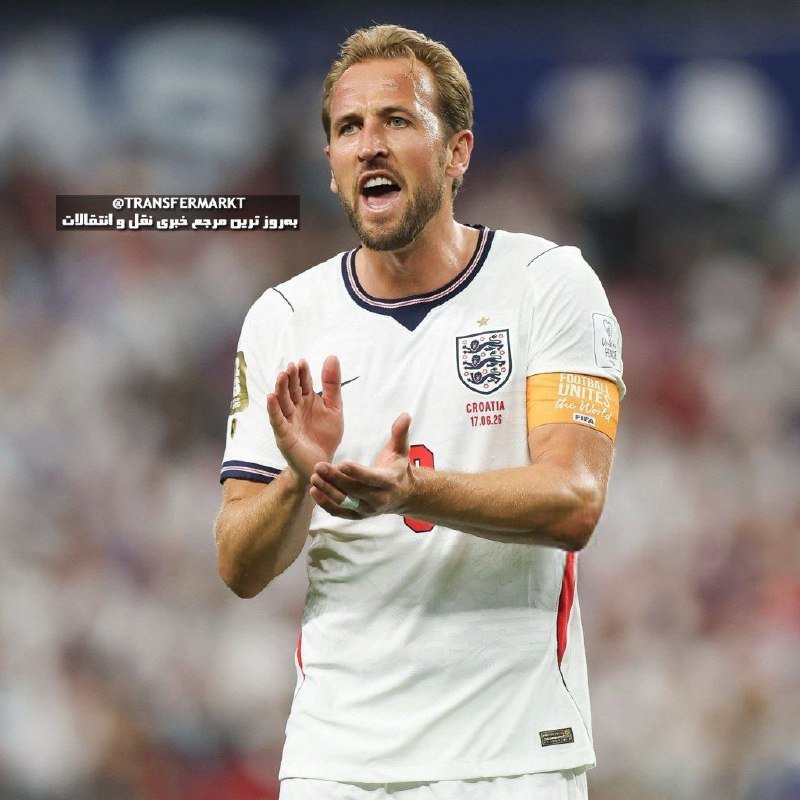
On 22 June 2026, with the World Cup less than a week from kick-off, the question on every defensive coach's whiteboard is also the simplest one in football: how do you stop them? According to a 22 June BBC Sport feature, Lionel Messi, Kylian Mbappé, Erling Haaland and Harry Kane have all arrived at the tournament in the kind of form that turns tactical plans into kindling, and the players are sufficiently varied in style that no single defensive system looks like it will hold against more than one of them. The problem is structural, not anecdotal, and the search for an answer is already reshaping how elite opposition analysts prepare.
The four forwards do not merely score; they impose different geometries on a defence. Messi operates in the half-spaces and links play; Mbappé runs behind the back line at pace; Haaland punishes crosses and second balls; Kane drops deep and orchestrates. Coaches preparing for a single match against one of them can pick a shape. Coaches preparing for a tournament, where the draw could deliver any combination, are staring at a combinatorics problem that the current scouting template was not built for.
The template is built to scout systems, not individuals
For two decades, opposition analysis has organised itself around the opponent's structure: the back five, the high press, the low block. BBC Sport reports that the four strikers in question now routinely bend matches around themselves, forcing scouting departments to build player-specific dossiers that have, until recently, been the preserve of set-piece work. The shift is small in language and large in labour. A system dossier can be built by two analysts over a week. A player dossier on Haaland's near-post runs, Kane's blindside combinations, Messi's half-space rotations and Mbappé's wide-channel isolation requires video from multiple leagues, contextualised against each striker's service pattern at club level.
This is not a problem the four have created alone. The wider professional game has spent a decade centralising possession in the front line; the false nine, the inside forward, the nine-and-a-half have all moved the point of attack into channels that older scouting models marked as transition zones rather than primary threat areas. The four names on the BBC's list are simply the most decorated occupants of those channels.
What the clubs are doing, and what the international managers are not
At club level, the response has been quietly impressive. According to BBC Sport, the players' own backroom staff describe a season in which each forward has been the primary subject of his own match plan: opponents double up, drop a wing-back, foul tactically early. The clubs cope because the talent around them is calibrated for the friction. The international managers face a different calculus. Squads are smaller, preparation windows are compressed, and the supporting cast is uneven.
That asymmetry is the part of the story that gets underplayed. A Messi, a Mbappé, a Haaland or a Kane operating behind a coherent club midfield is hard enough to neutralise. The same player operating behind an international midfield that meets twice a year, in a tournament that punishes a single tactical mistake with elimination, is something closer to a coin-flip problem for the defending side.
The structural read
Strip the names away and the situation is familiar: a small number of elite attackers in the strongest leagues, exporting their dominance into a tournament that has, by design, weaker collective units defending them. The economics of football concentrate the best talent in a handful of clubs; the World Cup redistributes that talent across national teams of wildly differing tactical maturity. The result is a competition in which the ceiling of the best attacking units sits well above the ceiling of the best defending ones. That gap is not a new phenomenon, but BBC Sport's reporting suggests the four forwards in question have widened it.
There is also a coaching-economic dimension. The four names in question tend to be the most-scouted players on the planet, which sounds like a leveller and is in fact the opposite. Their clubs pay for the most sophisticated video infrastructure in the sport; the national-team analyst pool is thinner and the windows shorter. The market prices the answer to the question "how do you stop them?" at a level that national federations do not routinely pay.
What the counter-narrative would say
It is worth recording the opposing read, even if the evidence does not support it. A defender of the international game's tactical depth would point out that the World Cup has, in the past, humbled forwards of comparable stature, and that collective organisation at the back has historically been the equaliser that club football does not face. They would also note that the four strikers in question have all suffered prolonged injury layoffs, and that peak form in mid-June is not always peak form in mid-July. The counter-narrative is not frivolous; it is just thinner than the dominant one. History produces outliers; the scouting departments preparing for the group stage are paid to assume that this tournament will not be one of them.
What we do not know
The sources do not specify which national teams have begun formalising player-specific defensive dossiers, and BBC Sport does not name the analysts or backroom staff it has spoken to. The list itself is editorial, drawn from a snapshot of form; whether the four remain at their current scoring rate into the knockout rounds is a question the data cannot yet answer.
This article is a staff-writer tactical brief. Monexus has treated the BBC's framing as the wire lead and added structural context drawn from publicly understood patterns in modern football analysis. Where the BBC's reporting stops short of specifying a coaching decision or a scouting workflow, the piece says so.