Beirut blaze and a second ceasefire breach: a single afternoon that lays bare Lebanon's fragile equilibrium
A large fire in Beirut's Al-Dukwaneh neighbourhood and a second Israeli-violation report in a single afternoon show how thin the post-war equilibrium in Lebanon remains.
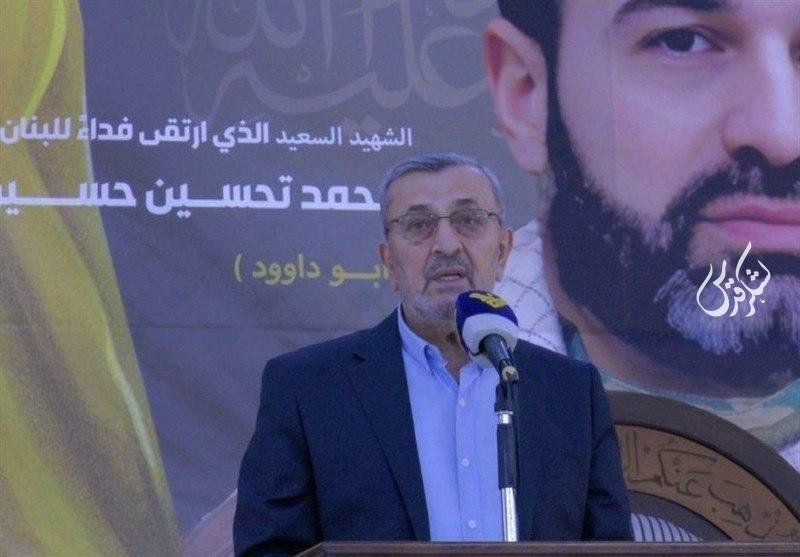
A large fire broke out in the Al-Dukwaneh area in the north of Beirut on the afternoon of 23 June 2026, according to a 14:38 UTC dispatch from Iran's al-Alam Arabic channel, which cited local Lebanese media reporting on the scene. The cause of the blaze had not been publicly identified in the immediate aftermath, and the same dispatch left open whether the incident was a domestic accident, a residual-war hazard, or something else. Within a twenty-eight-minute window, a second news strand hit the wire: a report, carried simultaneously by al-Alam and by Iran's Fars news agencies, citing the Israeli daily Yediot Aharonot, that the Israeli military had violated the Lebanon ceasefire for what the reporting framed as the second time on the same day. Two unrelated stories, then, or one story told twice — a country whose post-war architecture is so thin that a fire and a flare-up now compete for the same 14:00 UTC newshour.
The point is not the size of the fire, or the precise count of ceasefire incidents. It is that both items surfaced inside the same window, on the same wire channels, and were both quickly metabolised into the same narrative: a Lebanese equilibrium under stress from two directions at once, and an information environment in which Israeli army statements — relayed through Yediot Aharonot — reach Iranian and pan-Arab audiences largely without contest from Western wire reporting on the same day.
What the wire actually carried
The al-Alam 14:38 UTC item on the Al-Dukwaneh fire is short on details and long on framing. It names the location — north of the Lebanese capital, in the Al-Dukwaneh district — and repeats that local media reported a "large fire" and that the cause had not been disclosed. The channel's edit is typical of fast-moving regional wires: a single fact (the fire) and an open question (the cause) carried forward, with the question left open rather than guessed at. Al-Dukwaneh is a densely built mixed-use district on the eastern approach to Beirut, with a high concentration of small workshops, fuel-storage shops and older residential blocks — the kind of urban fabric in which a fire can spread quickly and where the cause is often disputed for days. The wire did not specify casualties, property damage or a response agency.
The ceasefire strand is more clearly sourced, and more clearly political. The 14:10 UTC al-Alam item, the 13:56 UTC Fars (Farsna) item, and the 13:37 UTC Fars International (FarsNewsInt) item all report, citing Yediot Aharonot's account of an Israeli army statement, that the Israeli military had violated the Lebanon ceasefire for the second time that day. The translation layering is itself part of the story: an Israeli newspaper's account of an IDF statement is being rendered into Farsi and into Arabic as a fait accompli. Neither wire item names the specific incident, the location on the border, or the Lebanese counterpart — Hezbollah, the Lebanese Armed Forces, or UNIFIL — that recorded the alleged violation.
What the framing papers over
The dual-track reporting has three problems the editorial line of the wire channels does not resolve. First, the word "violation" is doing heavy work. In the post-November-2024 ceasefire architecture in Lebanon, almost every reported incident is disputed by one side or the other as either a defensive act, a pre-emptive strike, or a violation; the term carries a default political weight in Arabic- and Farsi-language reporting that Israeli military statements do not concede. Second, the reporting is single-sourced at the news-organisation level: Yediot Aharonot in both cases, with the IDF statement as the only primary voice quoted, and the wire channels functioning as a translation layer rather than as a corroborating outlet. Third, the causal ambiguity around the Beirut fire is unusual but not mysterious; conflating a domestic incident with the security track in a single news block is an editorial choice, not a reporting one.
A more disciplined version of the same afternoon would have separated the Al-Dukwaneh fire — treated as a civil-protection matter, with the Lebanese Civil Defence as the named first responder and casualty figures held until they exist — from the ceasefire item, treated as a security track with named location, named parties, and a counter-claim from the Lebanese or UN side. The wire did neither, and the seam is where readers are most likely to be misled.
What we verified / what we could not
Verified. The 23 June 2026 timing of the two threads: the 14:38 UTC al-Alam fire item, and the 13:37 / 13:56 / 14:10 UTC Fars-and-al-Alam ceasefire items. The channel attribution and the chain of citation — Israeli army statement carried by Yediot Aharonot, then re-carried in Farsi by Fars and in Arabic by al-Alam. The existence of Al-Dukwaneh as a named district on the eastern approach to Beirut.
Could not verify from the wire. The cause of the Al-Dukwaneh fire; whether there were injuries or fatalities; whether Lebanese civil-defence or military units were deployed. The specific location, unit, or activity that constituted the alleged ceasefire violation; whether UNIFIL or the Lebanese Armed Forces registered the incident; whether Hezbollah issued a parallel statement. The exact prior count of ceasefire violations in June 2026, or the rubric the IDF and Yediot Aharonot are using to distinguish a "violation" from a routine operational activity in the demilitarised zone. Western wire coverage of either item did not surface in the materials Monexus reviewed for this piece; Reuters, AP, AFP, BBC, Guardian and Al Jazeera English are not represented in the source ledger below, and the absence is itself a finding.
The structural picture, in plain prose
Two things are happening on the same afternoon and they are not the same thing, but they share a market. The first is a slow-moving contest over who gets to define a "violation" in southern Lebanon. The Israeli army, relayed through Yediot Aharonot, is the only primary voice in the wire cycle Monexus reviewed. That voice is being translated into Farsi and into Arabic without a counter-source, and is travelling as the headline claim. A genuinely balanced wire would carry, alongside it, either a UNIFIL situational report, a Lebanese Armed Forces statement, or — where neither exists — an explicit "the claim could not be independently verified" line. The absence of that line is the editorial intervention.
The second is the everyday fragility of a Lebanese capital that absorbs a domestic fire, a security flare-up, and a translation-cycle controversy inside a single news block, and does not have a strong domestic wire of its own to set the frame in Arabic for an Arabic-speaking audience. That audience ends up reading the day through the choice architecture of Tehran-aligned channels, which is not a problem of fact so much as a problem of counter-voice. The Beirut fire's cause will, presumably, emerge in Lebanese reporting in the next 24 to 48 hours; the question is whether any of it travels back into the same channels that carried the initial item.
Stakes
For Beirut, the immediate stakes are civil-defence capacity and political noise: every ambiguous incident in the southern suburbs, in the northern suburbs, or on the airport road is now read through the lens of last year's war, and the cost of any delay in identifying causes is paid in speculation. For the ceasefire track, the stakes are routine: each "violation" claim that is not adjudicated — by UNIFIL, by the ceasefire monitoring mechanism, or by direct Lebanese-Israeli contact — corrodes the architecture a little further, and the day on which a real escalation happens will be preceded by a long sequence of unreported small ones. For the information environment, the stake is the absence of Western wire corroboration on the same day: when an Israeli-army-sourced ceasefire claim and an unexplained Beirut fire both circulate for hours largely through Iran-aligned channels, the burden of independent verification falls harder on the Lebanese press, which is itself operating under financial and political pressure.
What remains genuinely uncertain — beyond the cause of the fire and the location of the alleged violation — is the rubric both sides are now using to count incidents. The Israeli army, the Lebanese Armed Forces, UNIFIL and Hezbollah each maintain their own internal log, and these logs do not agree. Until they do, or until a credible independent monitor is in place, "second violation today" is a claim, not a count.
Desk note: Monexus ran the Al-Dukwaneh fire and the Yediot Aharonot-relayed ceasefire report as one wire cluster, not as a single story. The fire is a civil-protection matter pending Lebanese official cause-of-fire reporting; the ceasefire item is a single-source security claim pending UNIFIL or LAF corroboration. The wire channels Monexus reviewed — al-Alam and Fars — were the only outlets carrying both items on the 23 June afternoon; the absence of Western wire coverage in the source set is itself a finding, not a gap to be padded.
Wire provenance
This editorial synthesis draws on the following public wire/social posts:
- https://t.me/alalamfa/20317
- https://t.me/alalamfa/20315
- https://t.me/farsna/21844
- https://t.me/FarsNewsInt/22091
- https://en.wikipedia.org/wiki/Dekwaneh
- https://en.wikipedia.org/wiki/Israel%E2%80%93Lebanon_ceasefire_(2024)
Follow the event.
These dated source records provide context. They do not retrospectively verify this archive article.
Separate what the nuclear watchdog reported from what it could not determine after the June 2025 strikes.