Service Refused: A New York Coffee Shop, a Congressman's Barred Entry, and the Civil-Rights Question Both Sides Now Face
A federal civil-rights probe into a New York coffee chain that refused to serve a pro-Israel congressman has reopened a fault line running through American public accommodation law, partisan politics, and the question of when political exclusion becomes discrimination.
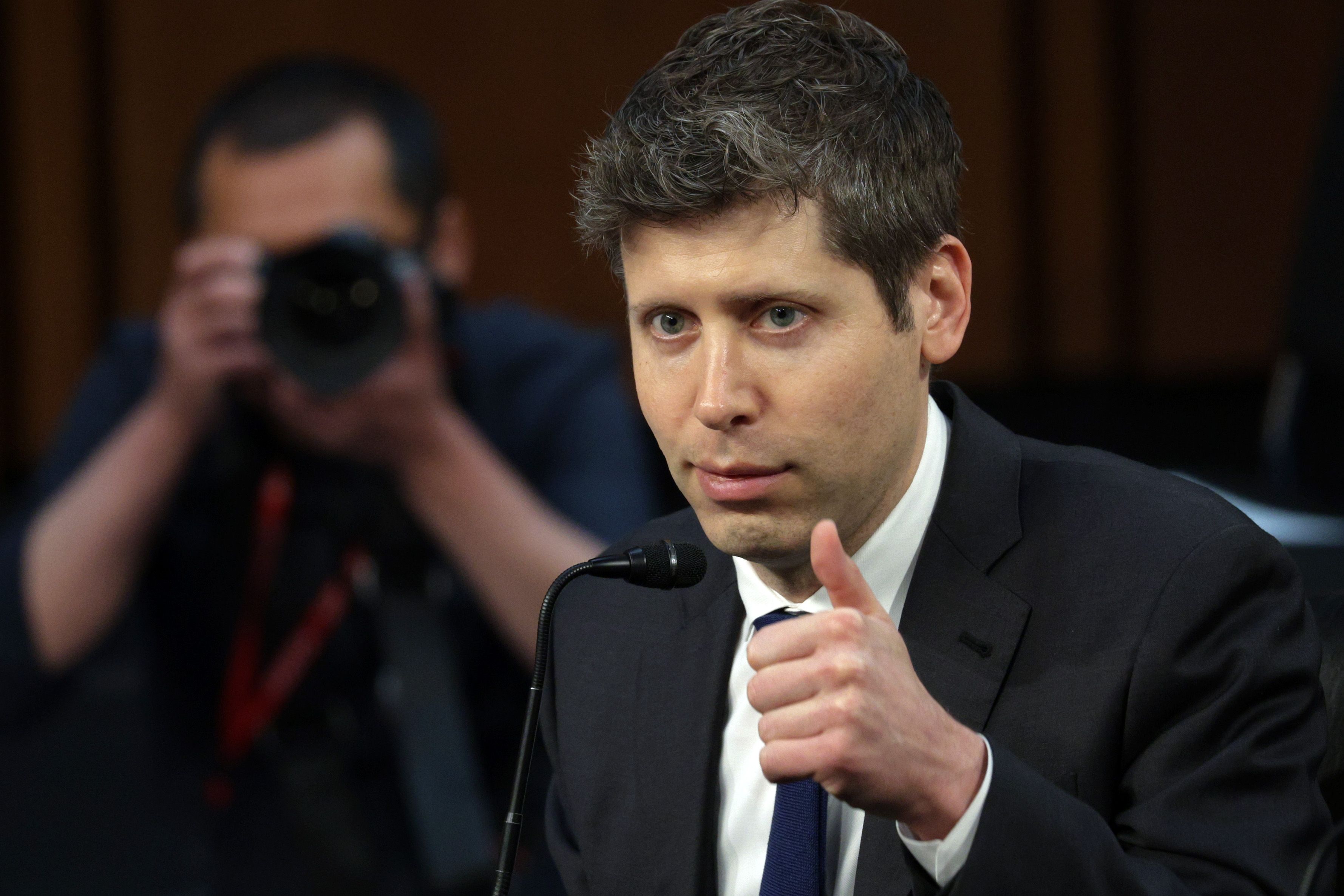
On the morning of 23 June 2026, the United States Department of Justice opened a civil-rights investigation into a New York–based coffee shop chain after the company announced it would not serve Representative Dan Goldman, a Democratic congressman known for his vocal support of Israel. Reuters broke the story at 08:25 UTC, citing an announcement from the department's top civil-rights prosecutor. Al Jazeera's breaking-news desk carried the same disclosure at 07:49 UTC, naming Goldman and describing the probe as focused on whether the chain's stated refusal constitutes unlawful discrimination under federal public-accommodation statutes.
The episode lands at an intersection where three forces have been grinding against each other for years: the long-standing American expectation that businesses open to the public serve the public, the hardening of consumer and employee pressure on companies to take sides in the war in Gaza, and a federal civil-rights apparatus that has rarely been turned on private establishments that bar individual politicians rather than classes of customers. The Goldman case is small in commercial scale — a single regional chain, one congressman — but it is large in what it forces the country to argue about. A private business has chosen a side in an American foreign-policy dispute and has done so by excluding an elected official from its premises. The Justice Department has now been pulled in to decide whether that choice is a political statement, which sits inside the First Amendment's shelter, or an act of discrimination, which does not.
What the chain actually did, and what the DOJ says it is investigating
The Reuters and Al Jazeera reports do not, in the available wire copy, name the coffee chain, the location of the disputed incident, or the precise language the company used when it announced that Goldman would not be served. Reuters describes the chain simply as a New York coffee shop chain; Al Jazeera frames the chain as having said it would not serve the Democratic lawmaker, naming him explicitly. What both wires agree on is the bare sequence: Goldman, who represents a New York district and has been among the more outspoken pro-Israel voices in Congress, was effectively told he could not buy a cup of coffee at one of the chain's locations; the chain then publicly defended the refusal; and within hours the Justice Department's civil-rights division announced an investigation.
The federal hook, according to the framing of the wires, is the body of US public-accommodation law — primarily Title II of the Civil Rights Act of 1964, which prohibits discrimination in places of public accommodation on the basis of race, colour, religion, sex, and national origin, and a parallel New York State Human Rights Law that adds political beliefs to the protected list. Goldman is white, male, Jewish, and an elected Democrat. None of those protected categories, on their face, describe the conduct at issue. The civil-rights question therefore turns on whether refusing service to a customer because of his political positions — positions that are themselves about a foreign conflict — fits inside the protected list at the state level, and on whether the chain's stated rationale, if it can be established, was religious or national-origin discrimination in disguise.
This is the part the available reporting does not resolve. The wires do not contain the chain's internal communications, the on-site statements, or any testimonial account of the confrontation that would let a reader decide whether the refusal was directed at Goldman's politics, his religion, his stance on Israel, or some combination. The Justice Department, in announcing the probe, will have signalled that, on the face of the public reporting, the conduct falls inside the zone the department believes it can investigate — but the wires do not state the legal theory the department has adopted.
The counter-narrative: a private business making a political choice
There is a second, perfectly serious reading of the same facts. A coffee chain is a private actor. Its owners have political views. American law has long tolerated, and in some respects protected, the right of private businesses to refuse service in ways that do not hit the federally protected categories — the baker who declines to print a particular message, the venue that turns away a controversial speaker, the restaurant whose management decides that a given customer creates a hostile environment for staff. None of those decisions is, on its face, a civil-rights violation. The argument the chain will likely make, if the matter proceeds, is that Goldman's exclusion is a political stance, not a categorical ban on a protected class — and that the First Amendment protects the company's right to take that stance, even if the public finds the stance distasteful.
That argument has an internal logic that survives scrutiny. It also has obvious limits. Public-accommodation law exists precisely because, in the American experience, private refusals have historically tracked categories of identity that the political branches have decided are illegitimate to discriminate against. When a refusal is announced publicly and tied to a foreign-policy position that is itself entangled with the identity of a national or religious group, the legal question is no longer purely about political belief. It becomes a question about what the refusal signals — and whether that signal, in 2026, lands as political speech or as identity-based exclusion.
This is the difficulty the Justice Department now has to manage. Civil-rights law was built to address categorical exclusions, not partisan ones. The Goldman case forces the framework into territory it has not, in recent memory, been asked to occupy: a refusal aimed at one named elected official, justified by his stated views, advertised on social channels, and treated by the public as a stand-in for a wider cultural argument about the war in Gaza.
The structural frame: politics as a protected category in a polarised marketplace
The deeper pattern this episode exposes is the slow conversion of American commercial space into a venue for foreign-policy disputes. Over the past two years, consumer boycotts and employee pressure have pushed major brands to publicly align — or refuse to align — with one side or the other of the Israel–Gaza war. Corporate statements on the conflict are now treated as market-moving events; boycotts are organised on app-based platforms; and individual managers of single-location businesses are routinely placed in the position of either enforcing or resisting a chain-wide stance. The result is a marketplace in which the act of buying a cup of coffee has become, for some customers and some employees, an assertion of political position.
In that environment, the choice to bar a single elected official is not really about that official. It is a signal that the business, its staff, or both, take a side in a war that has no clean domestic analogue. The same dynamic operates in reverse, in the broader American consumer landscape, when pro-Palestinian customers are turned away, when Palestinian-American employees are dismissed for social-media posts, or when brands publicly distance themselves from one side of the conflict and find themselves boycotted by the other. The Goldman case is unusual only because it has been picked up by a federal prosecutor.
The legal architecture is being asked to do work it was not designed for. Federal civil-rights statutes were written to address exclusions rooted in identity categories that the United States, after a long and often violent struggle, decided were illegitimate bases for public treatment. They were not written to police the political statements of private businesses. State-level human-rights law, in jurisdictions like New York, has gone further — extending protection to political beliefs — but the constitutional boundary between protected category and protected speech has rarely been tested at this volume and at this temperature.
What the wider war does to the legal question
The Reuters and Al Jazeera wires do not pause to spell out the obvious: the politics of the Israel–Gaza war have entered every adjacent space in American civic life, and the commercial sphere is one of them. The Electronic Intifada's reporting on 23 June, on a separate but adjacent problem — the destruction in Gaza of civil-status documents that Palestinians need to renew and that are now impossible to replace — runs in the same news cycle and is part of the same background radiation. Palestinian civilians whose identity documents have been physically destroyed by the war cannot, in many cases, prove who they are to foreign consulates, to banks, or to international aid agencies. The Electronic Intifada's reporting on this is one piece of evidence that the question of identity and documentation is, on the Palestinian side of the conflict, a literal matter of survival under bombardment.
That parallel does not resolve the legal question in the Goldman case. It does, however, clarify the moral background. The congressman at the centre of the New York dispute is one of the more prominent American political defenders of Israel's prosecution of the war. The chain that has barred him is, on the available reporting, taking a position in active opposition to that war. The American legal system is now being asked to adjudicate a commercial refusal that is, at one remove, a statement about a foreign conflict in which tens of thousands of civilians have been killed and the basic administrative infrastructure of an entire population has been damaged to the point that identity itself is at risk. The courtroom is not the right venue to settle that argument, but it is the venue that has been summoned.
Stakes and a forward view
The concrete stakes of the DOJ investigation are narrow. If the department finds that the chain's stated basis for the refusal maps onto a federally protected category, the company faces the same enforcement options available in any Title II case: conciliation, a public-accommodation order, and, in the most aggressive scenario, a referral for civil litigation in federal court. If the department finds that the refusal is political speech by a private actor, it will close the matter and the chain's decision will stand as a legally tolerated act of consumer-level political expression. The New York State Human Rights Law, which on the wires' framing is in play, opens a parallel state-level track that could produce a different outcome regardless of the federal disposition.
The wider stakes are larger. If the federal government prosecutes, it will be the first prominent federal civil-rights case in the modern era built around a private business's refusal to serve an elected official over a foreign-policy position. If the government declines to prosecute, it will be signalling that political-belief exclusions from public accommodations are, in 2026, a tolerated category of commercial speech. Neither outcome is neutral. Both will be read by other chains, by other politicians, and by other customers as a permission slip or a warning about what is acceptable when the war in Gaza finally stops being the lead story on American cable news.
What the wires do not yet settle
The Reuters and Al Jazeera reporting on 23 June 2026 establishes that a probe has been opened, names the congressman, identifies the federal division involved, and confirms the basic sequence of refusal, announcement, and investigation. The wires do not, in the available copy, name the coffee chain, publish the chain's internal communications, identify the specific location of the incident, lay out the legal theory the Justice Department has adopted, or quote any official from the chain. The framing in both wires is consistent, but it is also thin: this is a developing story, and the public record will fill out in the coming days.
Until then, three things are worth holding in mind. First, the act being investigated is the exclusion of one named politician from one commercial premise on stated political grounds — a pattern that has historical American precedent but has rarely been treated as a federal civil-rights matter. Second, the legal theory the department adopts, once it is disclosed, will determine whether this case is the leading edge of a new enforcement posture or an isolated response to an unusually publicised refusal. Third, the war that supplies the political backdrop to this dispute is, as the Electronic Intifada's parallel reporting on 23 June makes visible, still destroying the basic documentary infrastructure of civilian life in Gaza — which is the larger fact against which the New York coffee dispute will be read, whether the courtroom acknowledges it or not.
This piece is a long read by the Monexus staff. Where wire copy on the morning of 23 June 2026 was thin, the article says so; where the structural context required drawing on adjacent reporting from the same news cycle, the article names that reporting and does not extend beyond what was on the wires.
Wire provenance
This editorial synthesis draws on the following public wire/social posts:
- http://reut.rs/4oNPYlM
- https://electronicintifada.net/content/gazas-id-less-people-struggle-survive/51469
- https://www.justice.gov/crt
- https://www.eeoc.gov/title-ii-civil-rights-act-1964
- https://dhr.ny.gov/article/human-rights-law
- https://www.congress.gov/member/dan-goldman/G000599
- https://www.govinfo.gov/content/pkg/STATUTE-78/pdf/STATUTE-78-Pg252.pdf
- http://reut.rs/4oNPYlM
- https://electronicintifada.net/content/gazas-id-less-people-struggle-survive/51469
- https://www.justice.gov/crt
- https://www.eeoc.gov/title-ii-civil-rights-act-1964
- https://dhr.ny.gov/article/human-rights-law
- https://www.congress.gov/member/dan-goldman/G000599
- https://www.govinfo.gov/content/pkg/STATUTE-78/pdf/STATUTE-78-Pg252.pdf