England's goalless draw with Ghana exposes the questions Thomas Tuchel cannot keep ducking
A side built to win tournaments could not beat a team ranked outside the world's top 40. The numbers are not the problem; the shape of the team is.
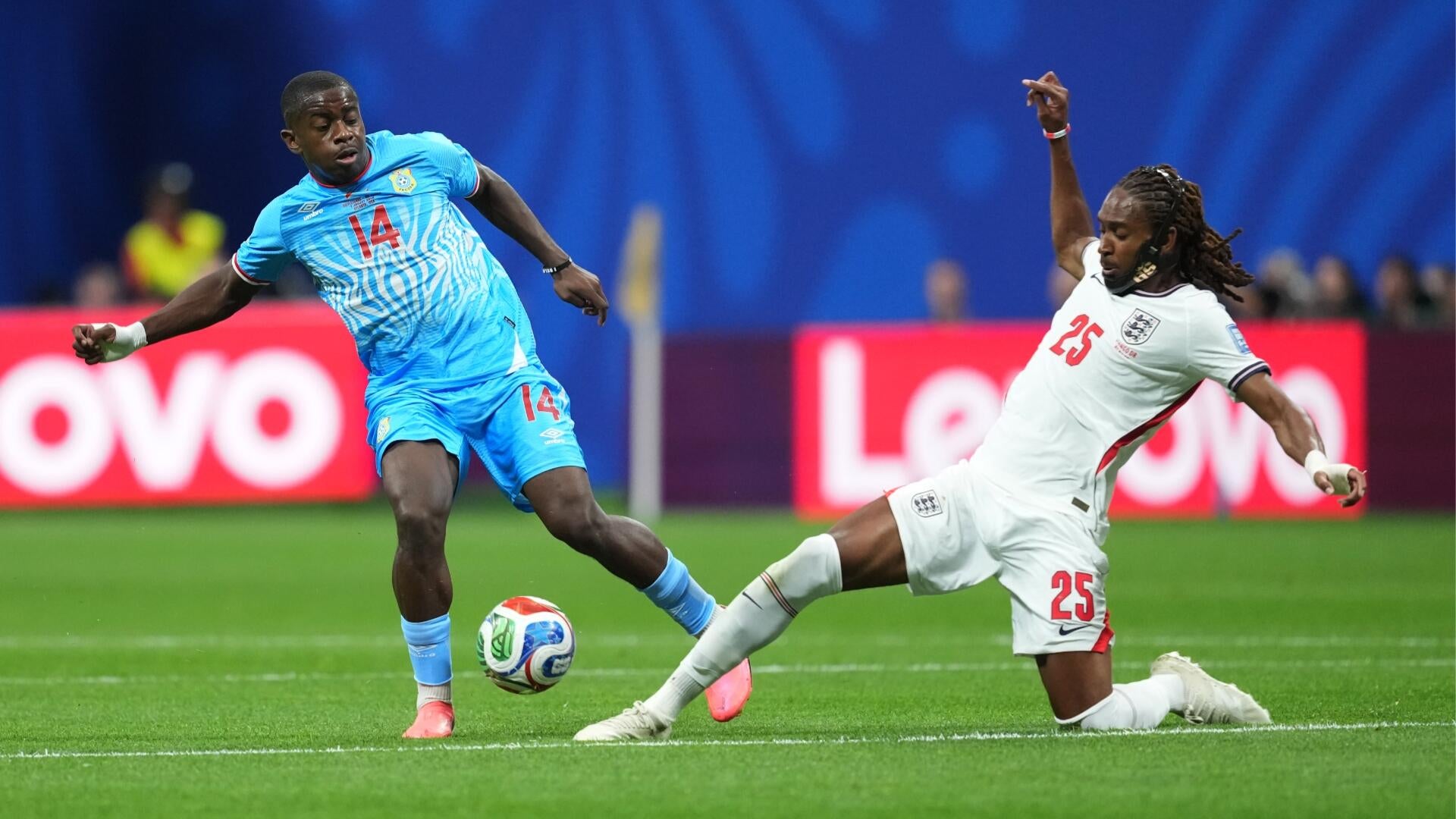
England went to Gillette Stadium on Tuesday evening with a Group L match that should have been a procession. The visiting side from Accra is a proud footballing nation but no longer a global heavyweight, and the pre-match logic was straightforward: three points, a stronger goal difference, and a clean lap around the group before a tougher test in the knockout rounds. Instead, the final whistle blew with the scoreboard reading 0–0, Harry Kane's late miss still fresh in the memory, and the England bench looking like a side that had been told something it did not want to hear about its own ceiling. The result, confirmed across the wire services between 22:06 and 23:40 UTC on 23 June 2026, is the worst kind of World Cup draw: not a shock, not a crisis, but a slow, accumulating admission that the questions England's head coach has been ducking for the past six months are now standing in the middle of the pitch and refusing to move.
The case for concern is not built on vibes. According to ESPN's match report, England dominated the expected statistics: more possession, more shots, more territory, more passes into the Ghanaian third. The same outlet noted that Kane, the captain and focal point of the attack, "looked lost" for long stretches — a striking verdict on a striker who has spent a decade redefining what a centre-forward can do at the top of the European game. France 24's summary described the contest as a "goalless Group L stalemate," a phrase that captures the texture of the night better than any single moment. CBS Sports, in its pre-match build-up, framed the fixture as the game in which England could "take full control of their group" — a frame the performance comprehensively refused to honour.
What the underlying numbers actually say
Dominance without reward is the most uncomfortable failure mode in modern international football. England kept the ball, moved it through the lines, and got into the kinds of positions that ordinarily produce goals. The official line-ups, posted by Transfermarkt on Telegram at 19:10 UTC and confirmed by the broadcasters, showed Tuchel naming an attack built around Kane, with Marcus Rashford and Bukayo Saka providing width and pace. On paper it is a forward line that any defence in the world would respect. On grass at Gillette Stadium, the line did not connect.
ESPN's late dispatch was unusually direct: Kane missed a "golden late chance" that would have settled the argument. ESPN's analysis piece added a sharper cut, noting that the captain "looks lost" in a system that increasingly asks him to do jobs he did not sign up for. The danger for England is not that Kane has stopped scoring — strikers go quiet for weeks at a time at every World Cup — but that the side has no plan B that does not involve Kane being Kane. If the centre-forward is having an off night, who becomes the centre-forward?
The Ghana read, taken seriously
It is tempting, in the English commentariat, to write Ghana off as the side that was supposed to be rolled. That framing is wrong and the players in green shirts knew it. Otto Addo's team sat in a low block, conceded the wide areas, and waited for the counter — a tournament-tested formula that has undone better-resourced sides in recent World Cups. The Ghanaians did not create much; they did not need to. The draw, as France 24 noted, suits a team that arrived as the underdog and left with a point that, on a hot New England evening, is worth its weight in tournament oxygen.
The structural read is straightforward: a team that can defend in two compact lines, break at pace, and frustrate a possession-dominant opponent for 90 minutes is, by definition, a difficult opponent. England's failure was not that Ghana played well above itself; it was that England could not solve a problem that any coach in world football can set up against a side that does not vary its tempo.
The structural problem underneath the result
Tuchel arrived with a reputation for tactical clarity built across Paris, London and Munich. The early evidence of his England tenure has been mixed rather than damning — a series of competent wins against beatable opposition, and a body of evidence that this squad is not as deep as the Premier League talent stock would suggest. The Ghana draw sharpens the worry. England did not look like a team in crisis; it looked like a team with a fixed ceiling. The shape of the side, as set out by the line-up confirmed at 19:10 UTC, asks the full-backs to push high, the wide forwards to invert, and Kane to drop deep to link play. Against a low block, the chain breaks at the first link.
The pattern is not new. International football cycles through phases in which the best-club-player sides — and England's squad is, on paper, the best-club-player side at the tournament — discover that a collection of elite individuals is not the same thing as a team with a defined way of winning. Tuchel has, in his press conference cycle, spoken about the need for "intensity" and "structure." The Ghana draw suggests that the dressing room has heard the words but has not yet internalised the system. Whether the next group fixture gives him time to fix it is the open question of the next 72 hours.
What remains uncertain, and what to watch
The most honest reading of Tuesday's result is that one game is a small sample. England's xG, if the broadcasters' figures hold, suggests a side that should have scored. Kane missing a late chance is a familiar story from any tournament; even the great strikers go through evenings like this. The counter-narrative, which the England camp will lean into, is that the team created enough to win and was let down by finishing and by a single outstanding defensive intervention. There is something to that.
The case for alarm is that the same patterns have surfaced before this tournament. The dominant-stat-without-goal performance, the captain looking peripheral, the wide forwards running into cul-de-sacs — these were features of England's run to the final of Euro 2024 as well, and were papered over by individual brilliance from Jude Bellingham and Ollie Watkins at the critical moments. At a World Cup, those individual interventions are less reliable. The fixtures ahead will, in short order, separate the side that simply had a bad night in Foxborough from the side that has a more fundamental problem with the way it attacks a deep defence. Tuchel knows it. The players, after a long, flat Tuesday in the Massachusetts heat, probably do too.
This publication framed the result around the tactical questions for the head coach rather than the individual errors, on the grounds that a single match's finishing can swing either way but a system that cannot break a low block is a structural problem that does not fix itself between group games.
Wire provenance
This editorial synthesis draws on the following public wire/social posts:
- https://t.me/s/transfermarkt/