Bill Foley moves on Las Vegas NBA franchise, betting his hockey playbook travels
Bill Foley's Vegas bid is less about hockey nostalgia and more about porting an arena-leverage playbook into the NBA's media-rights economy. The structural opening is there, if the price is right.
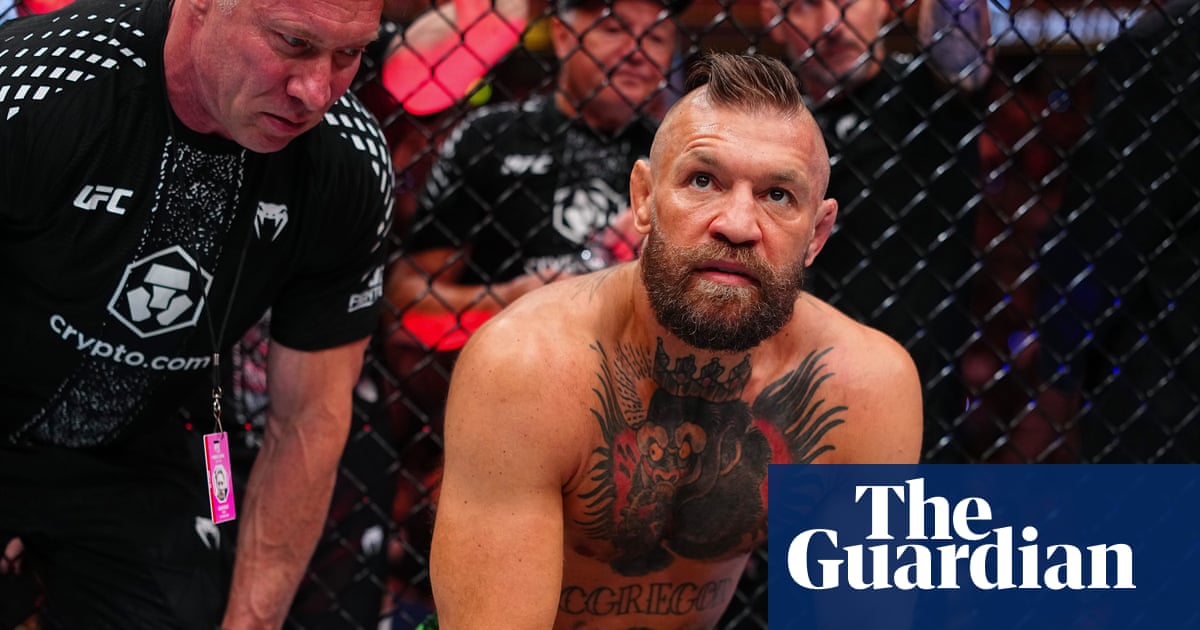
Bill Foley put a Stanley Cup in Las Vegas within five years of placing an expansion franchise there. Now he wants to do it again, and the league he is asking to join this time is the one whose economics he has spent the last decade studying from the outside.
According to reporting from the Vegas Golden Knights' own communications channels and the public history of NBA expansion, Foley has formally moved to acquire an expansion franchise in Las Vegas, with the play callibrated to a city that has already swallowed one bet and is ready for another. The bet is that the same playbook that turned a 2017 expansion fee and a building-share arrangement with MGM Resorts into a Western Conference championship can be ported to a sport whose media-rights math is the most contested in American professional leagues.
The hockey template
When Foley was awarded the Golden Knights in 2016, the prevailing wisdom in NHL boardrooms was that a desert expansion team would struggle to draw attention in a non-traditional market. Five seasons later, the Knights were Cup champions. The apparatus Foley built around that run is the part that matters for an NBA bid: a single ownership group controlling arena economics through T-Mobile Arena's operating partnership, a season-ticket base pre-sold years in advance, and a roster-construction model that front-loaded competitive viability rather than accepting the usual expansion purgatory.
The arena is the hinge. T-Mobile Arena, opened in 2016 as a joint venture between MGM Resorts and AEG, already hosts an NHL team and hosts roughly 150 events a year. Adding an NBA tenant to a building that has been a financial outperformer since opening would change the math on both the existing Knights lease and any new franchise's operating margin. Foley does not need to be told how that negotiation goes. He has been on the other side of it.
What changes for the NBA
The NBA's last expansion round, in 2004, added the Charlotte Bobcats at a $300 million entry fee. Twenty-two years later, the league's media-rights package is the gravitational centre of every franchise valuation, and the next expansion fee will be priced accordingly. Most reporting on Foley's interest has framed this as a celebrity-buyer story, a billionaire collecting a toy. The more durable question is what an NBA franchise in Las Vegas does to the league's existing national-television inventory and to the territorial carve-up that determines regional sports network rights.
A Vegas franchise would also have to settle the question Las Vegas already answered once: how a non-traditional host city absorbs the schedules, the all-star infrastructure, and the in-season tournament logistics that the league has spent the last three years layering on top of the regular season. The NBA's appetite for that experiment is not obvious. The league's appetite for a $5 billion-plus expansion cheque, paid into a media-rights environment where the next national deal is the single largest variable in team valuations, is much easier to read.
The Foley record
Foley's holding company, Foley Family Wines excepted, has spent the last decade consolidating sports and entertainment assets under one balance sheet. The Golden Knights sit alongside a minority stake in the Premier League's AFC Bournemouth and a controlling interest in the AHL's Henderson Silver Knights, the development affiliate that has fed the parent club's early-window competitiveness. The pattern across those holdings is consistent: buy or build, control the venue, and treat the team's competitive window as a financial-engineering problem with a sports overlay rather than the reverse.
The 2026 NBA Draft played out in New York this week, with the Dallas Mavericks adding Tobi Lawal and correspondent Cedric Coward moving through the green room in his media role. None of that is directly Foley's story, except as a reminder that the league's transactional clock keeps running while ownership questions simmer in the background. A Vegas expansion team, if approved, would not be a participant in next month's draft, but the framework within which the league values that draft's picks is precisely the one Foley is now trying to enter at a higher price point.
The Vegas assumption
The premise underlying Foley's play is that Las Vegas has stopped being a novelty market and become a permanent one. The Knights' playoff runs in 2018 and 2023 sold out T-Mobile Arena at rates the NHL had never recorded in a non-traditional city. The Super Bowl and the Formula One race have moved through the Strip without dislocation. The argument is that the city has now cleared the threshold where a second major-league tenant is not a stretch but a consolidation.
Whether the NBA's existing ownership group agrees is a different question. The league's board of governors has historically been cautious on expansion, partly because each new franchise dilutes the per-team media-rights slice and partly because every expansion since 2004 has come with a territorial carve-out that satisfies the incumbent nearest to the new city. Las Vegas sits in a relatively open territorial pocket. That is the structural opening Foley is buying his way into, with a five-year-old building, a working playbook, and a city that has already learned his name.
What to watch
The next signal is procedural, not sporting. The NBA's expansion committee has not been formally re-constituted for a 2026 or 2027 round, and the league's media-rights negotiations with its incumbent partners are the binding constraint on the price any expansion franchise will be asked to pay. Foley can move when those two clocks line up. Until then, the play is to keep the Las Vegas option visible, keep the arena economics warm, and wait for the league to need what he is already selling.
Sources: Wikipedia, Vegas Golden Knights; Wikipedia, T-Mobile Arena; Wikipedia, NBA expansion; NBALive (Telegram), 2026-06-25, draft coverage and Dallas Mavericks selections.
Desk note: Monexus framed this as a sports-business story about expansion economics and arena leverage, not as a celebrity-ownership piece. The wire line has focused on Foley the personality; the more durable question is what an NBA franchise in Vegas would do to the league's existing media-rights math.