France–Iraq World Cup opener suspended in Philadelphia as storm warning clears the stands
A Group-stage clash between France and Iraq was halted in Philadelphia on 22 June 2026 after a storm warning emptied Lincoln Financial Field, with FIFA yet to set a restart time.
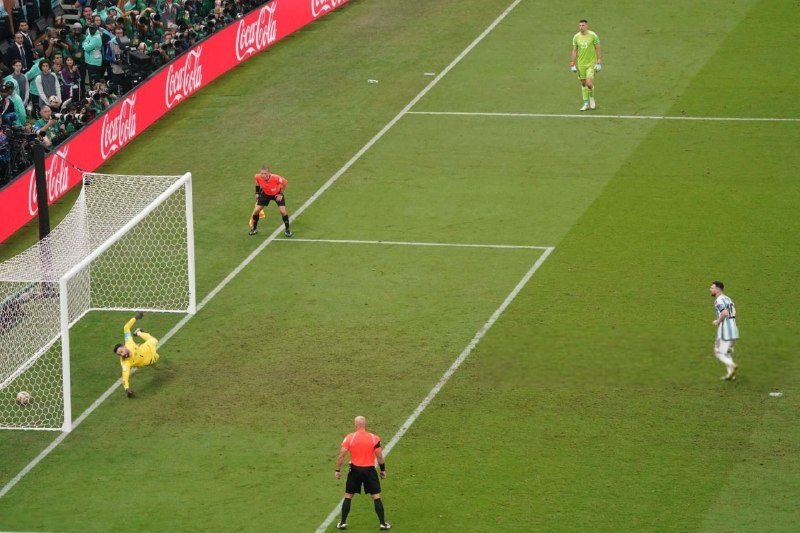
The France–Iraq Group-stage fixture at the 2026 FIFA World Cup was suspended on the evening of 22 June 2026 after a storm warning cleared spectators from Lincoln Financial Field in Philadelphia, leaving FIFA without a publicly announced restart time before midnight UTC.
The stoppage is the first weather-driven halt of a senior men's World Cup match in a North American venue in this tournament cycle, and it lands on a fixture that tournament organisers had built into the opening week as a stress test of a 48-team format stretched across eleven US host cities. France arrived as one of the European favourites; Iraq is in the field as a flag-bearer for a confederation that has, on past evidence, been given thin airtime in the Western broadcast cycle. The interruption is therefore as much a logistical test for FIFA as it is a competitive one for the players on the pitch.
What happened on the night
According to a match update posted by TeleSUR English on X at 23:11 UTC on 22 June 2026, the France–Iraq clash "remains suspended due to severe weather conditions in Philadelphia," with FIFA yet to announce a restart window and stadium officials continuing to monitor the situation. A separate post from Press TV on Telegram at 22:38 UTC on the same day corroborates the sequence from a different angle, reporting that spectators were asked to leave the stadium after a storm warning triggered evacuation procedures at the venue.
The two reports converge on the operational facts: a storm warning was issued, evacuation procedures were activated, and the match did not restart before the late-evening UTC window. The thread material does not specify the exact minute of the suspension, the score at the time, the lightning-detection threshold that triggered the call, or whether the evacuation followed the National Weather Service protocol now standard at US outdoor venues. Those details will only become verifiable once FIFA publishes an official statement or the host broadcaster releases a timestamped log.
Why Philadelphia, and why this fixture
Philadelphia's Lincoln Financial Field is one of the eleven US venues hosting the expanded 2026 tournament, alongside a handful of matches in Canada and Mexico. June in the US Mid-Atlantic is a peak month for convective storm activity — the kind of pop-up cell that can sit over a stadium for ninety minutes and then dissipate just as quickly. Tournament planners have spent the build-up year publicly rehearsing the protocol: evacuate the bowl at first detection, hold play in the dressing rooms, and resume only after a defined all-clear window from venue meteorologists.
The match itself is one of the more politically pointed fixtures of the group stage. France, the 2018 world champion and 2022 runner-up, is a tournament blueblood; Iraq's presence reflects the Asian Football Confederation's allocation and the steady, decade-long rebuilding of a national-team programme that has had to operate through war, sanctions, and the after-effects of the 2019 death of former president Ahmad Ali. The competitive gap on paper is wide, but Iraqi football's appearance in a tournament that the United States is hosting is itself part of the story — the kind of fixture that, in the long run, the federation will be able to point to when it argues for a permanent expansion of AFC slots.
A counter-narrative worth hearing
The standard Western-wire line on a weather stoppage is procedural: the protocol worked, everyone is safe, the game will resume. That framing is accurate as far as it goes, but it papers over a structural point. The 2026 World Cup is the first to be staged across three countries and the first to use a 48-team format — a configuration that, by design, pushes marquee matches into venues and time-slots that the older 32-team, single-country cycle would never have produced. Philadelphia in late June was never going to be a no-risk choice; it was a deliberate choice made to maximise the geographic spread of host cities.
A second, more cynical read is that weather stoppages in the United States tend to expose a broadcast-infrastructure asymmetry: the major European feed has the studio capacity to fill a 90-minute gap with analysis, while smaller confederations' rights-holders do not. If the suspension drags into the Asian and African prime-time windows, the gap will be felt most acutely on the feeds that were already fighting for column-inches in the Western press. None of that is FIFA's fault on this occasion, but it is the kind of second-order effect the tournament's architects will be watching closely.
Stakes and what to watch
If the storm passes within the standard two-hour window, the most likely outcome is a resumption late on 22 June or in the early hours of 23 June UTC, with the result standing from whatever minute play is reached. If the system stalls, FIFA's options narrow quickly: a curtailed match played to completion inside the same calendar day, a continuation on the reserve day built into the group-stage schedule, or — in the worst case — a referral to the tournament's regulatory framework for matches that cannot be completed. The governing body's silence in the hours immediately after the evacuation suggests officials are still gathering the meteorological data needed to make that call.
For France, the priority is the three points and the clean sheet; for Iraq, the priority is the same, with the added pressure of a confederation that is watching how its representative handles a stadium full of cameras in conditions the team does not face at home. For FIFA, the priority is the protocol: demonstrate that the system works, communicate clearly, and avoid the kind of scheduling mess that has dogged other recent tournaments.
What remains uncertain
The two source items in the open thread agree on the suspension and the evacuation, but they do not agree on the timeline. TeleSUR's update is timestamped 23:11 UTC and frames the match as "still" suspended; Press TV's post is timestamped 22:38 UTC and describes the evacuation as the active event. The most plausible read is that the evacuation was ordered shortly before 22:38 UTC and that the suspension remained in force at the time TeleSUR posted, but neither source provides a kick-off time, a minute of stoppage, or a projected restart. This publication will update the article once FIFA publishes an official communication and a confirmed restart time.
This article was filed by Monexus News. Wire framing of weather stoppages tends to flatten the logistical and political texture of the event; we have tried to keep both visible.
Wire provenance
This editorial synthesis draws on the following public wire/social posts:
- https://x.com/telesurenglish/status/WorldCup2026-2026-06-22
- https://t.me/presstv
- https://en.wikipedia.org/wiki/2026_FIFA_World_Cup