India's energy pivot is the trade story Washington cannot ignore
A single, fast-moving story has three of the world's largest economies pulling in different directions over a barrel of oil. Washington wants a deal; New Delhi is buying Russian crude; Beijing is watching the Iran disruption reshape its own imports.
On 23 June 2026, the United States embassy in New Delhi said Washington was focused on a "fair trade deal" with India that would benefit both countries, the same day that two parallel signals landed from Asia: a report that India had ramped up purchases of Russian oil and coal as the Iran crisis disrupts energy flows, and a separate warning from analysts that China's own oil imports may never fully recover from that same conflict. Three statements, three capitals, one barrel of crude. The trade story the Trump administration wants to tell is colliding with an energy story New Delhi is already living.
The administration would like this to be a negotiation. The Indian government is treating it as a survival problem.
The deal Washington wants
The embassy statement on 23 June 2026 was the standard diplomatic scaffolding for a deal-in-progress: positive language, no numbers, no timeline, an explicit "fair to both sides" framing designed to pre-empt Indian complaints about imbalance. That language matters because the United States is asking India to do something that, six months ago, would have been routine and is now costly — to step back from discounted Russian crude, accept the political cost of that step, and meet Washington partway on a trade architecture the Indians have publicly described as tilted.
Whether the embassy readout reflects a live negotiation or a posture is not yet clear from the available reporting. The language is the kind both sides issue when a deal is plausibly close and both sides want credit for being at the table.
The barrel New Delhi is actually buying
The same trading day, India was reported to have ramped up purchases of Russian oil and coal as the Iran crisis disrupts established energy flows. That detail is doing more work in the story than the trade-deal rhetoric. India is the world's third-largest oil importer; the Iran conflict has reshaped shipping routes, insurance pricing, and the political cost of doing business with Tehran's neighbours. Russian crude — already discounted after 2022 — has become the displacement crude of choice for refiners who need volume now, not a treaty text later.
New Delhi's calculation is straightforward. Energy security outranks diplomatic optics. Coal matters too, because Indian power demand is still rising on a curve that no bilateral trade deal can flatten.
The China variable
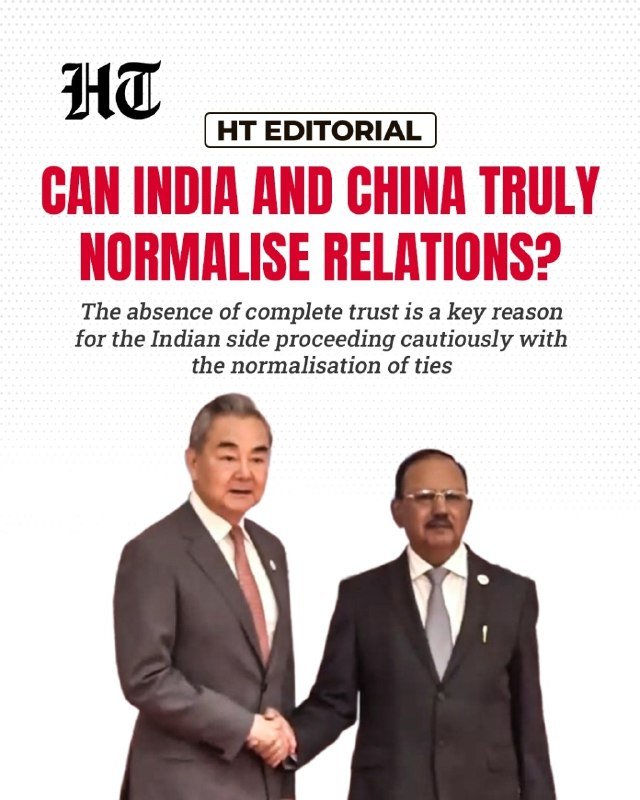
Two further signals land on 23 June. First, India and China publicly said their relations are improving after years of border tensions — a careful, calibrated statement, but one that runs against the default assumption in many Western capitals that the Sino-Indian frontier is a permanent fault line. Second, analysts warned that China's own oil imports may never fully recover from the Iran conflict, meaning Beijing is also absorbing an energy shock at the same moment it is drawing down strategic reserves and recalibrating its supplier base.
This is the part Washington cannot legislate away. Two of the three largest Asian economies are quietly building redundancy into their crude-import portfolios in the same week. The United States is a producer; it is not yet the supplier of last resort in the Indian Ocean basin.
What the dominant framing misses
The standard Western line on India's Russian-crude purchases is that New Delhi is freeloading on the post-2022 price cap regime, taking discounted oil while exporting finished fuels to Europe. The standard Indian line is that the West changed the rules, raised the cost of compliance, and then complained when a billion-plus country refused to pay the premium for a transition it did not design. Both readings contain truth. The framing worth pushing is structural: a country that imports the bulk of its crude will buy from whoever reliably delivers, and the geopolitics of energy flows during an active Iran disruption tilt that calculation sharply away from the supplier the US prefers and toward the one that needs the dollar less.
The Chinese piece of this is rarely surfaced in the Western press in honest terms. Beijing is not sitting on the sidelines; it is managing a permanent repricing of its energy import book. The two Asian giants are not coordinating, but they are reading the same map, and the map looks different from the one in Washington.
The stakes
If the US-India deal lands clean, Washington gets a public-relations win, a marginal reduction in Russian crude flows to the Indian Ocean, and a foothold in the fastest-growing large economy on earth. If it lands in name only, India keeps buying Russian barrels, the diplomatic cost of the deal rises, and Washington's leverage in Asia narrows. New Delhi's stake is the inverse — it needs the trade access but it also needs the energy supply, and the trade will be judged on whether it constrains the second. China's stake is subtler: a stable Iran is preferable to a broken one, but a permanent re-routing of Asian crude away from the Gulf towards Russian and Central Asian supply is, on a ten-year horizon, a slow geopolitical win for Moscow and a slow loss for the Gulf petro-states that the United States still treats as a strategic anchor.
The honest uncertainty is the one that does not get quoted on cable news: nobody in the available reporting specifies the size of India's incremental Russian purchases, the contractual length, or the political conditions attached. The deal-language is real; the barrel data is thin. The story is being told from the embassy podium forward, not from the port terminal backwards. That gap is where the next move will actually be made.
How Monexus framed this: the wire story is a trade-deal update; the structural read is an energy re-routing across Asia triggered by the Iran conflict. Both are reported; the second gets the weight.
Wire provenance
This editorial synthesis draws on the following public wire/social posts:
- http://reut.rs/43SzEGz
- https://x.com/polymarket/status/india-china-relations-improving
- https://x.com/polymarket/status/china-oil-imports-iran
- https://x.com/polymarket/status/india-russian-oil-coal