Electrification and Blockade Bets: How an Iran Energy Shock Is Reshaping the 2026 World Cup Circuit
An IEA warning about energy-driven electrification, a 24% Polymarket line on a fresh US blockade, and a polite Iranian note in a Los Angeles locker room — the threads of a single story converge on the same question: how durable is the assumption that Gulf hydrocarbons still anchor the global order?
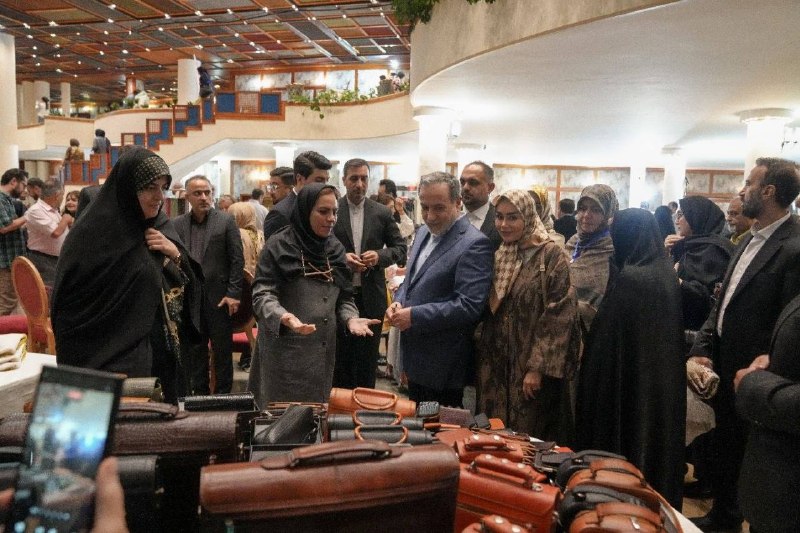
On the afternoon of 23 June 2026, Iran's national football team walked off the pitch at SoFi Stadium in Los Angeles with a goalless draw against Belgium and an unusually soft gesture in the away dressing room. According to Iranian state broadcaster PressTV, the squad left a handwritten message thanking the city for its hospitality — a small, courteous scene, broadcast on Telegram at 16:50 UTC, that says almost nothing about football and quite a lot about the choreography of public diplomacy in a tournament staged across three North American host cities. Three hours earlier, at 13:37 UTC, the US-focused markets account Unusual Whales had flagged a far less decorative message from the International Energy Agency: the Iran-linked energy crisis, the IEA warned, will accelerate a global push toward electrification as governments try to harden domestic energy security against supply shocks. Twenty minutes after the dressing-room note went out, a prediction market tracked by Polymarket put the odds of a new US blockade on Iran at 24%.
Read those three signals together and a single picture emerges. A World Cup that began in June as a sporting carnival is being staged inside an energy-security emergency; the same week that the IEA is warning governments to electrify faster, prediction markets are pricing a non-trivial probability of a new naval blockade of the country whose hydrocarbons sit at the centre of the supply calculus. The connective tissue is not sports. It is the unspoken assumption, built into nearly every Western policy document of the past forty years, that Gulf energy will remain reliably available to industrial economies — and the slow-motion discovery, on both sides of the Pacific, that the assumption is no longer load-bearing.
A draw, a dressing-room note, and the limits of the sporting frame
PressTV's reporting on the locker-room message was, in form, a sports bulletin. Iran's team had drawn 0–0 with Belgium in a Group-stage fixture in Los Angeles; the squad left a thank-you note for the city; PressTV relayed the gesture on its verified Telegram channel at 16:50 UTC. None of that is geopolitically unusual on its face — teams leave notes after matches at most major tournaments. What made the bulletin worth parsing is what the gesture does not contain. There is no political statement, no reference to the confrontation between Tehran and Washington that has shaped the build-up to the tournament, no nod to the Strait of Hormuz or to the IEA warning circulating on the same day. In an environment where every Iranian public-facing communication is scrutinised for subtext, restraint is itself the message.
The choice of venue matters. Los Angeles is hosting matches across the group stage at SoFi Stadium, a privately financed 70,000-seat venue in Inglewood that is itself a monument to the kind of capital-intensive infrastructure the IEA now argues every industrialised economy will need more of. The same metro area that built SoFi has spent the past decade trying to harden its grid against wildfires and heat-dome events; the same state legislature has spent the past year debating whether to keep the Diablo Canyon nuclear plant online past its scheduled retirement. An Iranian football team leaving a polite note in that stadium is a footnote. An Iranian football team leaving a polite note in a city whose governor is simultaneously being briefed on electrification pathways is something closer to a receipt — proof that the routine of international sport still functions, even when the underlying energy economy does not.
The IEA warning, in plain terms
The Unusual Whales post at 13:37 UTC, citing the International Energy Agency, is the more substantive of the three threads. The IEA's argument, paraphrased: the recurring crises around Iranian exports and shipping through the Strait of Hormuz have exposed how thinly industrialised economies are buffered against a sudden loss of Gulf hydrocarbons, and the policy response is no longer a one-off emergency draw-down but a structural pivot toward electrification. Countries are being advised — and, in several cases, are already moving — to electrify transport, heating, and industrial processes so that the marginal unit of energy demand can be met by a domestic mix of nuclear, hydro, wind, solar, and (where the politics allow) gas, rather than by seaborne crude.
The IEA is not a fringe institution. It is the energy-policy arm of the OECD, headquartered in Paris, and its warnings carry weight inside finance ministries, central banks, and grid operators. The framing matters because it treats the Iran-related energy crisis not as a regional disturbance to be contained by a sanctions regime or a naval escort, but as a permanent feature of the post-2025 environment. The implied message to governments is that hedging against another Hormuz shock is now baseline policy, and that the cost of building out generation, transmission, and demand-side electrification — typically measured in trillions of dollars and two-to-three decade build-outs — is the cost of taking the Iran risk off the table. This is the language of industrial policy, not of diplomacy.
For oil-and-gas producers, the IEA's frame is uncomfortable. If the agency is right, then the long-run marginal demand for seaborne hydrocarbons is lower than the consensus price curves in New York and London still assume, and the political leverage that flows from being a swing supplier erodes faster than the producers' budgets can adjust. For Gulf states, the IEA's warning validates the diversification strategies they have been pursuing for a decade; for Iran, it suggests that the Western pressure campaign on its exports, however painful in the short run, is accelerating the very structural shift that erodes the strategic value of those exports in the long run.
What a 24% blockade market is actually pricing
The Polymarket line is the third thread, and the easiest to misread. A 24% implied probability that the United States announces a new blockade on Iran by the contract's expiry is not a forecast — prediction-market prices are noisy, illiquid, and heavily sensitive to news flow. But it is a meaningful signal about how traders are pricing the tail. Six months ago, a comparable contract would likely have cleared in the single digits; today, with the IEA publicly treating Iranian energy as a structural risk and with multiple regional flashpoints still open, the market is willing to pay real money for the chance that Washington escalates from sanctions enforcement to physical interdiction.
A blockade, in this context, would mean US Navy assets enforcing a cordon around Iranian ports or around the Strait of Hormuz itself — an act that, in international-law terms, would sit somewhere between a maritime exclusion zone and an act of war. The economic consequences would extend well beyond Iran: roughly a fifth of globally traded oil moves through Hormuz, and even a partial closure would force a price spike that would land hardest on the same Asian economies that have spent the past five years deepening their dependency on Gulf crude. China and India, in particular, have built their industrial strategies around affordable Iranian, Saudi, and Emirati barrels; a blockade would force both to draw down strategic reserves, activate emergency demand-reduction, and accelerate the electrification programmes the IEA is now endorsing.
The Polymarket price also captures something the official Western line rarely does: the possibility that escalation is no longer contingent on Iranian behaviour. Previous sanctions cycles followed a recognisable rhythm — provocation, condemnation, tightening. A blockade bet sitting at 24% during a World Cup week suggests traders see escalation as a live option in its own right, decoupled from any single Iranian decision and increasingly tied to the domestic political calendar of the country imposing it.
Counter-reads, and why they don't quite hold
There is a counter-read, and it deserves airtime. The first is that the IEA warning is exaggerated — that the Iran-related energy crisis, while real for specific tanker routes and specific insurers, has not materially changed the underlying supply calculus, and that the push toward electrification is a policy preference dressed up as an inevitability. There is genuine evidence for scepticism: European gas demand has fallen faster than the IEA's own pre-2022 models predicted, but the fall is partly the result of demand destruction in heavy industry rather than a durable structural shift. A serious reading of the IEA's note would acknowledge that electrification is happening, but that the speed of substitution is still uncertain, and that a return of Russian pipeline gas to Europe, or a sustained price ceiling on Gulf crude, would slow the transition materially.
The second counter-read is that the Polymarket line reflects liquidity rather than belief. Prediction markets on geopolitics are notoriously thin, and a handful of large bets can move the implied probability by ten percentage points in a day. The 24% figure should be read as a sentiment indicator among a small population of professional and semi-professional traders, not as a consensus forecast. By that standard, it tells us that the blockade scenario is being actively considered by people who think about it for a living, but it does not tell us the US government has moved closer to a decision.
The third counter-read is that the PressTV note is precisely what it appears to be — a polite gesture from a football team, no more. That reading is plausible, and PressTV's editorial incentives are real: the channel has every reason to project an image of a confident, normal, diplomatically functional Iranian state during a tournament that is being watched by a global audience. None of that changes the fact that the three signals sit on the same day, in the same information environment, and the cumulative weight of their coincidence is higher than any of them in isolation.
The dominant reading — that the IEA warning, the Polymarket price, and the PressTV note are not three separate stories but three fragments of one — holds because the underlying economic logic is tight. If you believe the IEA, you should also believe that the political value of Iranian hydrocarbons is depreciating; if you believe the Polymarket traders, you should also believe that some non-trivial probability of a blockade is being priced into the cost of carrying Iranian crude; if you watch PressTV, you should notice that the official Iranian communications strategy is built around the assumption that the country will still be playing football, and receiving foreign dignitaries, in a world where its energy exports are increasingly contested. The convergence is not proof of causation, but it is a useful map of how the three conversations — energy policy, geopolitical risk pricing, and public diplomacy — have begun to speak to each other in 2026.
Stakes, and what to watch next
The stakes of the underlying shift are concrete. For oil-importing economies in Asia, the IEA's electrification warning is, in effect, a recommendation to spend the next two decades rebuilding their industrial base around electrons rather than molecules — a project whose cost will be measured in trillions of dollars and whose payoff is conditional on the durability of the policy commitment. For Gulf producers, the warning is a slow-moving signal to accelerate the diversification plans already underway in Riyadh, Abu Dhabi, and Doha; the political risk premium on a barrel of crude is now structurally higher than it was in 2024, and the rents that fund those diversification plans are now structurally less reliable. For Iran, the warning is the most uncomfortable of all: the country's leverage is being eroded not by a single sanctions package but by a global capital-allocation shift that no party to the JCPOA negotiations foresaw.
The next markers to watch are the ones the market has not yet priced. A formal IEA special report on Iran-specific supply disruption scenarios, rather than the headline-level warning now circulating, would harden the policy signal; a blockade-related operational order from the US Navy's Fifth Fleet, even a routine one, would move the Polymarket line by more than ten points; a public Iranian offer to underwrite insurance for tankers transiting Hormuz, or to negotiate a Gulf-wide shipping security arrangement, would test whether Tehran reads the IEA warning the same way Riyadh does. The football, of course, will continue — there are group-stage matches still to be played, and the locker-room at SoFi will be used again on Wednesday. The energy story underneath it has only just begun.
Desk note: Monexus frames this as a single signal cluster — IEA electrification warning, Polymarket blockade pricing, PressTV public-diplomacy note — rather than three separate stories. Where mainstream wires treated the PressTV item as a sports bulletin and the Polymarket line as a markets curiosity, we read both inside the IEA's structural framing.
Wire provenance
This editorial synthesis draws on the following public wire/social posts:
- https://t.me/presstv
- https://t.me/presstv/0
- https://x.com/unusual_whales/status/iran-energy
- https://t.me/presstv/s/2026-06-23