Tehran signals it will keep the Strait of Hormuz under Iranian management after any US deal
Iran's chief negotiator says the chokepoint will be 'managed under Iranian arrangements,' signalling that any postwar settlement will leave Tehran as the regional gatekeeper of one-fifth of global oil flows.
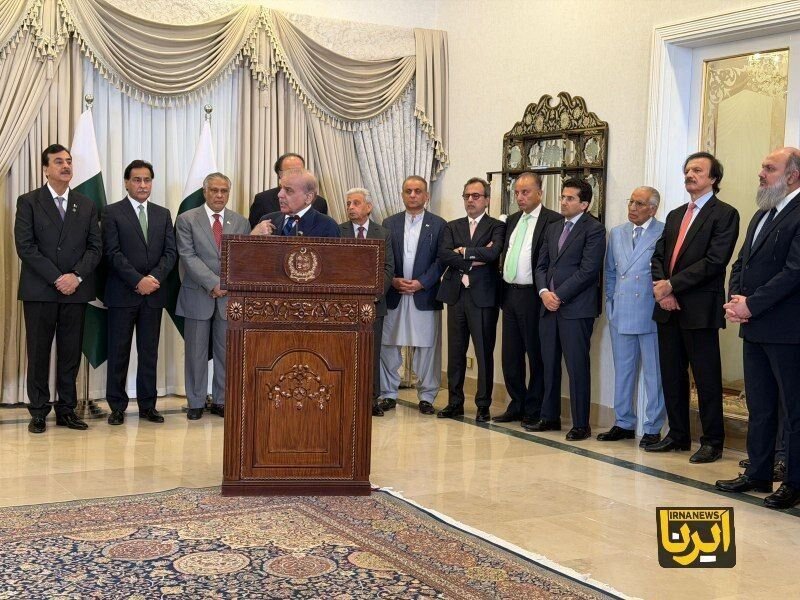
Iran's chief negotiator told domestic media on Tuesday, 23 June 2026, that the Strait of Hormuz "can never return to what it was before the war" and will in future be "managed under Iranian arrangements" — the clearest signal yet from Tehran that any permanent settlement with Washington will leave the Islamic Republic as the regional gatekeeper of the waterway through which roughly a fifth of the world's seaborne oil normally passes. The remarks by Mohammad Bagher Ghalibaf, reported by the Hindustan Times wire at 04:33 UTC, were echoed within hours by the BRICS-aligned news channel at 02:33 UTC and by France 24's live blog at 02:11 UTC.
What is now being negotiated, in other words, is not the terms on which Iran gives the strait back, but the terms on which Iran keeps it. That distinction reshapes the strategic geography of the Gulf.
What Ghalibaf actually said
Ghalibaf framed the postwar strait as a permanently altered asset. The phrase "never return to what it was before the war" was paired with an explicit claim of administrative control: the waterway will be "managed under Iranian arrangements" going forward. The BRICS-channel summary, posted at 02:33 UTC, sharpened the point into a single sentence — that Iran will maintain control of the Strait of Hormuz in any permanent deal with the United States. France 24's English-language live blog rendered the same line as the headline of its Middle East update at 02:11 UTC.
The three wire summaries, drawn from the same set of Tehran-side comments, point in one direction: the prewar regime of deconfliction — under which the US Fifth Fleet, the Iranian Revolutionary Guard Corps Navy, and Omani and Emirati coastguards operated alongside one another in a tacit, accident-prone balance — is finished. Tehran is now publicly bidding to replace it.
How this fits the wider US-Iran track
Iran's negotiators have spent the past several weeks alternating between conciliatory language aimed at Washington and maximalist language aimed at domestic audiences. The Ghalibaf remarks sit at the harder end of that spectrum. By speaking through the chief negotiator rather than a military commander, the message is calibrated for a foreign-policy readership: this is the price of a deal, not a threat of a war.
For Tehran, the strategic logic is straightforward. The strait is the single most valuable piece of Iranian real estate in peacetime and the single most potent coercive instrument in wartime. Ceding its management to a multinational arrangement — the kind of framework floated in some European and Gulf Arab capitals over the past year — would mean trading a permanent strategic asset for a one-time sanctions concession. Iranian commentary, as filtered through the BRICS-channel wire, treats any such trade as structurally unacceptable.
The counter-narrative, and why it probably does not hold
Western analysts, including several quoted in Gulf-based outlets over the past quarter, have argued that Iran cannot credibly administer the strait unilaterally because it cannot unilaterally defend it. Roughly a third of crude exported through Hormuz originates in Saudi Arabia, the UAE, Kuwait, Iraq and Qatar. Any Iranian attempt to impose transit fees, vetting regimes, or routing restrictions would be met by a coalition response — and, in extremis, by US naval power that does not depend on Iranian permission to enter the Gulf of Oman.
The counter-argument from Tehran, visible in the Ghalibaf framing, is that the postwar environment has changed the cost calculus. The US Navy's freedom of operation in the western Gulf is no longer treated, in Iranian doctrine, as a given; the practical question is no longer whether Iran can close the strait but whether the United States is willing to bear the political and economic cost of reopening it by force. On that question, the Iranian reading of recent months — of restrained Western responses to Iranian actions in and around the waterway — points one way.
What is at stake
If the Ghalibaf framing becomes the operating basis of a final deal, three things follow.
First, the Gulf energy market acquires an Iranian surcharge in all but name. Even a lightly administered Iranian transit regime gives Tehran de facto leverage over the pricing window for Brent and for Asian LNG cargoes that originate in Qatar and the UAE. Second, the small Gulf monarchies lose the quiet insurance policy they have historically drawn from the US Fifth Fleet's presence in Bahrain; that insurance is what the proposed Saudi-Israeli normalisation track, in its various drafts, was partly designed to replace. Third, China and India — the two largest customers of Gulf crude and the two largest buyers of Iranian oil under sanctions — gain a negotiating partner with a stronger hand on the waterway itself, which complicates Western secondary-sanctions enforcement.
For Tehran, the upside is the conversion of a tactical asset into a structural one: a permanent claim on the global energy economy that survives any change of government in Washington. For Washington, the upside is the avoidance of a renewal of open warfare over the strait; the cost is the quiet acceptance of an Iranian-administered chokepoint that no postwar American president will want to defend publicly.
What remains unresolved
The three wire items do not specify what "managed under Iranian arrangements" means in operational terms — whether Tehran is proposing transit fees, vessel vetting, an expanded IRGC-Navy role, or a multilateral framework that merely gives Iran the chair. The sources do not say whether Ghalibaf's language was cleared with the office of the Supreme Leader, nor whether the position has been formally tabled to the US negotiating team in the current round of talks. Until those questions are answered on the record, the line between a maximalist negotiating posture and a genuine policy red line cannot be drawn with confidence.
Desk note: Monexus is treating the three wire summaries as convergent reporting on a single set of Tehran-side remarks, and is flagging the operational content of "Iranian arrangements" as the key unresolved question for the next reporting cycle.
Wire provenance
This editorial synthesis draws on the following public wire/social posts:
- https://t.me/hindustantimes
- https://t.me/bricsnews
- https://t.me/france24_en
Follow the event.
These dated source records provide context. They do not retrospectively verify this archive article.
Separate what the nuclear watchdog reported from what it could not determine after the June 2025 strikes.