Israel's Lebanon Strikes and the Fragile Iran–US Understanding
Israeli strikes on southern Lebanon have killed dozens and put the Iran–US understanding on notice — and Tehran is signalling, in unusually direct terms, what it considers out of bounds.
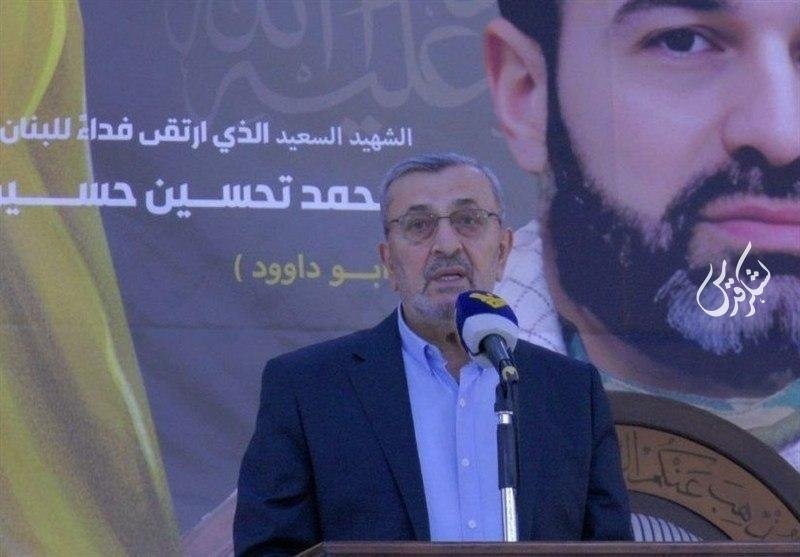
On 23 June 2026, Israeli strikes on southern Lebanon killed at least 32 people, according to a wire item carried at 16:20 UTC by TeleSUR English's #FromTheSouth News Bits, threatening to derail the parallel track of US–Iran diplomacy that had, just hours earlier, produced a technical-level meeting in Switzerland. The proximity of the two events — the meeting in one European capital, the bombardments on a Mediterranean border — is the story. It is also, increasingly, the only story that matters about the Middle East in 2026.
What the public is watching is a stress test of a tacit understanding between Washington and Tehran: restraint in exchange for a negotiating channel. The strain is not abstract. The Iranian ambassador to the United Nations in Geneva stated on 23 June 2026 that, should Israel attack Lebanon and Hezbollah in any format that violates the memorandum of understanding, Iran will respond. The warning, posted in English on social media, was unusually explicit. Diplomacy of this kind is normally conducted in the passive voice; this one was in the first person plural.
What just happened
TeleSUR's midday wire reported that technical-level delegations from Iran and the United States convened in Switzerland, with the Iranian side pressing Washington to honour its commitments under whatever arrangement the two governments have reached. The meeting is the operational layer beneath the political talks: the place where sanctions sequencing, sanctions relief, escrow mechanics, and verification protocols are negotiated when principals cannot yet agree on the headline. The fact that it is happening at all is itself a signal — it indicates that both sides continue to see value in keeping the channel open.
Hours later, the same wire reported that Israeli strikes on southern Lebanon had killed at least 32 people. The two items, taken together, suggest a coordination problem more than a breakdown: a diplomatic track moving in one direction, a security track moving in another, and no obvious mechanism to align them. The casualty figure, drawn from TeleSUR's bulletin, is the floor of what is publicly attested; cross-checking against Lebanese and Israeli sources will be required to firm it up.
The counter-narrative
The Western wire line on these strikes is, broadly, that Israel is targeting Hezbollah infrastructure and that the operations are defensive. Israeli officials have repeatedly framed the campaign in southern Lebanon as a continuation of operations that began in 2023–2024, aimed at degrading cross-border capabilities. The Iranian framing, as articulated by the ambassador in Geneva, is that any strike on Lebanon — and on Hezbollah's presence there — constitutes a violation of the understanding with Washington, and therefore triggers a right of response.
Both framings are internally coherent. The dispute is about scope: whether the Iran–US channel covers the Israel–Lebanon frontier at all, or only the Iran–US bilateral file (nuclear, sanctions, regional de-escalation narrowly defined). TeleSUR, a Latin American state-aligned outlet, has an editorial interest in emphasising the Iranian framing; Israeli and many Western outlets have an editorial interest in keeping the two files separate. A reader weighing the two should note that the telegraphed Iranian position has been remarkably consistent in recent weeks, while the Israeli operational tempo has not visibly slowed.
The structural frame
The pattern here is familiar to anyone who has watched the region for the last three years: a US–Iran process generates headlines, regional actors on one or both sides act in ways that test the perimeter of that process, and the process either absorbs the pressure or breaks. The informal rules of the game — what each side is allowed to do without triggering the other — are written in action, not text. When a public ambassador in Geneva spells out a red line in English, that is a signal that the rules are being contested at the working level, not a prelude to war.
What makes the present moment unusual is the simultaneity: the technical meeting and the strikes occurred within hours of each other, on the same day, and were reported by the same wire. That is not coincidence. It is a posture. Both sides are demonstrating to their domestic audiences — and to each other — that they are not the party stepping back.
Stakes
If the trajectory continues, the most likely outcome is a slow erosion rather than a rupture. The technical talks produce partial deliverables; Israeli operations continue at a calibrated tempo; Iran calibrates its proxies; the casualty count in Lebanon accumulates. The risk is that calibration fails — that an Israeli strike hits a target Iran cannot ignore, or that an Iranian response hits a target Israel cannot absorb — and the tacit understanding becomes a casualty of its own perimeter dispute. The down-stream effects of that failure would not stay in Lebanon. Energy markets, the Hormuz transit, and the Gulf state posture would all reprice within hours.
What remains uncertain, and what the public sources do not yet settle, is whether the Swiss meeting produced anything concrete, whether the 32-figure will hold under independent verification, and whether the ambassador's warning reflects a coordinated Iranian position or an individual envoy's reading of his instructions. The next 72 hours of reporting will tell. For now, the cleanest read is the simplest one: a fragile channel is being asked to absorb events it was not designed to contain, and the actors on all sides know it.
Wire provenance
This editorial synthesis draws on the following public wire/social posts:
- https://x.com/telesurenglish/status/2069412631333556224
- https://x.com/telesurenglish/status/2069411192410357760
- https://x.com/unusual_whales/status/20694080000000000
Follow the event.
These dated source records provide context. They do not retrospectively verify this archive article.
Separate what the nuclear watchdog reported from what it could not determine after the June 2025 strikes.