A Lull, Then Blood: How Southern Lebanon Reopened on the Day Iran Refused to Move
Two reported Hezbollah operatives were killed in southern Lebanon on 23 June, hours after Iran publicly warned that any Israeli strike against the Iran-backed group would breach the understanding with Washington.
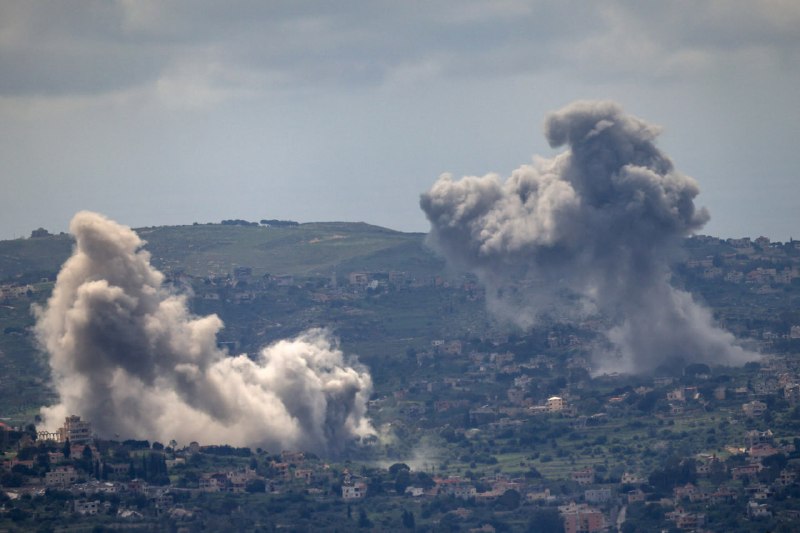
The shooting in southern Lebanon on the afternoon of 23 June 2026 lasted only a few minutes, according to Lebanese authorities, but it reopened a fault line that two governments on opposite sides of the Mediterranean had spent weeks trying to keep sealed. The Israeli military said its troops killed two men it identified as Hezbollah operatives near the border villages. Hezbollah, the Iran-backed Shia movement that has held a paramilitary presence along the frontier since well before the present war, called the incident a ceasefire violation. By the early evening in Beirut, the Iranian ambassador to the United Nations in Geneva had issued a one-line warning, broadcast by an X account tracking Iranian diplomacy: if Israel violated the memorandum of understanding "in any format, including by attacking Lebanon and Hezbollah in Lebanon," Iran would respond.
What made the day's violence more than a routine border incident was the diplomatic choreography running underneath it. Hours earlier, Iran's foreign ministry told reporters in Geneva that Tehran had made "no new commitments" on nuclear inspections following talks with United States Vice-President JD Vance, who had said on departure that inspectors would be invited back to Iranian facilities. The two streams — a kinetic incident on the Lebanon border and a stand-off over who gets to look inside Iranian enrichment halls — were connected by an unwritten contract. That contract is now visibly fraying.
This publication's reading of the day's reporting is straightforward. The November 2025 arrangement between Washington and Tehran, which paused the worst of the Israeli–Iranian exchange in return for limited monitoring access, was sold to all parties as a holding pattern rather than a settlement. The pattern is failing on the side it was always most likely to fail: the porous, factionalised border between Israel and Lebanon, where neither the Israeli army nor Hezbollah's residual units answer directly to the diplomats in Geneva or Vienna. The killing of two men in the south is small in military terms. The Iranian ambassador's warning, and the foreign ministry's flat denial of new commitments, are large in political terms.
What happened on the ground
The BBC's world desk, citing Lebanese authorities, reported that Israeli troops killed two men in south Lebanon during what it called "a lull in fighting," with the Israeli military identifying both as Hezbollah operatives. Hezbollah, through channels loyal to the movement, accused Israel of a ceasefire violation. The BBC's framing — a lull, then a killing, then competing claims — captures the structural problem. There is no single document that both sides would sign as defining the current arrangement; there is only an accumulation of exchanges, mediated by the United States and France, that each side can interpret to suit the day's tactical needs.
The geography matters. The southern Lebanese frontier, a strip running from the Mediterranean coast east toward the Golan, has been the most kinetic interface between Israel and an Iranian-aligned militia for two decades. After the September 2024 Israeli campaign against Hezbollah leadership and infrastructure, and the November 2025 ceasefire, the area was supposed to fall quiet. The frontier villages — places whose names are bylines in themselves — sit on the Israeli side of the Litani line as Hezbollah and the Lebanese state understand it, and on the Lebanese side as the IDF understands it. When troops move and shots are fired in that strip, the question is never only about the two men on the ground. It is about which capital gets to claim the rules were honoured and which gets to claim they were broken.
The diplomatic parallel track
While the shooting was being reported, the second front of the day was opening in Geneva. The BBC also reported that Iran's foreign ministry had said Tehran made "no new commitments" on nuclear inspections after talks with Vice-President Vance. The American side had signalled, on departure, that inspectors would be invited back. The mismatch is the story. Either the two governments are describing different conversations, or one of them is positioning for a domestic audience that has grown sceptical of concessions.
The Iranian ambassador's Geneva statement, captured by the X account @unusual_whales on the afternoon of 23 June, is the connective tissue. By linking "any format" of Israeli action against Hezbollah inside Lebanon to a breach of the memorandum of understanding, Iran is asserting that the November 2025 framework covers the southern front by extension. The Israeli position, implicit in the morning's strike, is that residual Hezbollah military infrastructure in the border strip remains a legitimate target regardless of the broader arrangement. Both readings cannot be correct. Both can be held at once, which is the more dangerous outcome, because it allows each side to claim the other crossed the line first.
The structure of the failure
The arrangement the United States brokered in November was a hegemonic-bloc deal dressed in technical language. Iran offered constraints on enrichment, monitoring access, and a freeze on direct strikes against Israel in return for a halt to the Israeli campaign against its proxies and a partial unfreezing of access to foreign exchange. It was not a peace treaty. It was a price-fixing exercise between two states that had exhausted their appetite for a hot exchange, with the United States acting as guarantor and the Gulf monarchies as quiet financial backstops. The expectation, on the Western side, was that Iran would use the breathing room to consolidate rather than re-escalate, and that the proxy front would cool accordingly.
The expectation on the Iranian side, more cynical and probably more accurate, was that the proxy front was the residual leverage that made the deal worth taking. Hezbollah, the Houthi movement in Yemen, the Shia militias in Iraq, the wider "axis of resistance" network, were the bargaining chips Tehran could threaten to put back on the table. A deal that disarmed those chips in exchange for inspection access would not have been a deal at all. So the framework, as written, left the proxies in a grey zone: nominally constrained, operationally patient, politically intact. That grey zone is exactly where the shooting in southern Lebanon belongs.
Counter-reads and what they miss
The Israeli framing of the strike — two Hezbollah operatives killed during a lull — carries internal logic. Residual armed infrastructure in a declared ceasefire zone is, under most readings of the laws of armed conflict, a legitimate concern for the bordering state. The two men identified as Hezbollah operatives were, on the Israeli account, doing something that justified the engagement. The structural counter is that, in a grey-zone ceasefire, the bordering state that shoots first is also the bordering state that decides what counts as justification. The same logic applies to Hezbollah's claim that the incident was a violation. In an ungoverned lull, every incident is a violation, and every denial is a counter-violation waiting to happen.
The Western wire line tends to treat the killing as a localized policing matter and the Geneva exchange as the diplomatic headline. That ordering has the effect of keeping the proxy front inside a security frame and the nuclear question inside a diplomacy frame, when in fact the two are now stitched together by the Iranian ambassador's explicit linkage. The alternative read, more common in Middle East analytic outlets and in Tehran-aligned commentary, is that the strike was a deliberate Israeli test of how far the November understanding could be stretched before the Iranians had to either retaliate or absorb. Either reading is plausible. The evidence at this point supports a hybrid: a tactical Israeli decision made inside a political environment in which Iran has publicly raised the cost of doing so.
What the sources leave uncertain
The BBC's report does not name the two men, the specific village, or the unit affiliation of the Israeli troops involved. The Iranian foreign ministry's "no new commitments" line is a summary of a press conference rather than a direct quote; the Geneva ambassador's statement is paraphrased through an X post rather than a wire dispatch. The X-sourced nature of the Iranian warning, in particular, is a reminder that the public record on 23 June 2026 is partial. What we know is that two men are dead in south Lebanon, that Tehran publicly denies making new commitments on inspections, and that the Iranian mission in Geneva has publicly tied Israeli action in Lebanon to a breach of the broader understanding. What we do not know, and cannot know from the day's reporting, is whether the strike was coordinated in advance with Washington, whether the Iranian warning was authorised at the highest level, or whether the November arrangement has any operational life left in it.
The most defensible editorial position is the one the day's evidence forces: the November 2025 arrangement is being tested at the seam where its two weakest elements — the Lebanon border and the inspection regime — meet. The two are not separable any more. A reading of the ceasefire that excludes the nuclear file, or a reading of the nuclear file that excludes the southern front, will miss what is actually being negotiated. The shooting in south Lebanon, the foreign ministry's denial, and the ambassador's warning are three movements in the same piece.
Stakes over the next weeks
If the pattern of the 23 June holds, the next moves are predictable. The Israeli military will report additional targeted actions in the south and present each as a contained counter-terror operation. Hezbollah will frame each as a violation and recalibrate its posture. Iran will oscillate between warnings delivered through diplomatic channels and warnings delivered through proxies. The United States will try to keep both channels open by managing the inspection file in Geneva while publicly backing the Israeli framing on the border. The Gulf monarchies, watching the price of oil and the price of their own quiet financial backstop, will lean on Washington to avoid an open breach. None of these actors wants a hot exchange. All of them have an interest in demonstrating that they are willing to have one. The southern Lebanese frontier, in that setup, is the most likely place for the demonstration to occur.
The deeper structural point is that the November deal was sold as a pause that would buy time for a longer arrangement. The pause is overrunning its own logic. When an arrangement can be read two ways by both sides, every incident becomes a precedent and every denial becomes a counter-precedent. The two men killed in south Lebanon on 23 June 2026 will not be the last such case. Whether they are also the first of a longer unraveling depends on choices being made right now in Jerusalem, Beirut, Tehran, and Washington. The day's reporting gives the public a thin but legible view of those choices. It does not yet show how they will resolve.
Desk note: this article frames the 23 June incident as a test of the November 2025 understanding between the United States and Iran, with the southern Lebanese front and the Geneva nuclear track treated as one connected file. Mainstream wire reporting (BBC) anchors the on-the-ground facts; the Iranian diplomatic warning is sourced through an X account tracking Iranian statements and is flagged as such. Coverage does not project motives beyond what the day's statements support.
Wire provenance
This editorial synthesis draws on the following public wire/social posts:
- https://t.me/BBCWorldoffl
- https://t.me/BBCWorldoffl
- https://t.me/s/unusual_whales
- https://en.wikipedia.org/wiki/Israel%E2%80%93Hezbollah_conflict_(2023%E2%80%93present)
- https://en.wikipedia.org/wiki/Joint_Comprehensive_Plan_of_Action
Follow the event.
These dated source records provide context. They do not retrospectively verify this archive article.
Separate what the nuclear watchdog reported from what it could not determine after the June 2025 strikes.