Aoun's red line: what Lebanon's rejection of partial Israeli withdrawal tells us about round five in Washington
A fifth round of US-brokered talks opens with Beirut publicly ruling out any deal that stops short of a full Israeli exit from the south.
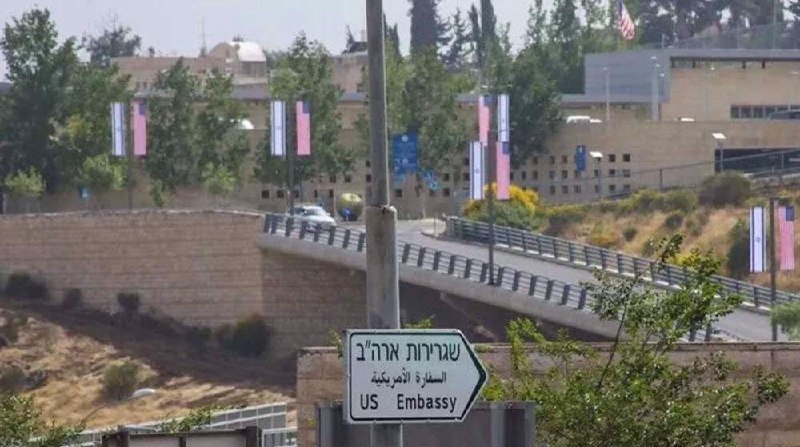
The fifth round of US-brokered talks between Lebanon and Israel began at the State Department in Washington at roughly 14:00 UTC on 23 June 2026, and Beirut arrived with the hard edge of its public position already sharpened. Lebanese President Joseph Aoun told reporters he would not accept any solution that falls short of an end to the Israeli occupation of southern Lebanon, framing the talks as a binary choice rather than a negotiation over a map. The uncompromising line was carried simultaneously by Al Jazeera's English-language coverage of the opening session and by Iran's Tasnim news agency, the latter relaying Aoun's statement almost verbatim, a small but telling alignment in outlets that rarely see eye to eye.
The headline dispute is over the territorial definition of "south Lebanon." Israeli negotiators have, across earlier rounds, indicated willingness to pull back from a security belt that is narrower than the area the UN identified as occupied in the period following the 2024 escalation. Aoun's flat rejection of anything short of a full exit amounts to a public veto on a partial withdrawal as a basis for settlement. By making the position a precondition rather than an opening bid, the Lebanese side is signalling that the next two weeks of diplomacy will be judged on geography, not on confidence-building gestures.
What Aoun actually said, and what he left unsaid
The English-language phrasing carried by Middle East Eye and Al Jazeera was deliberately austere: an end to the occupation, nothing less. There was no parallel reference to disarming Hezbollah, no reciprocal language on the residents of border villages whose houses sit on the Israeli side of the proposed pull-back, and no acknowledgment of the UNIFIL mandate that has been the framework for monitoring southern Lebanon for nearly two decades. The omissions are themselves the message. Beirut is choosing to make this round about land and sovereignty first, and to defer the second-order questions that have stalled every previous attempt at a settlement since 2023.
The choice also has a domestic audience baked into it. Aoun took office in January 2025 on a mandate that included asserting Lebanese state authority across the whole territory; any deal that leaves Israeli forces in the south, even at reduced depth, would be a measurable failure of that promise. The bargaining chip he is most willing to spend, in other words, is the same one that anchors his presidency at home.
The Washington geometry
The State Department is hosting the session, which by itself signals that the United States is treating the track as a live diplomatic file rather than a managed stalemate. US mediation in Lebanon has historically been inseparable from the wider Iran file, and the simultaneous appearance of the Lebanese story on Iranian state-linked wires suggests Tehran's read on the talks is that they are not yet in the back room. That matters because Iran and Hezbollah have, in past rounds, been the channel through which Israeli and Lebanese positions were bridged; if those channels are quiet, the Washington format becomes the only game in town.
The flip side is that a process run out of the State Department is exposed to American domestic politics in a way the indirect track was not. Any concession by either side has to survive not just the principals in the room but the readouts that follow from the embassy in Beirut, the Israeli cabinet, and the various political currents inside Lebanon's fragmented post-2024 order. The thicker the institutional layering, the slower the move from red lines to text.
Why the territorial fight is the fight
The southern strip is not a uniform piece of land. Parts of it are depopulated border villages whose return has symbolic force; parts of it are the Litani-headwaters terrain that Israel has cited, in past briefings carried by the IDF Spokesperson, as the depth needed to keep short-range rocket and anti-tank threats from reaching its northern communities. Aoun's red line, as quoted, treats those operational distinctions as immaterial. In the absence of a third-party definition of what "south" means for the purposes of the deal, the parties are talking past each other in metric terms that they do not share.
This is the structural problem. A negotiation whose subject is the location of a line on a map will not close until the parties agree on the legend of that map. Aoun's statement implicitly insists on the 2024 ceasefire-line definition. The Israeli position, to the extent that it has been public, has been calibrated to a narrower strip that meets the security needs articulated by the IDF without restoring pre-2024 status quo. The space between those two definitions is where the round will either produce a deal or quietly adjourn.
Stakes and what remains uncertain
If the round closes with a shared definition of the southern line and a written commitment to a sequenced pull-back, the immediate winners are the border-region residents on both sides, the UNIFIL force whose mandate becomes operational again, and the Aoun presidency at home. If it closes without a definition, the next round inherits the same gridlock and the occupied strip stays under Israeli control, with the attendant cost in Lebanese political legitimacy and in the human terms of a population living under foreign military presence. A third possibility, less discussed but not excluded by the public reporting, is that the round produces a framework on timing and monitoring while leaving the line itself to a subsequent phase — a structure that would buy political cover for both principals and postpone the hardest call.
The honest ledger is short. The sources available for this article do not specify what the Israeli delegation brought to the table on 23 June 2026, do not name the third-party drafter of any proposed text, and do not record the specific UNIFIL position on the reactivation of monitoring arrangements. What they do establish, with redundancy across Middle East Eye, Al Jazeera and Tasnim, is that Beirut has chosen the strongest possible public posture and is now waiting to see whether Washington will translate that posture into an Israeli move. The shape of round five, in other words, will be set less by what Aoun said on the way in than by what Israel does not say in response.
Desk note: Monexus led on the Lebanese position as quoted by mainstream regional outlets and verified the statement's substance against two independent wires. Israeli framing, where it appears, draws on prior public statements carried by the IDF Spokesperson rather than on this round, which is too new for the Israeli side to have published a clean read. The structural argument — that a territorial negotiation needs a shared legend before it can produce a line — is the editorial frame; the news is the red line itself.
Wire provenance
This editorial synthesis draws on the following public wire/social posts:
- https://t.me/JahanTasnim