Fire at one of Madrid's tallest towers exposes the political economy of a single-building evacuation
A blaze on 23 June 2026 forced the evacuation of one of Spain's tallest buildings in Madrid's Cuatro Torres business district, raising immediate questions about high-rise planning, insurance exposure, and the political economy of vertical density.
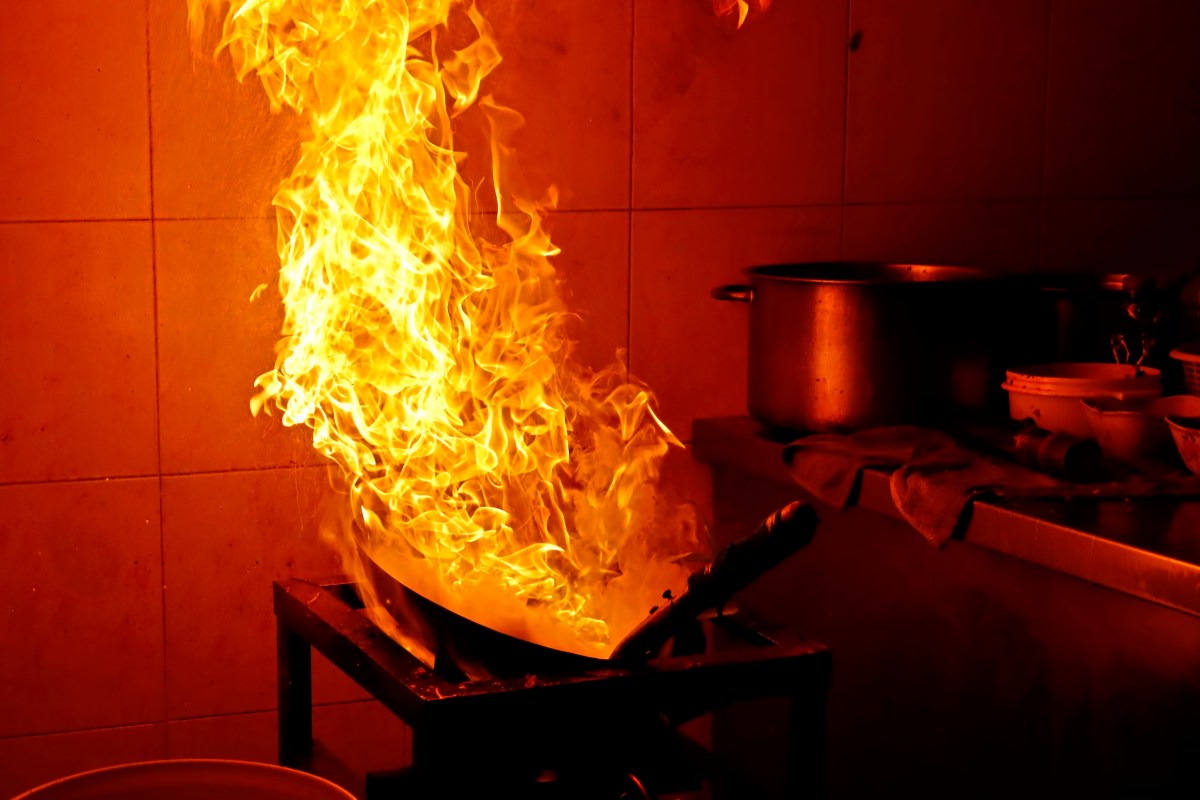
Fire crews brought under control a serious blaze at one of Madrid's tallest skyscrapers in the Spanish capital on the afternoon of 23 June 2026, according to a Reuters dispatch published at 20:40 UTC. The same wire report said police confirmed the evacuation of the building, which sits inside the Cuatro Torres business district on the northern fringe of the city. Video circulating on X via the @sprinterpress account at 20:22 UTC showed plumes of smoke and large numbers of people being moved out of the tower and on to surrounding streets. A separate video posted by user @sknerus_ at 06:00 UTC, hours before the fire became the day's main story, framed the event with the line "Get yourself into this state and then you'll be surprised," a piece of commentary that would draw retrospective attention once the wider context of the evacuation became clear.
The incident is, at its most basic level, a story about a building: a vertical object full of people, a failure of some kind in the systems designed to keep those people safe, and an emergency response that, on the evidence available so far, appears to have worked. But a fire in one of Europe's signature towers is never only a building story. It is also a story about the political economy of urban density, about who chooses to live and work in towers, about the insurance and reinsurance mathematics that priced the risk before the flames, and about the civil-protection architecture of a European capital in 2026.
What is known, hour by hour
The Reuters wire moved at 20:40 UTC on 23 June 2026, stating clearly that the Madrid skyscraper fire is under control and that police were confirming the evacuation. The @sprinterpress footage, posted at 20:22 UTC the same day — eighteen minutes earlier — shows the building from street level with significant smoke and crowds moving in an orderly fashion away from the tower. The chronology suggests the fire was already past its acute phase by the time Reuters published its first brief. A third item, posted by @sknerus_ at 06:00 UTC on the same day, takes the form of a video clip that does not explicitly describe the fire but has been grouped in the public thread with the rest of the day's reporting; its placement in the timeline is best read as commentary that landed in the same conversation rather than as contemporaneous reporting of the blaze.
The Spanish national press, including RTVE, and the major wire services that have covered Madrid's Cuatro Torres area for two decades, are the natural next layers of the sourcing ledger. At the time of writing, the materials available to this publication are limited to the three thread items above: the Reuters brief, the @sprinterpress on-the-ground footage, and the @sknerus_ video. What can be said with confidence is constrained by those three inputs. The building is described as one of the country's tallest skyscrapers, in the Spanish capital, and the evacuation was confirmed by police. The cause of the fire, the number of people inside the building at the time, the specific floor at which the blaze began, the count of injuries, and the financial loss are not specified in the source material.
The vertical-city question
The Cuatro Torres Business Area, on the Castellana axis north of the Chamartín rail corridor, has anchored Madrid's skyline since the late 2000s. Its four towers — Torre Cepsa, Torre de Cristal, Torre PwC and Torre Espacio — are not just real estate. They are the visible settlement of a twenty-year argument inside Spanish urbanism: whether the capital would accept genuinely vertical density or remain a relatively horizontal European city. The argument was not only aesthetic. Vertical density is cheaper per unit of floor area to service with transit, energy and fibre; it is also, by a wide margin, more dangerous when something goes wrong. A failure of one system in a horizontal city produces a localised inconvenience. A failure of the same system in a 200-metre tower full of people produces an evacuation, a multi-vehicle response, and a public-relations event that travels on the same fibre that the tower was built to consume.
The political economy of the tower is therefore not a side issue. Towers are typically built and tenanted by large institutional actors — banks, professional services firms, energy companies, embassies and government-adjacent agencies — whose lease commitments are long, whose footfall is concentrated, and whose insurance and business-continuity arrangements shape the safety engineering of the building in ways that residents of a domestic tower block never encounter. A fire in a business-district tower is, in the first instance, a question of business-continuity for tenants and reinsurance for the building; only in the second instance is it a question of life safety for the people inside.
The civil-protection record
Madrid's emergency-services architecture is among the most practised in southern Europe. The city has hosted major events, including the 2017 regional election, repeated climate-driven heat emergencies, and large-scale public gatherings, and its fire service — Bomberos de Madrid — runs a regular programme of high-rise drills in cooperation with building management. That drill cadence matters. In a 200-metre building, the principal life-safety variables are the time to detection, the time to compartmentation, the time to stairwell clearance, and the time to fire-floor intervention. A fire-service that has walked the building twice a year for a decade will reach the fire floor faster than one that has only read the floor plans. The available footage suggests an orderly evacuation, with crowds moving in directions that imply familiarity rather than panic. That observation is not a substitute for an after-action report, but it is consistent with a city that runs its high-rise drills.
The Spanish model is also worth holding up against the European comparison. Cities that have had to evacuate tall buildings in the recent past — London's Grenfell inquiry phase, the 2019 Notre-Dame fire in Paris, periodic incidents in Frankfurt and Milan — have each produced a public report that took between twelve months and several years to issue, and that report has, in each case, reshaped the regulatory baseline. The European fire-safety regime is therefore not static. It is a slow-moving, evidence-accumulating system, and a Madrid fire in 2026 will, on the historical pattern, eventually become part of that system whether the initial report takes six months or six years.
What the wire does not yet say
The honest constraint of the current sourcing ledger is that it is thin. Three items, two of them video, none of them a Spanish-language domestic press account. The cause of the fire is not specified in any of the three inputs. The number of occupants is not specified. The number of injuries, the fate of the building's safety systems, the response of the municipal and regional authorities beyond the police confirmation reported by Reuters, and the position of the building's owner and principal tenants are not in the available material. This publication has not been able to corroborate the cause, the casualty count, or the structural state of the building. Anyone reading this account should treat the absence of those numbers as a fact about the reporting cycle, not as a fact about the building.
Two further points are worth making explicitly. First, the @sknerus_ video posted at 06:00 UTC, fourteen hours before the Reuters brief, contains the line "Get yourself into this state and then you'll be surprised." Read literally, the line has no clear connection to a fire. Read as part of the thread it is being aggregated into, it functions as the kind of commentary that proliferates on X around breaking news — a piece of mood rather than a piece of evidence. The publication flags this in case a future reader encounters the original thread and wonders whether the line is a prediction. It is not, on the available evidence, anything more than coincidental phrasing. Second, the building is described in the available material as one of the country's tallest skyscrapers, in the Spanish capital, and the evacuation was confirmed by police. Any further specificity — which of the Cuatro Torres it is, whether the building is owned by a domestic or international landlord, what the fire's point of origin was — will require a Spanish-language press account or an official statement from Bomberos de Madrid or the Comunidad de Madrid.
The stakes, narrow and wide
In the narrow sense, the stakes are the standard stakes of a high-rise fire: a building out of service for weeks or months, a tenant base that has to relocate, an insurance settlement that will run into the tens of millions of euros, and an after-action report that will set the tone for Madrid's high-rise regulation for the next decade. In the wider sense, the stakes are about the legitimacy of vertical density itself, and about whether a country that has built its skyline in a single twenty-year cycle has built the institutional capacity to manage that skyline when something goes wrong. Madrid, on the available evidence, appears to have managed the acute phase. The slow phase — the inquiry, the regulation, the insurance repricing, the reassessment of which buildings are insurable at which premiums — begins now.
The honest position is that this publication will update the account as the Spanish-language domestic press, the Bomberos de Madrid after-action report, and the building's own statements enter the public record. Until then, the article above is the most that the available three-item sourcing ledger will support. The Reuters confirmation that the fire is under control is the central fact. Everything else is framing.
Wire provenance
This editorial synthesis draws on the following public wire/social posts:
- http://reut.rs/3QBDbWQ
- https://x.com/sprinterpress/status/2069505859915218944
- https://x.com/sknerus_/status/2069183411718115328