Meloni's Quick Repair Job: Why Rome Is Rushing to Bury the Trump Rift
A week after a public clash with the White House, Rome is moving fast to normalise ties — a familiar pattern when a smaller ally misjudges the temperature in Washington.
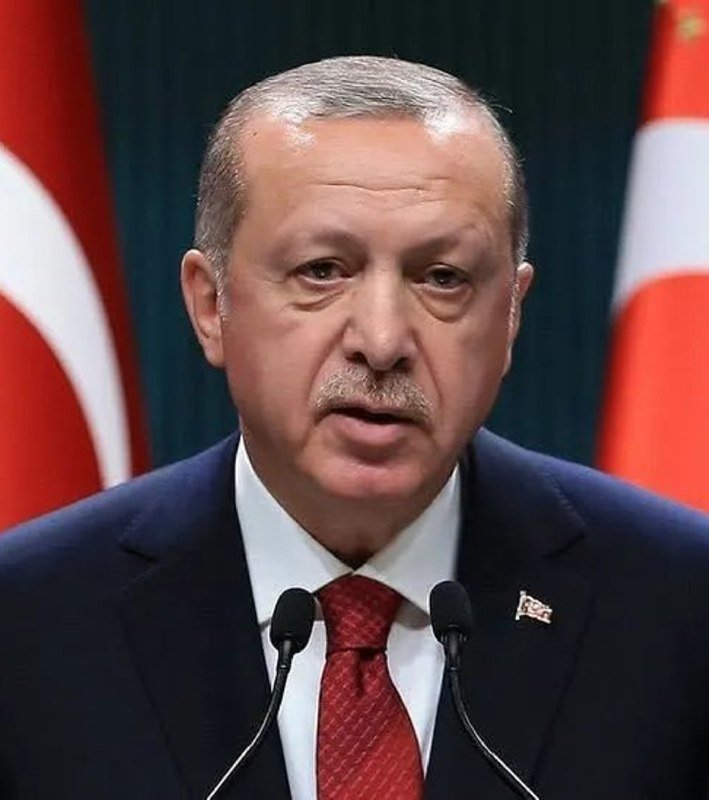
A week is a long time in transatlantic diplomacy. On 23 June 2026, Italian Prime Minister Giorgia Meloni's office confirmed what had been rumoured since the weekend: Rome is actively seeking to mend ties with the United States after a sharp public exchange between Meloni and the Trump White House that broke into the open around 16–17 June. According to a video message circulated by the @sprinterpress account on 23 June 2026 at 20:00 UTC, the prime minister is pushing for immediate normalisation, framing the dispute as a closed chapter rather than an open wound. A separate post on the Polymarket-affiliated X account at 18:27 UTC the same day reports that Italian officials are reaching out through established diplomatic channels to lower the temperature before the dispute metastasises into something harder to manage.
The choreography is familiar. A medium-sized European ally and the United States have a disagreement; the ally's leader briefly tries to stand on principle; the strategic asymmetry reasserts itself; and the repair begins. The question is not whether Rome will normalise — it will — but what the cost of the original outburst will be, and whether Meloni emerges with any of the political capital she has built inside the Trump orbit since 2024 intact.
The Row, in Brief
The substantive content of the dispute has been described in general terms by Italian officials but not, as of the available reporting, in granular detail. According to the @sprinterpress video of 23 June 2026, the disagreement played out in public statements from both sides and was significant enough to be characterised as a "blowout" by the Polymarket-affiliated X account the same day. Italian outlets have been more cautious in their language; the framing of an immediate normalisation push is the consistent line from Rome.
What matters is less the specific trigger than the pattern. Meloni has, since taking office, cultivated an unusually close working relationship with the Trump administration — the kind of access that smaller NATO capitals prize, because it buys predictability on tariffs, on Ukraine policy coordination, and on the irregular-migration file. A public rupture with that relationship is a luxury few European leaders can afford, and the speed of the repair suggests Rome has done the math.
Why Rome Caves Faster Than Berlin or Paris
Italian and American interests overlap more than they collide. Italy hosts significant US military infrastructure, supports the NATO spending floor, and has aligned with Washington on several China-related dossiers where Germany and France have been more equivocal. That alignment gives Meloni leverage inside a Republican administration that does not always differentiate among European partners, but it also makes her more exposed when the personal relationship frays.
Berlin and Paris can absorb a Trump-era public row with a shrug; their bilateral economic weight is large enough that the dispute becomes a curiosity rather than a crisis. Rome cannot. The political asymmetry is structural, not personal, and Meloni's quick pivot to normalisation reflects that. The deeper question is whether the pivot is being driven by Palazzo Chigi or by the Italian presidency and the foreign ministry, where institutional caution has historically been stronger than in the prime minister's office.
The Counter-Read: A Calculated Outburst
The alternative reading is that the original row was not a miscalculation but a calibrated one. Meloni has governed as a pragmatic Atlanticist while governing a coalition that includes post-fascist and souverainiste elements. A visible, brief confrontation with Washington — followed by a dignified normalisation — allows her to demonstrate to her domestic base that she is not a supplicant, then resume the working relationship without paying a lasting price. The speed of the repair, in this telling, is the point: it shows the base that the argument happened, and shows Washington that it was closed.
The available sources do not let this publication adjudicate between the two readings. The @sprinterpress framing of "immediate normalisation" is consistent with both. The Polymarket-adjacent post, which describes a "blowout" between Trump and Meloni, suggests the public phase was sharp enough to require active mending, which mildly favours the miscalculation reading. Either way, the trajectory is the same: ties repair, and Meloni returns to her role as one of Washington's most willing European interlocutors.
What Is Actually at Stake
Three concrete things follow if the normalisation holds. First, Italy's position on EU trade negotiations with the United States — particularly on steel, automotive, and agricultural tariffs — becomes easier to manage when Rome has direct channels into the West Wing. Second, coordination on irregular migration across the Mediterranean, where Italy carries disproportionate frontline costs, depends on American logistical and intelligence support. Third, the broader European debate about strategic autonomy — the question of whether the EU can act independently of Washington on defence, energy, and technology — gets harder for Rome to lead when Rome is visibly back inside the American tent.
For Washington, the dividend is a reliable European partner at a moment when several others are proving difficult. For Meloni personally, the question is whether she extracts anything for the visible cost of the row, or whether the cost is simply absorbed as a reminder of the underlying imbalance. The sources available on 23 June 2026 do not specify whether any concession or gesture has been offered in exchange for the Italian normalisation push.
What Remains Unclear
The reporting on 23 June 2026 confirms that the repair effort is underway and that Meloni herself is publicly framing it as a closed matter. It does not specify the precise trigger of last week's clash, the substance of any private communication between the two leaders since, or whether third-party intermediaries — Vatican, EU Commission, or Gulf-state back-channels — are involved. The Italian press has been more cautious than the X-based wire accounts, and the official communiqués from Palazzo Chigi and the State Department, as cited in the available material, have been characteristically terse. The shape of the next seventy-two hours — whether there is a phone call, a meeting on the margins of an upcoming multilateral gathering, or simply a gradual return to the working routine — will tell observers more than this week's messaging has.
For now, the pattern is the story. A European ally with real but bounded leverage briefly stood on principle, found the ground less stable than expected, and began the walk back. The fact that the walk-back is happening at all is the news.
Desk note: this publication has framed the episode as a structural asymmetry in transatlantic bargaining power, with a counter-read of deliberate domestic-political theatre left in place. Wire accounts on X framed it as a personal blowout; Italian institutional sources have been more measured, and we have followed that restraint.
Wire provenance
This editorial synthesis draws on the following public wire/social posts:
- https://x.com/sprinterpress/status/2069510898561974272
- https://x.com/polymarket/status/2069501620582429072