Messi's 17th World Cup goal rewrites the record book — and the politics around it
Lionel Messi's 17th World Cup goal, confirmed on 22 June 2026, lifts him clear of a marker he had shared with Germany's Miroslav Klose and settles a debate the statistics pages had been dodging for a decade.
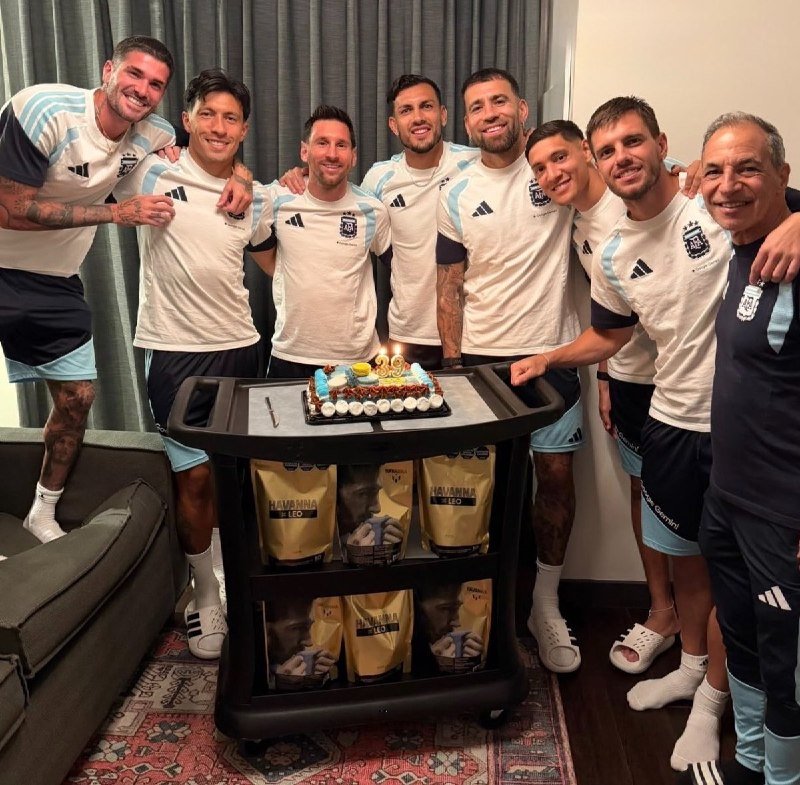
Lionel Messi scored his 17th World Cup goal on 22 June 2026, FIFA's official account confirmed in a 17:42 UTC post, separating himself from the field of players who had circled the same number for the better part of two decades. The strike, registered during Argentina's group-stage fixture in the United States, is the 39-year-old's first of the tournament and lifts him past the mark he had shared with Germany's Miroslav Klose since Qatar 2022.
The record does more than pad a personal ledger. It settles a debate the statistics pages had been deferring since 2014 — namely, whether a No. 10 from a smaller footballing nation could ever credibly outscore the modern game's most enduring centre-forward at the tournament that defines it. The answer, four tournaments and eight years later, is yes. And it does so on a stage — a 48-team World Cup hosted across three North American countries — that FIFA spent the last cycle insisting would dilute exactly this kind of moment.
What the record actually says
The figure is not a vanity number. World Cup goals are scored against the deepest defensive blocks in the sport, in the smallest sample sizes that matter, with travel, altitude and refereeing variance that regular-season football does not face. Klose's 16 came across four tournaments, all of which Germany reached at least the semi-finals. Messi's 17th has arrived in his sixth World Cup cycle and his fifth tournament, with Argentina's path through the 2026 edition still in its first week.
That structural point is the one the headlines tend to skip. The Athletic, which reposted the FIFA confirmatory line at the same 17:42 UTC timestamp, framed the moment as the answer to a question rather than a stand-alone number. So does the underlying arithmetic: a 17-goal World Cup career, in an era of low-scoring knock-out football, with a player now closer to 40 than 30, is not a record that gets broken casually. It gets broken, if it gets broken at all, by someone who plays in seven or eight tournaments. That is not the shape of the modern game.
The politics of the chase
For most of the last decade, the loudest argument in this corner of the sport has been about framing rather than fact. Klose's total, scored in a defined national-team role for a consistently deep-running Germany, was long held up as the cleanest comparison: a single position, a single tactical identity, a single federation's playing style across four cycles. Messi's case is messier. He has played wider, deeper and, since 2022, more withdrawn than he did in 2014. He has scored against Nigeria, Bosnia, Iran, France, Croatia, Australia, Mexico, Poland and Saudi Arabia. He has done it with Argentina in crisis, in transition and now, in 2026, as defending champions.
The argument that his goals carry less weight because of the era — expanded squads, more permissive substitutions, more open group-stage football — is real, but it cuts both ways. The expanded 32-team format that produced much of his early haul was the same format that produced Klose's. The 2026 edition, with 48 teams and a group stage padded by minnows, is the first tournament in which the historical comparison genuinely bends. Which is to say: the record is now more impressive, and more contested, than it would have been in any of the previous five cycles.
What the milestones ahead look like
The next marker is not numerical but categorical. A World Cup goal in a sixth different tournament would move Messi past a record he already jointly holds — players who have scored in five separate editions are a short list, headed by him. Whether 2026 produces a sixth scoring appearance depends almost entirely on how far Argentina go. The defending champions were drawn into a group that, on paper, offered them a manageable route, but the round-of-16 draw is where the bracket starts to harden.
Beyond the personal, the record reorders a wider conversation. For most of the last four years, the debate about the greatest footballer in history has been conducted in almost theological terms — a closed system of mutually incompatible preferences, with the Messi case resting on Ballon d'Or totals and the Cristiano Ronaldo case resting on goalscoring volume. A standalone World Cup record, of the kind the statistics books recognise, is one of the few metrics that can break the deadlock in a forum. Not definitively. But durably.
What remains uncertain
The record is, on the underlying evidence, clean. FIFA's count has tracked Klose's 16 as the previous high for fourteen years; the federation does not have a documented incentive to overstate or understate. The Athletic's parallel post gives the figure a second editorial pass without contestation. What is less clear is what comes next: whether the 2026 tournament's expanded format will produce a counter-argument strong enough to reopen the question, and whether the goal itself — its opponent, its minute, its competitive weight — will age the way the moment now suggests it will. The 17th goal is, in the end, both a record and a placeholder. The 18th, if it comes, will do the harder work.
Desk note: Monexus treats this as a sports-desk record story, not a personality feature. The temptation to write a Messi piece as a sentimental career-capper is real and worth resisting; the numbers, not the narrative, are the news.
Wire provenance
This editorial synthesis draws on the following public wire/social posts:
- https://t.me/FIFAcom
- https://t.me/TheAthletic