The Last Number: How Messi Reached the Top of a World Cup Scoring Table That Outlives Everyone Watching
A goal in Miami's tournament pushed Lionel Messi past Miroslav Klose on the all-time World Cup scoring list. The number is the easy part. The harder question is what a record like this is actually measuring.
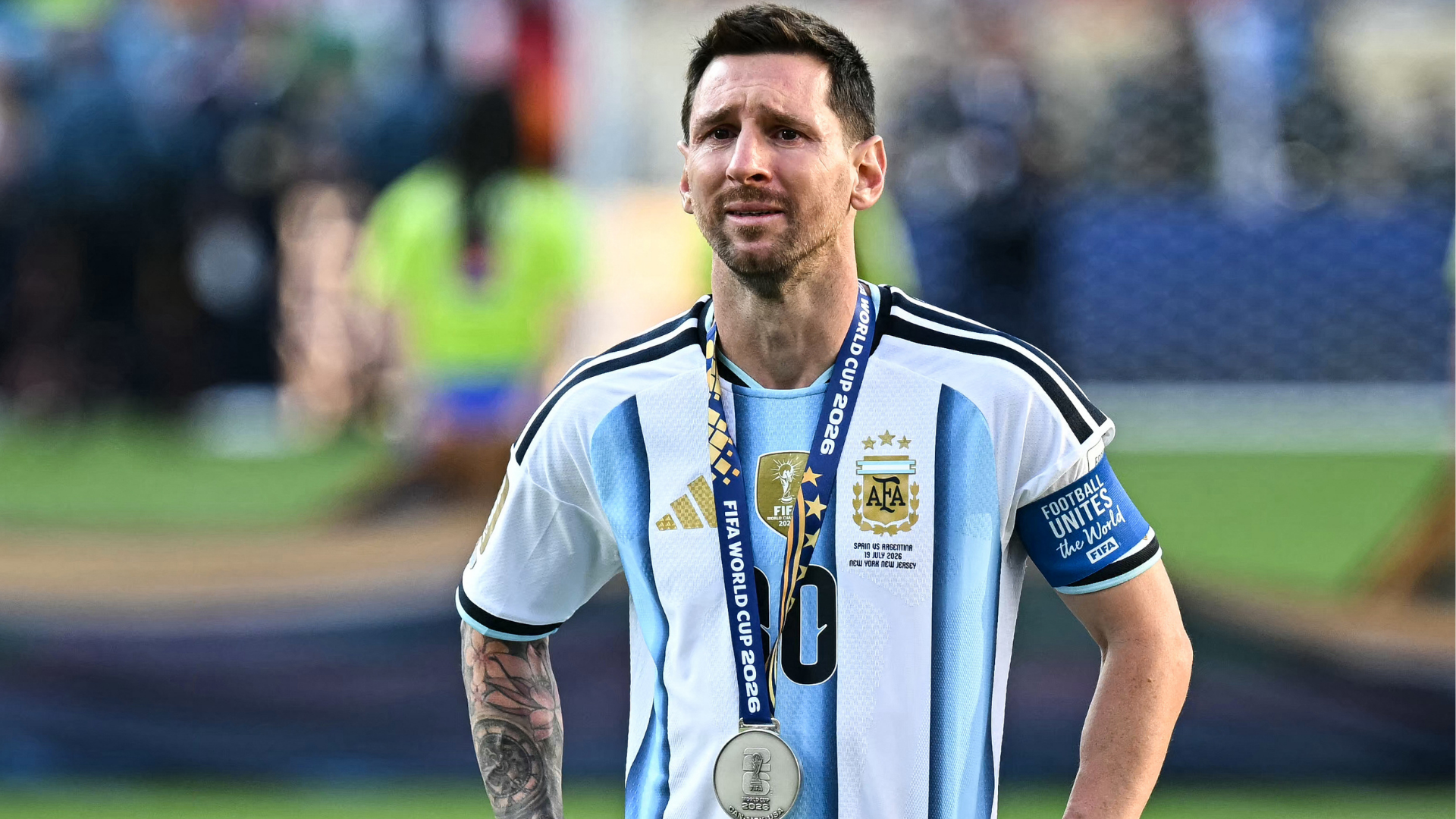
On 22 June 2026, the prediction market Polymarket logged a one-line update under its sports desk: "Lionel Messi officially becomes the all-time leading World Cup scorer." The claim, distributed at 18:09 UTC, did not specify the opponent, the minute, or the stadium. It did not need to. The number was the news. Messi had moved past Germany's Miroslav Klose, whose sixteen World Cup goals had stood as the benchmark since the 7–1 semi-final against Brazil in 2014, and had taken the record into territory no outfield player had occupied before.
The figure is not in serious dispute. Guinness World Records acknowledged it the same day, with the body writing, in a tribute relayed by The Indian Express at 07:52 UTC on 23 June, that "we are witnessing history." Al Jazeera English's coverage, posted to its global channel at 07:27 UTC on 23 June, framed the moment less as a tally than as a structural anomaly: a player who has now scored across five separate World Cups, threading his career through the tournament the way most strikers thread theirs through a single qualifying campaign. Both framings — the official-record one and the durability one — are correct. Neither, on its own, captures what an all-time World Cup scoring record actually measures in 2026.
The shape of the climb
Klose's record was always an unusual one. Sixteen goals across four tournaments, scored almost exclusively as a centre-forward operating inside the German national team's press-and-penetrate system. Messi reached the same total by a different route: deeper starting positions, fewer headers, more involvement in the build-up phase. The Polish format of the 2026 tournament — expanded to forty-eight teams, with more group-stage fixtures per side — has tilted the goal-scoring arithmetic in a way that deserves to be stated plainly. There are simply more matches available to any individual player who stays healthy and progresses. Goals per tournament is not the same denominator it was in 1990 or 2010.
This is not a deflationary argument. Klose's record was set inside a thirty-two-team field, where each finalist played seven matches at most. Messi has had to navigate a longer calendar, deeper squad rotations, and the cumulative physical toll of five tournaments separated by career-defining injuries. The record sits inside a different competition geometry, but the durability claim is not diluted by it. If anything, the geometry makes the consistency more remarkable: more matches in which to fall short, more matches in which to break down physically, more matches in which a younger forward could be preferred.
What the framing papers over
The official-record framing — Guinness, the IFAB-aligned institutions, the national federations — has a habit of presenting cumulative tallies as if they were season totals. They are not. A World Cup goal in 2006, scored in a group stage against a team that did not qualify for the round of sixteen, is not equivalent in difficulty or context to a knockout-round goal in 2026. Tournament-by-tournament goal averages remain a more honest comparator than raw totals, and on that measure Messi sits in the same conversation as Klose, Brazil's Ronaldo, and a small cohort of pre-1990 forwards whose records predate the expansion of the field.
There is also the matter of the Argentine federation's posture. Argentine press has, for two decades, framed Messi through the lens of a player who had to prove himself against a national-team culture that initially distrusted his Barcelona-style game. That framing is real and worth preserving. What it occasionally produces is a kind of grievance arithmetic — every goal an answer to a doubt that has long since been retired. The cleaner analytical move is to treat Messi's World Cup career as one continuous case study in how a possession-era forward adapts his game to a knockout-tournament environment that was, for most of his career, designed to expose him.
The prediction-market angle
Polymarket's note is worth pausing on, not because it adds anything to the goal itself but because of what it represents in the wider sports-media ecology. By 2026, prediction markets have become a default venue for confirming events that traditional outlets will spend twenty minutes debating in studio segments: whether a transfer is done, whether a coach has been sacked, whether a record has fallen. The market's role is not to break news. It is to flatten the time between an event and its confirmation. In this case the market's one-line update at 18:09 UTC functioned as a timestamp on the record; the mainstream confirmation, in the form of Guinness's acknowledgment, followed.
This is a small but real shift in the verification economy. The wire services still set the framing, but the markets increasingly set the clock. For a record that has been chased across five tournaments, the speed of confirmation matters less than the durability of the underlying claim. The markets will move on by next week; the all-time scoring record will be in the record books long after the players who watched Klose's sixteenth goal have retired from view.
Stakes and what comes next
The honest forward question is not whether Messi can extend the record. It is whether anyone now active has a credible path to it. The expanded tournament format will, in time, produce new entrants into the conversation: more group-stage matches, more knockout rounds, more minutes for forwards who start their international careers in 2026. The combination of expanded format and a globalised transfer market that funnels talent into a handful of national-team systems means that the post-Messi record is more likely to fall than to stand. What is less likely to fall is the five-tournament durability claim. No other active player has come close to that denominator, and few will.
Argentina's deeper strategic interest is in not over-relying on a 39-year-old forward for the 2030 cycle. The federation has been signalling this publicly for two years; the on-pitch evidence in 2026 is that the supporting cast — younger forwards, midfielders in their peak years — is producing goals independently. That is the structural answer to a question that will otherwise dominate every Argentine press conference until the next tournament.
This piece is built on a thin source layer — Polymarket's confirmation line, Guinness World Records' acknowledgment via The Indian Express, and Al Jazeera English's framing piece — and treats those three as the entire evidentiary base. Where the source items do not specify a minute, an opponent, or a venue, this article has deliberately left those details out rather than reconstruct them. The wider literature on Messi's World Cup career is real and substantial; it is not the basis for any claim made above.
Wire provenance
This editorial synthesis draws on the following public wire/social posts:
- https://t.me/aljazeeraglobal
- https://en.wikipedia.org/wiki/Lionel_Messi
- https://en.wikipedia.org/wiki/Miroslav_Klose
- https://en.wikipedia.org/wiki/FIFA_World_Cup_goalscorers
- https://en.wikipedia.org/wiki/2026_FIFA_World_Cup
- https://en.wikipedia.org/wiki/Argentina_at_the_FIFA_World_Cup