Rubble, excavators and gunfire in Nabatieh al-Fawqa: a single incident, two unfinished recoveries
A reported shooting of three civilians in Nabatieh al-Fawqa has renewed questions about how the post-war clearance of southern Lebanon is being conducted — and who is being held accountable for it.
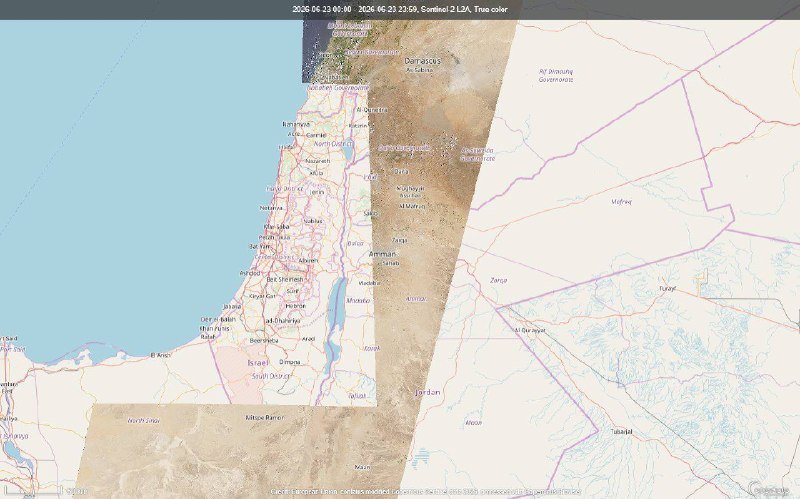
At roughly 08:43 UTC on 23 June 2026, local sources cited by The Cradle Media reported that Israeli occupation forces opened fire on civilians in the south-Lebanese village of Nabatieh al-Fawqa, injuring three people, and separately targeted an excavator clearing rubble from a house previously destroyed in earlier Israeli strikes. The reporting, attributed by the outlet to "local sources," is brief, unverified beyond the channel's own relay, and yet it lands on a wire already saturated with competing claims about the conduct of the post-war clearance in southern Lebanon. The incident is small; the questions it raises are not.
That a single, briefly sourced report can carry so much weight is itself part of the story. Two and a half years after the 2023–2024 escalation along the Israel–Lebanon border, and after the November 2024 ceasefire framework that formally paused large-scale hostilities, the southern villages sit inside a dense information environment where every bulldozer, drone and burst of gunfire is filtered through a chain of partisan intermediaries before reaching a reader. The Cradle is one such intermediary, with a documented editorial alignment toward the so-called "Axis of Resistance"; its relays are useful as signals of what is being claimed on the ground, not as confirmed fact. Reading this incident requires holding both truths at once.
What is being alleged
The Cradle's 08:43 UTC bulletin is straightforward: three civilians wounded by Israeli fire in Nabatieh al-Fawqa, and an excavator working rubble-clearance on a previously destroyed house also struck by Israeli forces. There is no claim of casualties beyond the three reported wounded. There is no identification of the civilians by name, no hospital named, and no Israeli military spokesperson quoted on the record. The incident is presented as a breaking local report, not as a confirmed battlefield event.
That sparseness is, in the current information environment, the whole problem. Reports of Israeli fire in southern Lebanese villages have been a recurring feature of post-ceasefire coverage, with each side interpreting individual incidents through a different lens. Israeli framing typically emphasises the continued threat posed by Hezbollah infrastructure and the obligation to act against live threats; Lebanese and pan-Arab framing tends to read the same fire as indiscriminate, punitive, or aimed at disrupting reconstruction. A single wounded civilian and a single bulldozer can be made to fit either narrative. Without verification from the Lebanese Armed Forces, UNIFIL, the Israeli military, or an independent wire on the ground, the report remains a claim, not a fact.
The structural frame
What makes this incident worth pausing on is not the three wounded, terrible as that is, but what it represents in the larger recovery picture. Southern Lebanon's reconstruction is being carried out in contested conditions. Rubble clearance is the precondition for any return to normal life: until the debris of destroyed homes is removed, families cannot rebuild, shops cannot reopen, and municipal services cannot be re-established. An excavator working a destroyed house is therefore not a military target in any conventional reading; it is the visible signature of recovery itself.
When force is used against that work, even on a small scale, it alters the political economy of the ceasefire. It tells the local population that recovery is provisional and reversible. It tells the reconstruction NGOs operating in the area — many of them working under UN coordination — that their work depends on Israeli discretion. And it hands critics of the ceasefire framework, on both sides, fresh material. The structural pattern here is familiar from other post-conflict zones: the slow grinding pressure that falls between headline events and never quite produces a diplomatic crisis, but steadily reshapes the ground that any future settlement will be drawn on.
The counter-narrative
There is a counter-narrative that deserves equal airtime. Israeli forces operating in or near southern Lebanon since the ceasefire have, in multiple documented cases, pointed to the presence of Hezbollah-affiliated operatives or infrastructure in the immediate vicinity of civilian sites. The line between a civilian rubble-clearing operation and a reconstruction effort partially staffed by armed non-state actors is, on the ground, often blurry. If the excavator in question was operating within or adjacent to a site where Israeli intelligence assessed live Hezbollah presence, the Israeli action would be framed domestically as a targeted operation, however messy the tactical outcome.
A serious account of the incident cannot dismiss that reading. It also cannot accept it uncritically. The burden of proof in a post-ceasefire environment falls on the party using lethal force, especially against clearly civilian equipment. "Local sources" reporting a bulldozer hit while clearing rubble is not, on its own, sufficient to resolve that burden either way. What it does is mark the spot where the next round of verification work has to begin — with the Lebanese Army, with UNIFIL, and with Israeli military spokespersons who can confirm or deny the engagement on the record.
What remains uncertain
Three things, in particular, the available sourcing does not resolve. First, the identity and condition of the three reported wounded, and whether they were indeed civilians rather than members of an armed group operating in civilian cover. Second, the precise location and circumstances of the excavator strike, and whether the equipment was being used purely for rubble clearance or for a dual-purpose site. Third, the chain of custody on the information itself — "local sources" in The Cradle's reporting is a phrase that compresses any number of intermediate actors, and the editorial distance between a village resident with a phone camera and a London-headquartered outlet with a clear editorial line is significant.
None of that uncertainty makes the report untrue. It makes it unconfirmed. The distinction matters because it determines what readers, editors and diplomats should do with the information: treat it as a lead, not as a conclusion.
Stakes
If the pattern The Cradle describes is accurate — repeated small-scale fire against reconstruction in south-Lebanese villages — then the November 2024 ceasefire is being hollowed out one incident at a time, without any single event being dramatic enough to break it. The winners in that scenario are those on either side who prefer the absence of full war to the presence of genuine peace. The losers are the civilians of Nabatieh al-Fawqa and a dozen villages like it, who find themselves living in the gap between a paused war and a recovery that is not allowed to begin.
That gap is where this news story actually sits.
Desk note: Monexus treats The Cradle's reporting on southern Lebanon as a useful signal of locally circulating claims, not as confirmed fact. We hold open the Israeli counter-claim that armed non-state presence in civilian clothing can blur the line between reconstruction and threat, while insisting that the burden of proof rests with the party firing.
Wire provenance
This editorial synthesis draws on the following public wire/social posts:
- https://t.me/thecradlemedia/123