South Lebanon firing near Nabatieh: a single incident, a wider operating pattern
An Israeli machine-gun burst near a roadside excavator in Nabatieh al-Fawqa killed one Lebanese man and wounded two others on 23 June. The local mechanics of the incident are settled; the rules under which it occurred are not.
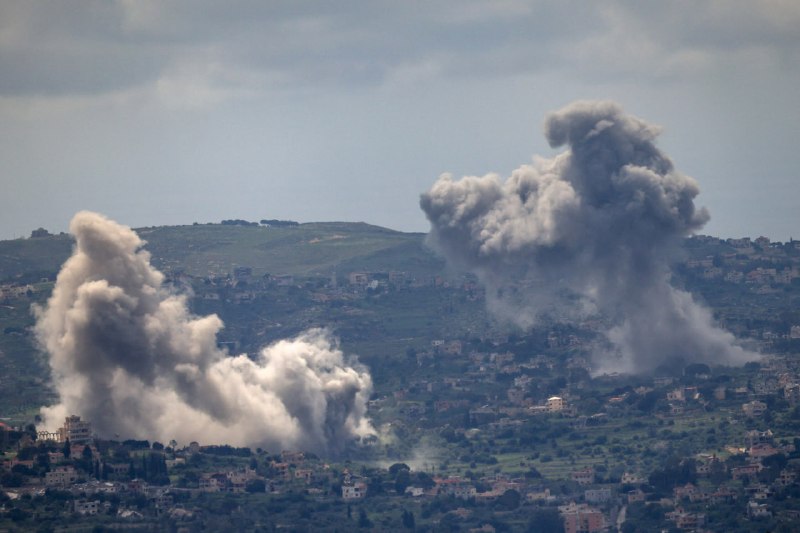
At roughly 07:35 UTC on 23 June 2026, Israeli forces opened machine-gun fire near an excavator that had been clearing a road in Nabatieh al-Fawqa, a hill town in south Lebanon's Nabatieh Governorate. According to reporting carried by The Cradle Media, a young man was killed and two others wounded. By 08:11 UTC, Lebanon's Civil Defence, as relayed by Al-Alam Arabic's breaking-news feed, had revised the count to two killed and one wounded. The discrepancy, common in the first hours of a strike or shooting, is itself the most newsworthy feature of the early wire traffic — the number of dead is not yet agreed between two outlets drawing on the same on-the-ground responders.
The incident is small by the arithmetic of the region, and that is precisely why it is worth reading carefully. It sits inside an operating pattern in which south Lebanon's post-2024 security architecture is enforced through a combination of aerial strikes, artillery, and what local press now routinely describe as "direct fire" incidents near roads, agricultural plots, and reconstruction machinery. The substantive question is not whether this particular machine-gun burst happened; the wire is consistent that it did. The question is what rules of engagement govern it, and how the international system records the resulting casualties.
What is on the record
The Cradle Media's breaking alert, posted at 07:35 UTC and reissued at 08:11 UTC, identifies the location as Nabatieh al-Fawqa and describes the fire as directed at a group near an excavator engaged in road-clearing work. Al-Alam Arabic's urgent flash, distributed at 08:16 UTC, attributes the casualty revision to Lebanon's Civil Defence. Both outlets operate with declared editorial positions: The Cradle explicitly identifies the firing force as "Israeli occupation forces," while Al-Alam, the Arabic-language satellite channel of Iranian state broadcasting, frames the same event through the lexicon of "Israeli gunfire" and the counting of "martyrs." Neither outlet is a neutral wire; both are, however, consistent with one another on the location, the number of wounded, and the involvement of road-clearing equipment.
What the record does not yet contain is an Israeli military statement identifying the unit involved, the rule-of-engagement criterion invoked, or the legal characterisation of the excavator and its operators. South Lebanon has been the site of near-daily exchanges since the November 2024 cessation of hostilities, with the Israeli military and UNIFIL publishing periodic, partial, and often contested counts of incidents. The absence of an Israeli-side read on this specific Nabatieh shooting is itself a data point.
Why the location matters
Nabatieh Governorate, and Nabatieh al-Fawqa in particular, sits in the band of south Lebanese territory from which Hezbollah fired thousands of projectiles into northern Israel between October 2023 and November 2024. The cessation of hostilities framework, brokered under US and French pressure, was meant to push armed infrastructure out of this belt and concentrate security authority in the Lebanese Armed Forces and UNIFIL. In practice, the area has become a laboratory for a model in which the IDF reserves the right to fire on persons or objects it judges to be Hezbollah-adjacent, while Lebanese state authority and UN reporting seek to establish, after the fact, whether the target met that threshold.
An excavator clearing a road is, on the most straightforward reading of the post-war order, civilian infrastructure work. It is the kind of activity the Lebanese government has publicly committed to expanding, both as a reconstruction measure and as a marker of restored state presence. The shooting of civilians near such equipment, and the inability of local outlets or civil-defence responders to name the originating military unit on first contact, is the kind of event that erodes the political viability of the cessation framework. It also creates the conditions in which armed groups inside Lebanon acquire a fresh justification for reconstitution.
How the wire handles it
The two Telegram channels carrying the news differ in framing but converge on facts. The Cradle, a Beirut-based outlet with a documented anti-hegemonic editorial line, foregrounds the civilian context — a road crew, an excavator, an occupied territory. Al-Alam, broadcasting from Tehran, foregrounds the religious-martyr lexicon that the Iranian-aligned press uses for any lethal Israeli action in Lebanon or Palestine. Neither channel publishes a bylined correspondent at the scene; both rely on civil-defence relays and stringers. This is the standard information environment in south Lebanon, and it is the environment in which casualty numbers are produced, contested, and ultimately recorded.
Western wire reporting on south Lebanon since late 2024 has tended to lag the local outlets by hours and, in some cases, to defer to Israeli military readouts when they arrive. The Israeli military has, in repeated instances, asserted that targeted individuals were operating as Hezbollah operatives or that structures struck had a military use. In the present case, no such readout has appeared in the window between 07:35 and the time of writing. Until one does, the public ledger contains only the Lebanese side of the story — and the Lebanese side is delivered through outlets whose editorial models are themselves part of the regional information war.
What remains unresolved
Three things are unsettled at the time of filing. First, the final casualty count: Civil Defence has moved from one killed and two wounded to two killed and one wounded within the first hour, a reversal that almost always reflects the death of a wounded person at hospital rather than a counting error. Second, the question of whether the excavator and its operators were on a list of sanctioned targets under whatever operational protocol governs Israeli fire in this sector. Third, the question of whether the Lebanese Armed Forces or UNIFIL will file an incident report, and through which channel that report will become public. On past form, an Israeli statement, if it comes, will arrive in a form that does not address the specific unit, commander, or rule of engagement, but will assert a generic security rationale.
For the families of those killed in Nabatieh al-Fawqa, none of these procedural questions is a substitute for an explanation. For the regional information environment, they are exactly the questions that determine whether the post-2024 architecture retains political credibility, or whether the slow rearmament of non-state actors in south Lebanon, already visible in secondary reporting, accelerates further. A single machine-gun burst is, on the arithmetic of the region, a small event. The set of rules that produced it is not.
This article drew on two Telegram channels with declared editorial positions, both of which reported the incident within the same hour. Where wire reporting catches up, this piece will be updated to reflect any Israeli military statement, UNIFIL incident report, or revision issued by the Lebanese Civil Defence.
Wire provenance
This editorial synthesis draws on the following public wire/social posts:
- https://t.me/thecradlemedia/1
- https://t.me/thecradlemedia/2
- https://t.me/alalamarabic/1