Muscat and Tehran open a channel on Hormuz: what the Iran-Oman talks actually change
Oman and Iran have opened a working channel on managing navigation in the Strait of Hormuz — the first concrete diplomatic step since US strikes, and a template the rest of the Gulf is watching closely.
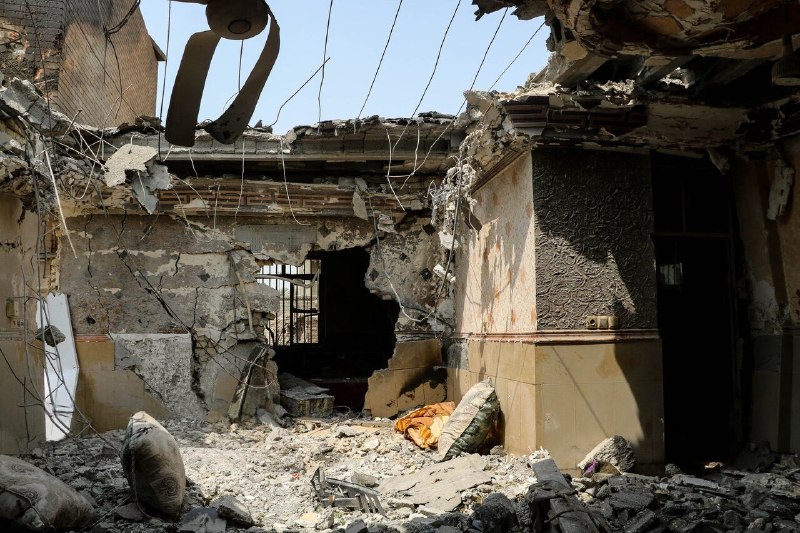
The announcement was four sentences long and it came from Reuters at 17:50 UTC on 23 June 2026: Oman and Iran have agreed to "pursue talks on managing navigation in the Strait of Hormuz." Within minutes, prediction markets had repriced the corridor, an OSINT feed had surfaced a fresh US presidential statement, and the diplomatic cables between Muscat, Tehran, and Washington were suddenly the most-watched traffic on the wire.
The talks matter because the Strait of Hormuz is the most consequential pinch-point in the global energy system, and because the parties sitting down — a Gulf sultanate long cast in the role of neutral go-between, and the Islamic Republic still recovering from a June US strike campaign — are the two governments least likely to grandstand and most likely to produce something operational. If a framework holds, it will not be a treaty. It will be a set of working arrangements on tanker routing, pilotage, fee collection, and the choreography of Iranian Revolutionary Guard Corps Navy fast-boat activity. The kind of dull, technical architecture that keeps oil moving.
What was actually announced
Reuters reported on 23 June 2026 that Oman and Iran would "pursue talks on managing navigation in the Strait of Hormuz." The wording was deliberately narrow — navigation, not security, not sovereignty, not the nuclear file. That is the point. By scoping the conversation to traffic management, Muscat has given Tehran a face-saving venue to discuss the strait without re-litigating the legal status of the waterway, which Iran has historically claimed in whole and which the United Nations Convention on the Law of the Sea treats as international.
Within the same hour, the Polymarket-style market feed flagged a complementary report that the two governments are "negotiating a framework to jointly manage navigation and shipping fees in the Strait of Hormuz." That is a more ambitious formulation — shipping fees imply some kind of revenue or cost-sharing arrangement — and is consistent with what Gulf shippers have been quietly asking for since the June strikes: predictability. Tanker insurance, transit notifications, and the choreography of IRGCN intercepts have been the real friction points for commercial traffic, and they are the kind of friction that can be reduced by bilateral arrangement even when the broader political relationship remains frozen.
The American backdrop
The US side is talking loudly. An OSINT aggregator's pull of presidential remarks, timestamped 17:46 UTC, carried three lines worth reading carefully. First, that "we're doing very well with Iran. They've been decimated, and we're making a deal with them." Second, that "yesterday, we had 19M barrels of oil come out — and that's the biggest in the history" — a claim, made in the same breath, that Iran exported approximately 19 million barrels of crude in a single day, framed as a record. Third, on the nuclear file, that "inspectors will be on the ground at the appropriate time," and separately that "Iran is wrong about IAEA inspectors, there's no rush to get inspectors on the ground in Iran." The pair of statements, read together, is the rhetorical signature of a White House trying to hold three positions at once: deal-in-progress, no rush, leverage-maintained.
That posture explains why Muscat is in the room. Oman has been the United States' preferred back-channel to Tehran for two decades, and is the only Gulf government with the standing on both sides to host a working-level navigation dialogue that does not collapse into a press conference. The framework under discussion is, in effect, a confidence-building measure that allows the United States to claim that the strait is being normalised without signing anything itself.
What is and isn't on the table
Three things are explicitly in scope. First, navigation — pilot services, traffic separation scheme compliance, weather and incident reporting, and the protocols for tankers entering and exiting the 21-mile-wide shipping lanes on either side of the boundary. Second, shipping fees — the marginal cost question of who pays for the lights, the tugs, the patrol hours. Third, the de-escalation of harassment incidents, of the kind that drove insurance premiums up and shipping firms off the route during earlier periods of tension.
Three things are not on the table. The legal status of the strait is not on the table. The nuclear file is not on the table — the IAEA question is being run in a separate track, with the US publicly saying there is "no rush" and Iran publicly saying inspectors will come "at the appropriate time." And the broader security architecture of the Gulf, including the US Fifth Fleet presence in Bahrain, is not on the table. The Muscat channel is a narrow corridor by design.
That narrowness is also the main reason to be cautious. The last time Iran and a Gulf neighbour produced a similar working framework — the 2015 technical arrangements around the establishment of the IRISL re-flagging programme — it held until it didn't. The risk is not that the talks fail on day one. The risk is that they produce a procedural agreement that holds in calm water and breaks the first time a US carrier strike group transits the strait at speed, or the first time a tanker is seized in retaliation for an unrelated sanctions action.
Who benefits, and who is being managed
The structural fact about the Strait of Hormuz is that almost everyone with a seat at the table has an interest in keeping oil flowing at predictable prices — and almost no one has an interest in saying so out loud. Saudi Arabia and the UAE, which have east-west pipeline alternatives that bypass the strait, benefit from elevated transit-risk premia that push buyers toward their spare capacity. Iran, whose own export economics depend on Hormuz access, has the strongest interest in a calm corridor. China and India, the two largest crude buyers out of the Gulf, are the structural anchors of demand and therefore the structural anchors of any arrangement that brings stability. The United States, which is a smaller and less exposed Gulf-customer than at any point in the postwar period, benefits from the diplomatic dividend of a normalised strait more than it loses from any single barrel diverted.
Oman is the facilitator that holds the room together, and the price Muscat extracts for that role is precisely the kind of quiet economic concession — port calls, technical training slots, fees processed through Omani banks — that does not need to be on the front page.
What to watch next
Three indicators will tell whether the Muscat channel is producing something real. First, a published joint technical committee with named Iranian and Omani co-chairs and a defined reporting cadence. Second, a measurable drop in reported harassment incidents in the strait over a rolling 30-day window, and a corresponding decline in war-risk insurance premia quoted by Lloyd's-listed underwriters. Third, an Iranian statement that references IAEA access using the same vocabulary the Omani statement uses — a tell that the back-channels are synced and not running on parallel tracks.
The Iran file has been written about, for two decades, as a story about centrifuges and sanctions and red lines. The Muscat talks are a reminder that the same file is also a story about tugs, pilot boats, and the choreography of a 21-mile waterway. Both stories are true. The second one is the one that actually moves the price of diesel in Mumbai and the price of jet fuel in Nairobi.
This publication framed the Muscat–Tehran channel as a working-level navigation track distinct from the nuclear and sanctions files, and read the same-day US presidential remarks as a deliberate three-position hold — deal-in-progress, no rush, leverage maintained — rather than as a contradiction. The wire consensus on the nuclear track remains split; the navigation track has firmer material to stand on.
Wire provenance
This editorial synthesis draws on the following public wire/social posts:
- http://reut.rs/3QYWt8H
- https://t.me/s/osintlive
- https://x.com/Polymarket/status/
Follow the event.
These dated source records provide context. They do not retrospectively verify this archive article.
Separate what the nuclear watchdog reported from what it could not determine after the June 2025 strikes.