Oman's pitch to administer the Strait of Hormuz meets a Rubio red line
Muscat floated a joint framework with Tehran to run Hormuz and its fees; Washington replied that no country can levy transit charges and the UN moved to evacuate stranded sailors.
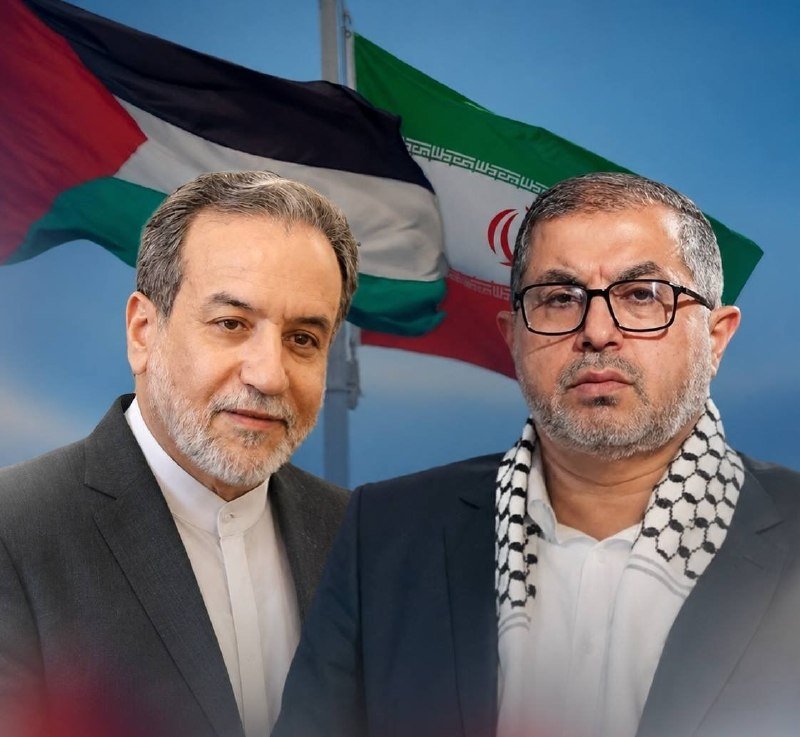
On 23 June 2026, the smallest Gulf sultanate put the biggest chokepoint of the global oil trade on the table. Oman's foreign ministry, following a visit from Iranian parliament speaker Mohammad Bagher Ghalibaf and foreign minister Abbas Araghchi, said the two sides had agreed to explore the option of "administrating the Strait of Hormuz, and the services and 'costs' associated" with its traffic, according to a Telegram summary of the Omani statement from the @rnintel channel at 22:25 UTC. The framing — services and costs — was a diplomatic way of raising the question Tehran has pressed for months: who collects fees from the roughly twenty million barrels of oil and a fifth of the world's traded petroleum that pass through the strait each day.
The answer, before the day was out, came from Washington. US Secretary of State Marco Rubio, speaking on 23 June 2026, drew a hard line: "Hostages in the region cannot be ended if Iran is launching missiles," and, separately, that no country may impose tolls on shipping in the strait, as reported by @sprinterpress at 20:42 UTC on X. The UN, for its part, said it would evacuate sailors stranded in the waterway, per a Telegram post from @BBCWorldoffl at 20:38 UTC. Within hours, a back-channel proposal, a great-power warning, and a humanitarian evacuation had been layered on top of each other.
The Omani proposal
Muscat's pitch, as filtered through the Telegram summary, was not a unilateral Iranian demand. It was a joint exploration of how to "administrate" Hormuz — language that nods toward port-and-pilotage governance models used elsewhere in the Gulf and leaves open whether fees would be service charges, insurance premia, or something closer to a transit tariff. The optics matter: Iran's Ghalibaf is the speaker of the Majles; Araghchi is the foreign minister. Sending both, together, signals that Tehran is approaching the question legislatively as well as diplomatically. Oman, long the Swiss-style intermediary between Washington and Tehran, is again positioning itself as the deal-broker rather than the deal-taker.
The structural subtext is that the strait's de facto security architecture — set under American naval primacy after the 1980s tanker-war era — has frayed. Iran's Islamic Revolutionary Guard Corps Navy has for years harassed commercial shipping; since the 2023-25 escalation around Gaza and Lebanon, that harassment has metastasised into seizures, drone attacks, and the kind of close-quarters incidents that drive insurance rates through the hull. The Omani proposal reads as an attempt to write those facts into a revenue-sharing formula rather than continue absorbing them as risk premiums absorbed by shipowners.
The Rubio red line
Rubio's response, characteristically, was framed as a principle rather than a negotiation. The position — that no country may charge transit fees through an international waterway — is consistent with the long-standing US view of the strait as a corridor governed by the law of the sea, not by riparian sovereignty. The accompanying line on Iranian missiles ties the two issues together: any arrangement that delivers Tehran a revenue stream while its missile programme continues striking the region is, in Washington's telling, paying for the next round.
That framing has weight because the strait's customers — refineries in India, China, Japan, South Korea, and a long tail of European and African buyers — are not at the table. Coverage routinely defers to the language of official spokespeople, and the practical question of who pays higher war-risk insurance, and where that premium ultimately lands, gets less column-inch than the great-power exchange does. A reader outside the region could be forgiven for concluding this is a bilateral argument between Tehran and Washington. It is, in fact, a global cost question being decided in someone else's capital.
What the UN evacuation tells us
The UN's decision to evacuate stranded sailors is the under-reported beat of the day. It implies that a non-trivial number of vessels and crews are presently stuck in the strait — unable to proceed because of Iranian action, unable to turn back because of insurance and charter terms, and outside the practical reach of national navies operating under rules of engagement that have narrowed since the spring. The UN statement, as carried by the @BBCWorldoffl Telegram channel, does not give a number of crews or vessels, but the decision itself is the kind of step usually reserved for protracted blockades, not for routine tensions.
This is also where the Omani proposal and the Rubio line collide most awkwardly. If Muscat and Tehran are sketching a service-and-cost framework, stranded crews are the early evidence that the existing arrangement is not functioning. If Washington insists no fees may be levied, then the implicit American offer has to be a credible guarantee of safe passage in exchange — and the UN evacuation suggests that guarantee is not currently being delivered.
Stakes
For Oman, this is a chance to reclaim the diplomatic franchise it has held since the 2013-15 nuclear talks and again through the 2024-25 back-channel period. For Iran, it is a chance to convert an asset it already partly controls — the ability to threaten the strait — into a formal seat at the revenue table. For the United States, conceding any fee structure would amount to a quiet rewriting of the postwar maritime order that has, until now, allowed American power-projection in the Gulf to ride on free transit.
What remains genuinely uncertain is whether the Omani statement represents a serious negotiating position or exploratory language calibrated for Tehran's domestic audience. The Telegram summary does not specify a timeline, a fee schedule, or the legal vehicle — and crucially, the framework as described would require the acquiescence of the strait's other shore, the United Arab Emirates and the Musandam exclave of Oman itself, neither of which has commented in the materials at hand. Rubio's statement, meanwhile, sets a ceiling but not a floor; it rules out fees without specifying what the United States would offer in their place.
The narrow window between now and the next incident is where the answer will be written. If the UN evacuation proceeds, and if Muscat can produce a text that looks less like a transit tax and more like a pilotage and security service, the Rubio line will be tested in private. If another tanker is seized, or another crew is detained, the framework conversation will close on its own.
How Monexus framed this: Western wires led with the Rubio quote and the UN evacuation; the Telegram-sourced Omani statement got less attention. This piece treats the Omani proposal as the lead because it sets the terms of the dispute, not Rubio's reply to it.
Wire provenance
This editorial synthesis draws on the following public wire/social posts:
- https://t.me/rnintel
- https://t.me/BBCWorldoffl
- https://t.me/sprinterpress