Pezeshkian's Islamabad stop signals an Iran tilting toward Asian ballast
Hours after technical talks in Switzerland wrapped, Iran's president landed in Islamabad. The sequence matters: Tehran is increasingly sequencing its moves through Asian partners as a hedge against Washington.
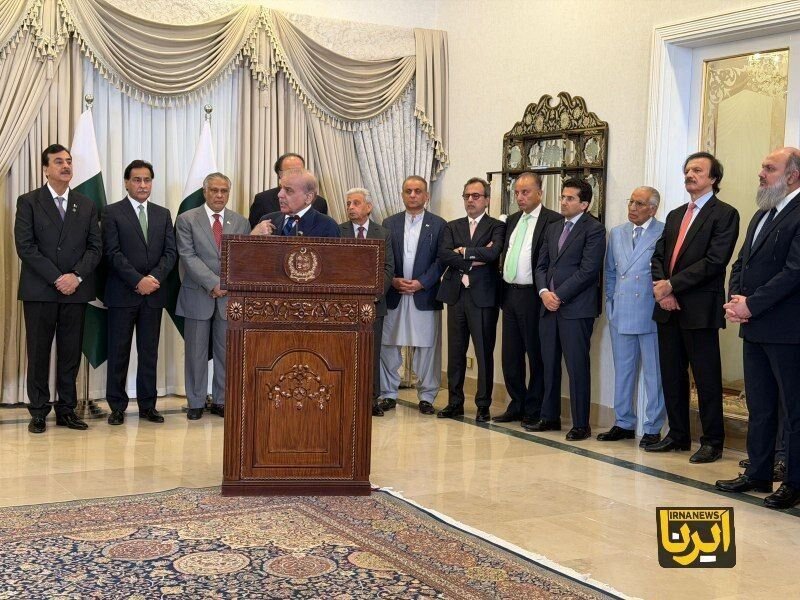
Iranian President Masoud Pezeshkian touched down in Islamabad at roughly 12:51 UTC on 23 June 2026, greeted on the tarmac by both Pakistan's president and prime minister, according to the official Islamic Republic News Agency. The visit came hours after Iranian negotiators wrapped a round of technical talks with a US delegation in Switzerland that Tehran's side described as having concluded "successfully." Two meetings, two continents, one afternoon — and the order is the story.
Tehran is no longer treating Washington and its Asian neighbours as separate diplomatic theatres. It is running them in parallel, and the choreography suggests an Iranian leadership that has stopped believing it can extract durable relief from one without leverage derived from the other.
A sequence, not a coincidence
Read the day's timeline in order. Technical talks in Switzerland wrap first. Pezeshkian's aircraft lands in Pakistan's capital roughly an hour after the IRNA announcement of the Swiss meeting, with the state agency noting he was received at the airport by the country's two highest officeholders. The same officials who would normally headline a state visit were on the apron within the same news cycle as a US–Iran technical round. That sequencing, more than any single communique, is the signal.
The Al Jazeera English wire carried both the Swiss conclusion and the Islamabad arrival as separate bulletins on the afternoon of 23 June, framing them as part of the same diplomatic afternoon. The decision to publicise the Pakistan stop at the precise moment the Switzerland track was still fresh tells the reader where Tehran wants attention to land.
Why Pakistan, why now
Islamabad is not a marginal venue. Pakistan borders Iran, shares a long and lightly governed frontier, and is a nuclear-armed state that has historically been courted by every great power with a stake in South and Central Asia. A presidential-level visit with both the head of state and the head of government in attendance is the protocol Islamabad reserves for partners it wants to flatter visibly. That Pezeshkian received it signals a calibrated upgrade.
For Tehran, the calculation is straightforward. Even a constructive technical round in Switzerland can collapse on a Washington political cycle — a new round of sanctions, a tanker incident, a domestic pressure campaign in the US. Pakistan, by contrast, sits outside the sanctions architecture that constrains Iran's Atlantic-facing trade, and it has the demographic weight and the port capacity to matter for any Iranian effort to keep its economy tethered to Asian demand. For Islamabad, hosting a sitting Iranian president at a moment of US–Iran thaw is a way to advertise relevance without picking a side.
The structural read
What is unfolding is not a single deal but a portfolio approach. Iran is hedging. The Western track, run through Omani and Swiss intermediaries in recent months, is being kept open in case the underlying political conditions in Washington shift. The Eastern track, run through Pakistan and through the longer-standing ties with China and Russia, is being thickened so that no single failure point in Geneva or Muscat can take the whole file down with it. The same logic that drives a treasurer to diversify a reserve portfolio is now driving a foreign ministry.
There is a harder reading, too. By foregrounding the Islamabad stop, Tehran is reminding Washington that any final settlement will be implemented in a region where Iran has neighbours, and where those neighbours will be paid attention to. Pakistan's import needs for energy, its interest in stable western-border trade, and its longstanding relationship with both Gulf and Chinese partners mean that a US–Iran deal that ignored Islamabad would arrive in a neighbourhood that had not been consulted.
Stakes, and what remains thin
If the pattern holds, the next several weeks will produce a series of Iranian presidential or foreign-ministerial stops through South and Central Asia, each timed to a milestone in the Western track. Energy and trade memoranda will be the public furniture. The unresolved questions — what the United States is actually prepared to concede on sanctions architecture, and whether Iran's regional partners are willing to be the public scaffolding for a deal they did not negotiate — will not be settled in those communiques.
What the day's reporting does not yet establish is the substantive content of the Swiss technical round. Iranian framing describes it as successful; that is a Tehran characterisation, not an American one. The Pakistan visit, meanwhile, is described in advance and arrival terms only — agenda items, joint statements, and any signed instruments have not surfaced in the reporting available at the time of writing. The sequence is real; the deliverables are not yet visible.
The honest read is that Iran is buying optionality. Whether that optionality gets converted into a deal, or into a more durable Asian ballast against a deal that never arrives, is the question the rest of the summer will answer.
Desk note: Monexus is foregrounding the sequencing — Swiss talks and Islamabad arrival in the same news cycle — rather than either event in isolation, on the read that the order is the diplomatic signal.
Wire provenance
This editorial synthesis draws on the following public wire/social posts:
- https://t.me/aljazeeraglobal
- https://t.me/aljazeeraglobal
- https://t.me/Irna_en