When the stars become the story: how a Telugu wedding rewrote a film's marketing playbook
The director of Ranabaali says a real-life wedding between two of Telugu cinema's biggest names has done more for his film than any trailer drop could.
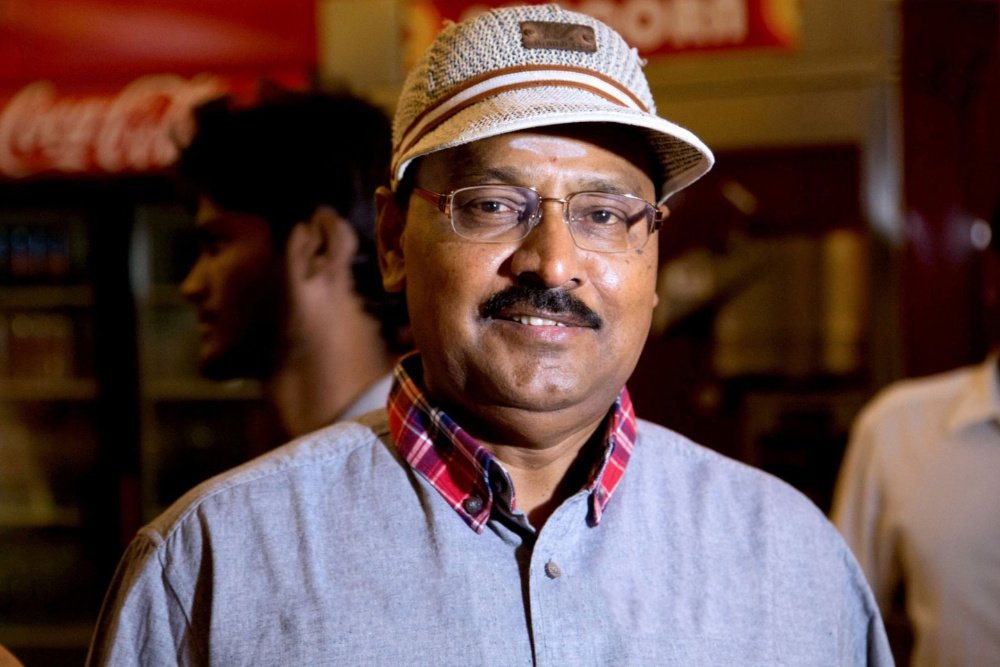
On 23 June 2026, the director of the upcoming Telugu film Ranabaali made an admission that most South Indian filmmakers only whisper about in private: the real-life marriage of two of Tollywood's most bankable stars has done more for his film's visibility than any trailer, music video, or paid campaign his team could have engineered. Speaking to The Indian Express, the director framed the wedding — between actors Vijay Devarakonda and Rashmika Mandanna — as a marketing accelerant that has, almost by accident, pulled his project into the centre of a regional cultural moment.
The remark is small, almost throwaway, and that is precisely why it matters. It captures a quiet shift in the economics of Telugu film promotion: the centre of gravity has moved from the producer's publicity budget to the couple's Instagram grid, and the industry has noticed.
A wedding as a release calendar
Devarakonda and Mandanna married in February 2025, an event that Indian entertainment outlets reported as a private ceremony attended by a tight circle of industry colleagues. The Indian Express's coverage of the Ranabaali press interaction, published on 23 June 2026, treats the union as established context rather than breaking news — a useful marker of how quickly the marriage normalised into the working background of Telugu production.
For the makers of Ranabaali, the calculation is straightforward. Devarakonda commands a particular kind of audience: a Telugu-speaking, mobile-first, social-media-fluent viewer in the 18-35 bracket who treats films as extensions of the personalities attached to them. When that audience is already saturated with wedding photographs, rehearsal videos, and family blessings featuring the lead actor, a film that simply has his name attached inherits a share of the oxygen. The director's framing — that the marriage "helps" the film — is the polite version of a sharper industry truth: in the post-pandemic Telugu market, a star's personal life is now a release strategy.
The counter-narrative: when the halo fades
There is, of course, an alternative reading. Industry veterans have long argued that personal-life hype produces a thin, volatile audience — viewers who show up for the gossip of the premiere but who do not return for the second-week matinee. By that account, a wedding-driven bump at launch is, in effect, a borrowed audience, and the long tail of a film's box office still depends on word-of-mouth from people who watched the picture rather than read about the couple.
The Ranabaali director's remarks are best read as honest about the immediate tailwind rather than a claim about depth. The Indian Express does not report any box-office figure for the film — it is positioned as an upcoming project — and there is no evidence in the source material that the marriage has translated into ticket sales. The most that can be said, on the available record, is that the conversation exists, that the film is part of it, and that the director is happy to say so out loud.
A second complication sits just under the surface. Telugu cinema in 2026 is no longer a one-star-per-film economy. Competition from streaming-first Telugu productions, from dubbed Telugu releases aimed at Hindi and Tamil markets, and from a generation of younger actors with their own native social-media footprints has thinned the rents that any single star used to extract. If Devarakonda's marriage boosts Ranabaali, it does so in a market where every other producer is also looking for the same trick.
The structural frame: stardom, intimacy and the algorithmic economy
What the Ranabaali director is describing, whether he uses the language or not, is a redistribution of marketing power away from the producer's publicity department and toward the star's personal brand. The mechanism is platform-native. A wedding produces an endless stream of content — soft launches, venue shots, family interviews, paparazzi candids — each of which is engineered to circulate on Instagram, YouTube Shorts, and regional entertainment portals. The film does not need to buy that circulation; it simply has to wait for the audience to associate the couple with whatever is on the marquee next.
The pattern is not unique to Telugu cinema, but the regional specifics matter. Telugu film's audience is unusually concentrated, unusually online, and unusually willing to treat stars as quasi-familial figures. The same dynamic has historically made Tollywood more sensitive to personal-life events than the more studio-driven Hindi film industry. When a star marries, the audience does not simply register the news — it reclassifies the star, and the films in the pipeline, by extension. Ranabaali is the latest project to benefit from that reclassification.
The risk for the industry is that the halo is treated as a resource to be mined. If producers begin scheduling films around the personal calendars of stars rather than the creative and commercial logic of their projects, the centre of decision-making in Telugu cinema drifts from writers and directors toward the small set of actors with audiences dense enough to make a wedding the news cycle. There is no evidence that Ranabaali was timed for that reason, but the director's candour suggests the temptation is now openly discussed.
Stakes: who wins, who loses, and what comes next
The immediate winner is Ranabaali itself, and the director is honest enough to admit it. The film enters a discourse where its lead is already the subject of fan attention for reasons that have nothing to do with the project, and that attention is, at minimum, a free channel for its eventual trailer and music launch.
The medium-term winners are the small number of Telugu stars with both the cultural standing to generate marriage-level interest and the production discipline to leverage it. Devarakonda and Mandanna are the most-cited current example; the same logic will apply to the next Telugu pairing to clear that bar.
The losers, if the pattern hardens, are mid-budget Telugu films that lack a star whose personal life travels at the speed of Instagram. Those projects have always depended on the producer's publicity spend and on word-of-mouth; in an attention economy in which a wedding can outperform a trailer, their relative position deteriorates. There is also a quieter loser: the audience, who will find it harder to separate the film from the celebrity-industrial complex around it, and to evaluate a picture on its own terms.
The most uncertain variable is the half-life of the effect. The Indian Express's reporting stops at the director's remark; there is no box-office data, no streaming-number data, and no survey evidence in the source material about how the marriage has shifted audience intent. The remaining question — whether the halo converts into tickets, into subscriptions, or merely into a louder launch week — is the one the trade press will be quietly tracking once Ranabaali is released.
This piece treats the Ranabaali director's own framing as the news. The Indian Express's 23 June 2026 report is the sole public record of the comment; the editorial line of this desk is to read industry candour as itself a data point, not to inflate it into a verdict on the film.