Rubio's Strait Script: What the Secretary of State's Iraq-Language Reveals About the Iran Deal
A carefully worded caveat about Iraqi airspace and a hard line on Hormuz reveal the real architecture of the MoU Washington is selling — and the constituencies it cannot afford to offend.
The line that mattered on 23 June 2026 was not the one about the Strait. It was the one about Iraq.
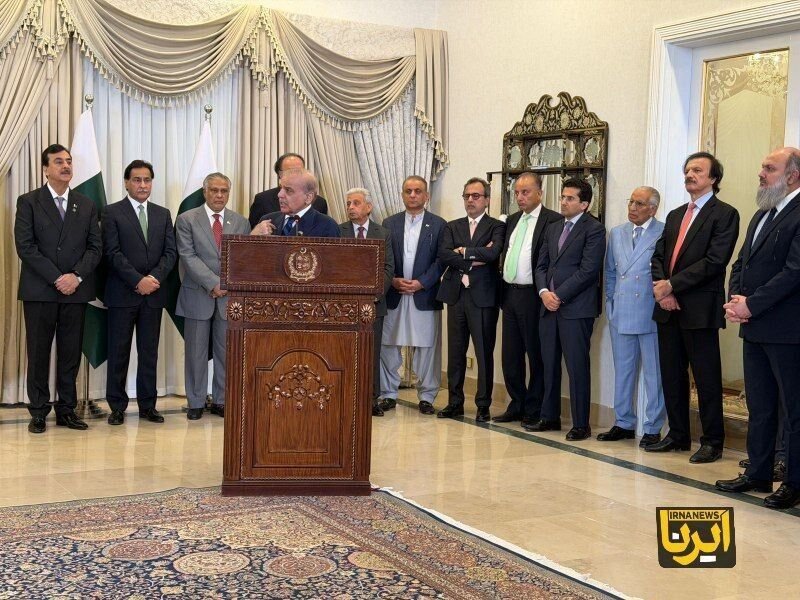
In a brief press appearance carried by Telegram channels Clash Report and Open Source Intel, US Secretary of State Marco Rubio set out the Trump administration's two-track message on the Iran memorandum of understanding. On Hormuz, the message was blunt: freedom of navigation is a matter of international law, no state may impose a transit fee, and the United States and its allies will enforce it. On the MoU itself, the language was careful and conditional. "A careful reading of the MoU will see that if you talk about an end to hostilities in the region — you can't have the end to hostilities and conflicts in the region as long as Iranian proxies are launching missiles and drones from Iraq and are participating in terrorism like Hamas did and Hezbollah." The clause does two things at once: it binds any de-escalation to a behavioural test for Iraqi airspace, and it keeps the war in Gaza and the long arm of Hezbollah inside the bargaining unit.
This is not a position that was negotiated in the room. It is the position the administration had to walk in with, and the Iraqi geography tells you why.
The Iraqi chokepoint hiding inside the language
For the better part of two years, the Iranian project in Iraq has been a drone-and-rocket architecture, not a political one. Militias tied to the Islamic Revolutionary Guard Corps have used Iraqi territory as launch terrain for strikes on US bases, on Gulf assets, and, intermittently, on Israel. Baghdad's central government has been unable — and on the most generous reading, unwilling — to dismantle that infrastructure. Any agreement that ends the active US pressure campaign on Iran but leaves the Iraqi launchpad intact is, from Washington's standpoint, not a deal at all. It is a ceasefire that the other side can switch off at will.
Rubio's wording names Iraqi territory specifically. The omission of Syria, of Yemen, of Lebanon, is itself a tell. The administration is signalling that the MoU is not a comprehensive normalisation. It is a sequenced arrangement whose first test is whether the Iraqi airspace stops being useful to Tehran. Until it does, the regional "end of hostilities" the MoU purports to deliver is conditional, revocable, and reviewable by the United States at any time.
The Strait as leverage, not as concession
The exchange that drew the most attention was the one that sounded most like boilerplate. Asked whether the US and its allies could guarantee freedom of navigation in the Strait of Hormuz, Rubio answered: "That's the law. It's an international waterway. No country is allowed to charge transit fees." The line read as restatement, not negotiation. It is worth taking seriously precisely because of that.
The administration is in the middle of trying to lock in a framework in which Iran does not convert the Strait into a revenue stream or a coercive instrument. Tehran has, at various points in the past two decades, threatened to do exactly that. The MoU under discussion is, on the public read, an attempt to take the transit-fee question off the table in writing, in advance of any larger sanctions architecture. Rubio's insistence on the legal baseline — not a favour, not a US guarantee, but a duty that exists regardless of the MoU — is the diplomatic equivalent of pre-positioning. It tells Tehran, and the Gulf monarchies watching, that the Strait is the line the US will hold even if the broader deal frays. It also tells domestic audiences, sceptical of any accommodation with Tehran, that the administration has not traded the right of free passage for a photograph.
What the proxies clause is really about
The proxies clause is the part of Rubio's remarks that will age the fastest, because it is the part that the Iraqi file will test first. The militias have a habit of acting unilaterally and claiming credit afterwards; that is the point of a proxy. A diplomatic document that conditions regional peace on a behavioural test for a third country's airspace invites a familiar pattern: provocations by subordinate actors, denials by the principal, and a Washington forced to choose between enforcing the clause and admitting the deal is dead.
There is a competing reading. Iraqi politics has shifted in the past year. The Shia political class is fractured between Tehran-aligned lists and figures who have begun, cautiously, to distance themselves from the militia economy. A deal that ties US tolerance to a measurable end of drone launches from Iraqi soil could, in principle, give those figures cover: a domestic reason to crack down that does not require them to choose between Baghdad and Tehran openly. The clause is not only a test for Iran. It is a tool for Iraqi politicians who would like to act on it.
The structural frame
Strip the rhetoric away and what the administration is doing is straightforward. It is building a multi-pivot arrangement: Hormuz as a hard legal floor, Iraqi airspace as the first behavioural test, the proxy ecosystem as a continuous review condition. Each element is sequenced. Each element is reversible. None of them concede a permanent strategic position to Tehran. Whether that sequencing is read in Washington as a disciplined framework or in Tehran as a structure designed to fail depends almost entirely on what happens the first time a drone leaves an Iraqi runway during the life of the MoU.
The serious answer to the question Rubio was asked is therefore the one he did not give. Freedom of navigation in the Strait is a question of capacity, not of law. The US Navy and its regional partners have, in the relevant scenarios, the capacity. The unresolved question is whether the political will to use it survives a deal in which one side is widely seen to have traded a piece of the regional balance for the sake of an agreement. The MoU's Iraqi clause is the place where that question will be answered first, and probably soon.
This publication reads Rubio's remarks as a deliberate, sequenced articulation of the MoU's red lines rather than off-the-cuff commentary. The Iraqi geography is the test case; the Strait is the floor; the proxy ecosystem is the ongoing review condition. Whether that architecture holds depends on the next incident in Iraqi airspace, not on the text of the agreement itself.
Wire provenance
This editorial synthesis draws on the following public wire/social posts:
- https://t.me/ClashReport
- https://t.me/osintlive
- https://t.me/osintlive/