Sa'ar's 'Iranian occupation' line is not diplomacy, it is a thesis statement
An Israeli minister's claim that there is no intention of leaving southern Lebanon is not atmospherics. It is the opening of a doctrinal file that other states are already compiling parallel versions of.
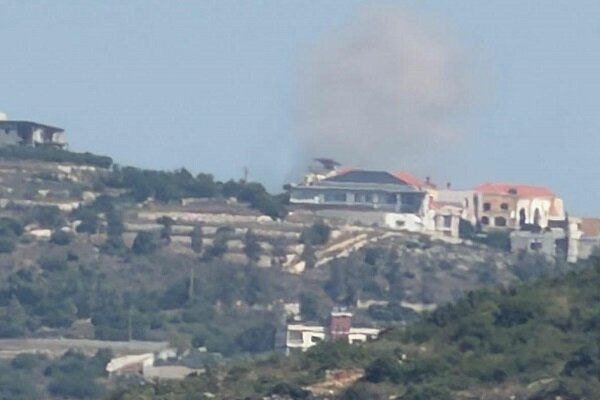
On 25 June 2026, Israeli Energy Minister Eli Cohen told Channel 14 that Israel has no intention of withdrawing from southern Lebanon, brushing off the Trump administration's request to wind down the occupation. The statement, reported by Iranian outlets and relayed through regional monitoring channels, was not a stray cabinet indiscretion. It arrived inside a broader Israeli discourse in which ministers have begun to describe the presence north of the border not as a temporary operation but as a structural condition. The wire treated it as coalition atmospherics. It is worth reading as a doctrinal claim with consequences for how the state intends to characterise the Lebanon file for the remainder of the year.
A lexicon, then a posture
Cohen is not the first Israeli minister to harden the language on Lebanon. Defence Minister Israel Katz, speaking on the same day, framed the "economic campaign against Iran" as a critical front for Israeli security, folding the southern Lebanon presence into a wider architecture of pressure on Tehran (Middle East Eye, 25 June 2026). The Energy Ministry line completes a pattern: one minister speaks of an indefinite occupation, another of an economic siege, a third of diplomatic re-engagement with Washington. Read together, they sketch a government in which the Lebanon file is no longer being negotiated but declared.
This matters because the Israeli presence in southern Lebanon has historically been justified, even by its critics, as a defensive buffer tied to a specific threat: Hezbollah rocket capabilities, the disputed Har Dov area, the residual infrastructure of the October 2023 war. Each of those arguments implies a horizon. A buffer is supposed to be temporary, calibrated to the threat it neutralises. When a sitting minister tells a domestic audience there is no intention of leaving, he is converting a security argument into a territorial one.
The template problem
Once Israel describes its position south of the Litani as an occupation in form as well as effect, the conceptual move becomes available to others. Syria's permanent representative to the United Nations, Ibrahim Al-Olabi, said on the same day that "Syria is continuing with reconstruction, and Israel continues to violate the disengagement agreement," framing Israeli operations across the 1974 line as a continuing breach rather than an isolated incident (Shaam Network, 25 June 2026). The Lebanese file and the Syrian file have always been legally distinct. In rhetorical practice they are now being welded together by both sides: Israel as the holding power, its neighbours as the documentation.
The wire also records the parallel Iranian-front messaging. The Persian Gulf Waterway Authority issued a notice that "the consequences of passing through unauthorized routes will be borne by the owner, operator, and captain of the vessel," a tightening of maritime language that Western shippers will read as enforcement theatre and Tehran's partners will read as policy (sprinterpress, 25 June 2026). Italian Prime Minister Giorgia Meloni clarified her country's position on cooperation with the United States against Iran, attempting to keep Rome inside the Western frame while the file drifts (sprinterpress, 25 June 2026). Canadian Prime Minister Mark Carney went further, telling reporters that Canada should reopen diplomatic offices in Tehran and Caracas, a small but pointed departure from the G7 consensus that has held since the last major escalation (Tasnim, 25 June 2026).
The economic front, named out loud
Katz's choice of phrase is the tell. "Economic campaign" is not a term that enters a defence minister's vocabulary by accident. It implies a target, a duration, and a theory of victory: that the Iranian state can be compelled through currency, fuel, and logistics rather than through the kind of strike package that has dominated headlines since 2023. It also implies coordination, because an economic campaign conducted by a single state is just a sanction regime; an economic campaign conducted by a coalition is something else.
That is where the Lebanon file connects back to the wider one. Israeli energy infrastructure in the disputed Mediterranean blocks is part of the same argument about pressure on Iran that Katz is now naming out loud. Cohen's insistence on staying in southern Lebanon is, in this reading, not about Lebanon at all. It is about preserving a forward position while the economic track runs in parallel.
What the documentation buys
The standard counter to an indefinite occupation is a UN Security Council resolution, a ceasefire framework, or a binding bilateral arrangement. None of those is in play. The Syrian complaint is on the record. The Lebanese complaint will be on the record when Beirut's diplomats file their next reply. Ansarallah leader Abdul-Malik al-Houthi used his Islamic New Year address to issue what he called a "final warning" to Saudi Arabia and Somaliland, hinting at military action to end what he characterised as an external project on Yemeni soil (DDGeopolitics, 25 June 2026). That is the same template in a different theatre: a sitting government describing a neighbour's presence as occupation, then building a documentation chain to support the claim.
If the template is accepted, it is available to every state with the patience to compile the file. That includes Iran, which has spent two decades assembling UN complaints about Israeli operations and now has a near-neighbour in Lebanon compiling a parallel one. It includes Syria, where Al-Olabi is already iterating the language. It does not, at this point, include the Gulf states, whose joint statement with Washington on Gaza, cited by the Hamas spokesperson, stopped short of any characterisation of Israeli positions on its northern border (Al-Alam, 25 June 2026).
The date to watch
The Trump administration's request, relayed through Cohen's Channel 14 interview, is the soft deadline that matters. If the Israeli cabinet treats it as advisory, the Lebanon file enters a new phase in which an Israeli government is openly claiming a permanent occupation while the United States publicly prefers otherwise. Boris Johnson, writing on 25 June, argued that Trump "was the first to blink" and accepted Iranian conditions back in April, a framing that suggests Washington is no longer the principal polemicist on the Iran file (sprinterpress, 25 June 2026). If the principal polemicist is no longer setting the pace, the ministers who speak loudest set it instead.
The next filing date to watch is the UN Security Council's regular Lebanon renewal in late July. If Beirut tables a formal characterisation of the Israeli presence as occupation, and if the documentation chain by then includes Syrian complaints, Iranian remarks, and Ansarallah warnings all pointing in the same direction, the wire will not be able to keep treating the line as atmospherics.
How Monexus framed this: where the wire logged Cohen's Channel 14 remarks as a coalition story, Monexus logged them as the opening of a doctrinal file. The Lebanon question is being re-described before it is re-negotiated, and the documentation race has already begun.
Follow the event.
These dated source records provide context. They do not retrospectively verify this archive article.
Separate what the nuclear watchdog reported from what it could not determine after the June 2025 strikes.