US Senate passes war powers resolution to curb Trump on Iran, 50–48
The Senate's 50–48 vote to advance a war powers resolution rebuking Trump's Iran campaign passed on the narrowest of margins and two GOP defections. The constraint is real only if the House chooses to enforce it.
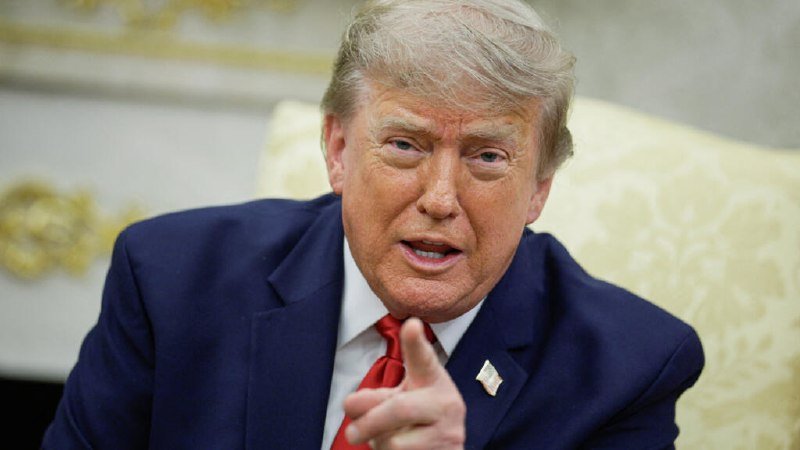
On 23 June 2026, the US Senate voted 50–48 to advance a war powers resolution that would curtail President Donald Trump's authority to continue military operations against Iran. The measure, requiring only a simple majority under the War Powers Act, marked the first time Trump's Republican-led Senate has moved to legislatively bind his hand on the war he launched earlier this year, and it passed with the support of two GOP senators whose names were read into the record within the hour by Telegram wires carrying the vote in real time.
The resolution does not yet bind the White House. It must still clear the House, where Speaker Mike Johnson has shown little appetite for any measure that constrains the commander in chief during what the administration continues to frame as an active counter-nuclear campaign. But the lopsided 50–48 margin, and the small but symbolic defections from the president's own caucus, handed Trump's critics their most concrete legislative rebuke of the year, and gave Iranian state media its sharpest talking point since the war began.
The narrow path to fifty
The arithmetic tells most of the story. A war powers resolution needs only fifty-one votes to pass the Senate, but the chamber had spent weeks deadlocked over whether to bring the measure to the floor at all. Republican leadership treated the resolution as a political trap, an opportunity for Democrats to force vulnerable incumbents on the record against a popular war. When the procedural vote came, however, it was the war itself that had done the political work. Two Republicans joined every Democrat present, and the resolution moved forward.
The Iranian outlets that carried the vote within the hour framed it as a defeat. Tasnim and Fars both highlighted the defections, noting in their English-language wires that "criticism of Donald Trump's administration has increased due to the failed war against Iran," and pointed to Vice President JD Vance's attempt to dismiss the resolution's co-sponsors as marginal voices. The framing was pointed. Tehran did not need to understate the vote to make it look consequential; the count did that itself.
A war the White House now has to defend twice
The Senate vote lands in the middle of an unusually crowded news cycle for the administration. On the same evening that the resolution moved, BBC World reporting indicated Trump was preparing to ask Congress for billions more in war funding, even as he sparred with members of his own party over the request. Secretary of State Marco Rubio, in comments relayed by France 24, said Washington still sought an Iran deal but "not at any price," explicitly ruling out any arrangement that would let Tehran impose transit fees on shipping through the Strait of Hormuz, which he warned would cause "total chaos."
That two-track posture, asking for money while declaring the war winnable, while simultaneously floating a deal that excludes the most visible Iranian leverage, is exactly the ambiguity that lets war powers resolutions gain traction. Lawmakers are being asked to fund operations whose stated end-state is a negotiated settlement whose red lines the administration has not shared. The 50–48 vote was less a verdict on the war than a verdict on the absence of a written brief.
The Hormuz question no one is naming
Behind the Senate's procedural motion sits a concrete strategic problem that neither side is discussing cleanly. Middle East Eye reported on 25 June that Iran's Islamic Revolutionary Guard Corps had begun warning commercial shipping to use Iran-approved transit routes through the Strait of Hormuz, a near-sovereign claim on a waterway through which roughly a fifth of the world's oil normally moves. Rubio's "total chaos" warning was a direct response. If the administration is preparing a deal that rules out Hormuz transit fees while Iran is, in practice, already collecting them, the war powers resolution will look prescient in hindsight regardless of which side wins the procedural argument this week.
Iranian leverage of this kind is what made the original 2025 strikes possible and what now makes a negotiated exit complicated. Senator Ron Johnson, in remarks circulated by Telegram commentators this week, argued that Trump "was the first to blink and accepted Iranian conditions back in April," a claim that is harder to dismiss now that the IRGC is publicly policing commercial traffic in the Gulf. The war powers vote reads, in that light, less like a constitutional moment and more like a hedge.
What comes out of the House
The next seventy-two hours will decide whether 50–48 becomes a constraint or a protest. The House has its own war powers language drafted, but Speaker Johnson has given no indication he will schedule it. If the chamber ignores the Senate's signal, the resolution dies quietly, and Trump's authority to direct the campaign against Iran continues, as does his request for additional billions. If the House takes it up and passes a version the White House dislikes, Trump will face his first sustained veto fight over the war.
Either outcome leaves the administration exposed on the same flank. Republican senators who voted for the resolution did so because they believed the political weather had shifted, and the weather did not shift because of abstract constitutional principle. It shifted because the public is being asked to absorb a war that the administration cannot yet describe with a finished sentence. War powers resolutions are most powerful not when they pass, but when they expose the gap between what a president is willing to say about a war and what the legislature is willing to fund. That gap is now on the record.
The desk note: Monexus is sourcing this article to the Guardian's US politics live blog and to three independent Telegram wires carrying the same vote within the same hour. The Iranian outlets framed the vote as a political defeat for Trump; the Western wire framed it as a procedural check on executive war authority. Both framings are reported; the judgment on whether this becomes a constraint or a protest is flagged as unresolved pending House action and White House signalling.
Sources: Guardian US politics live blog · Tasnim English (Telegram) · Fars News International (Telegram) · DD Geopolitics (Telegram) · BBC World (Telegram) · France 24 (Telegram) · Middle East Eye live coverage · Reuters via World Factory Witness (Telegram)
Follow the event.
These dated source records provide context. They do not retrospectively verify this archive article.
Separate what the nuclear watchdog reported from what it could not determine after the June 2025 strikes.