Senate war-powers vote forces a reckoning on Trump's Iran campaign
A 50-48 Senate vote instructs the president to halt operations against Iran absent congressional authorisation, exposing the narrowest possible majority against an active military campaign.
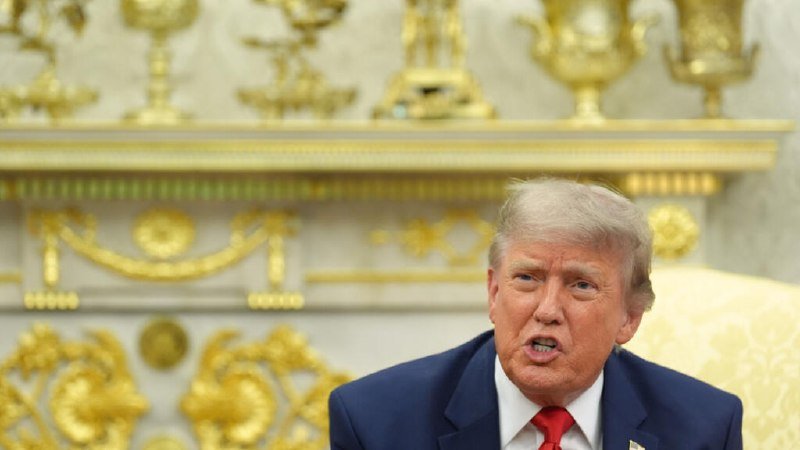
The United States Senate on Tuesday evening voted 50-48 to pass a concurrent resolution directing President Donald Trump to withdraw U.S. armed forces from hostilities involving Iran, the first formal congressional curb on an active Middle East campaign since the escalation began. The measure, agreed by both chambers in identical form, does not require the president's signature to take effect under the terms of the war-powers framework, leaving the White House with the choice of compliance, veto, or public defiance.
The arithmetic is the story. A two-seat majority is not a mandate; it is a warning. Inside a chamber where the Republican leadership carried water for the administration's Iran policy through the spring, two GOP defections were enough to invert the constitutional posture from executive latitude to legislative instruction. The vote also reopens the slow-burning question of whether a president can sustain an offshore military campaign past a mid-term cycle without the explicit authorisation Congress has refused to grant.
What the resolution actually does
The text passed on 23 June instructs the commander-in-chief to "terminate the use of United States Armed Forces" in operations against Iran unless Congress formally authorises continued hostilities, according to reporting from Ukrainska Pravda's wire desk and parallel coverage by The Jerusalem Post. It is a concurrent resolution — the same vehicle the House cleared earlier this month — which means it bypasses the presentment clause. Trump cannot veto it. He can ignore it, comply with it, or test it in court.
None of those options is cost-free. Compliance unwinds a campaign the administration has publicly framed as essential to deterrence. Open defiance would invite the first successful war-powers challenge of the modern era, with the courts as referee. Quiet non-enforcement invites the next strike to be litigated in real time.
The coalition that produced 50
Senate action on Iran has travelled a familiar post-2001 fault line: a small bloc of Republican defence hawks uncomfortable with executive overreach, joined by the Democratic caucus and a handful of institutionalists. The 50-vote total reflects that alignment almost exactly. Coverage in Israeli outlets emphasises the concerns of legislators who read the Iran file through the lens of arms-control precedent and the cost of an open-ended regional commitment; reporting from Tehran via the Iranian state-aligned channel @Farsna notes the framing in Washington as a sign that "even American lawmakers" consider the campaign constitutionally suspect.
Both reads are politically convenient and partially true. They are also incomplete. The deeper current is mid-term math. Senators facing re-election in two years are being asked, on the record, whether to underwrite a war the public has not been sold. The vote lets them answer "no" without owning the consequences of stopping it.
Counter-narrative: why the White House may not blink
The administration has incentives to treat the resolution as advisory. War-powers challenges are slow. Litigation runs on a calendar measured in months; strike packages run on a calendar measured in hours. A president willing to absorb a court loss can run out the clock on a campaign long enough to change facts on the ground before a judge rules on the authority to conduct it.
The legal scholars most associated with executive war power have spent four decades building the doctrinal scaffolding for exactly that posture: statutory silence, the President's role as commander-in-chief, the impracticality of judicial supervision of battlefield decisions. A concurrent resolution is not a declaration of war, and the framers of the 1973 act knew that. What the resolution does do is force the administration to spend political capital defending a position it would prefer to keep implicit.
Structural frame: the slow reassertion of the legislative branch
Read against the last quarter-century, the vote is less an aberration than a long-delayed correction. Post-9/11 authorisations were stretched to cover operations their drafters never imagined. Post-2024 strikes against Iranian-aligned assets in Syria and Iraq proceeded under the same elastic legal logic. Each escalation widened the operating envelope and shrunk the room for congressional objection — until the envelope met a Senate caucus willing to object on the record.
What this resolution actually contests is the routine deference to the executive on the use of force. It does not, on its own, end the campaign or compel a withdrawal. It does move the burden of justification from those who would restrain the war to those who would wage it. That shift is harder to reverse than a single vote.
Stakes over the next ninety days
The immediate question is whether the White House treats the resolution as binding. A posture of open defiance would push the war-powers question into the federal courts and trigger the first serious judicial test of executive military authority since the post-Vietnam reforms. Quiet compliance would narrow the administration's operational space and complicate any plan for sustained strikes into the autumn. Half-measures — token drawdowns paired with continued surveillance flights and special-operations activity — would test the statute's tolerance for ambiguity and almost certainly produce the next round of litigation.
For Tehran, the vote is at minimum a propaganda asset and at most a structural opening. Iranian state media has already cast it as evidence that the campaign lacks domestic legitimacy; that framing will be useful in negotiations whether or not it changes the operational reality. For Gulf states hosting U.S. forces, the message is less reassuring: an ally whose Congress will not authorise the war is an ally whose commitments are conditional.
What remains uncertain
The sources do not yet specify which Republican senators crossed over, what specific operations the administration considers covered by the resolution, or whether the House leadership intends to attach the resolution to must-pass legislation that would force a different choice. The 50-48 margin leaves no margin for error on a future vote; one defection on either side and the arithmetic collapses. Whether the White House treats that fragility as a deterrent or as a provocation is, for now, a matter of interpretation rather than evidence.
What is on the record is narrower and sturdier: on 23 June 2026, a thin Senate majority instructed a sitting president to stop a war he had not been authorised to start. The constitutional system worked the way the constitutional system is supposed to work — slowly, messily, and on the narrowest of margins.
This piece was framed as a constitutional and political story rather than a battlefield one. The wire coverage out of Israel and Ukraine treats the vote primarily as a U.S. domestic signal; Iranian state media treats it as a vindication. Monexus treats it as both, and as a test the administration has not yet answered.
Wire provenance
This editorial synthesis draws on the following public wire/social posts:
- https://t.me/ukrpravda_news
- https://t.me/The_Jerusalem_Post
- https://t.me/farsna
- https://en.wikipedia.org/wiki/War_Powers_Resolution
- https://en.wikipedia.org/wiki/War_Powers_Clause
Follow the event.
These dated source records provide context. They do not retrospectively verify this archive article.
Separate what the nuclear watchdog reported from what it could not determine after the June 2025 strikes.