South Korea's AI chip boom and the quiet nuclearisation next door
Seoul is subsidising a chip industrial complex of historic scale. Forty miles north, a leader has just declared his country will 'fully exercise' its status as a nuclear weapons state. The two stories are not unconnected.
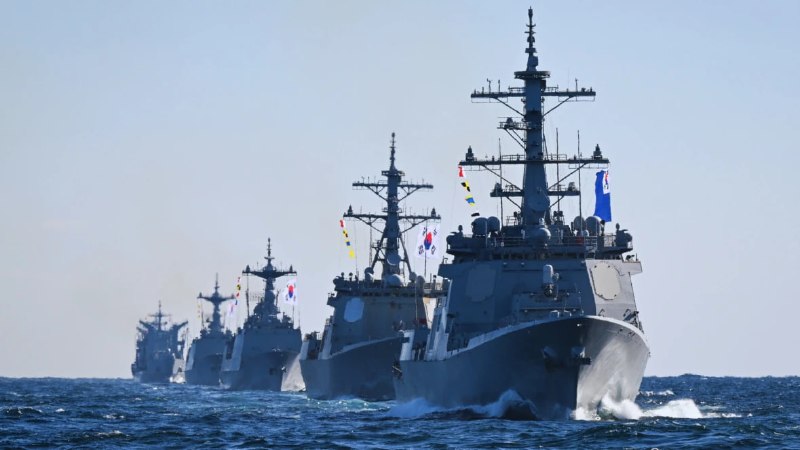
At 04:01 UTC on 23 June 2026, an X account affiliated with the prediction market Polymarket posted a single line: Kim Jong Un has declared North Korea will "fully exercise" its status as a nuclear weapons state. Sixty-one minutes earlier, the South China Morning Post had published a long read asking why South Korea's AI chip boom is becoming a "serious concern" for its economy. The two stories share a peninsula, a border, and a contradiction that regional planners are running out of language to describe.
The thesis is unfashionable but worth stating plainly: the most expensive industrial project on the Korean peninsula is being built in the shadow of an accelerating nuclear arsenal, and the conversation about the two is conducted in entirely separate rooms.
The chip subsidy, in numbers
South Korea's AI semiconductor complex is no longer a sector — it is a state project. The South China Morning Post's 23 June piece catalogues the scale of the buildout: memory giants, foundry incumbents, and a thicket of fabless design houses all clustered around a national bet on high-bandwidth memory and AI accelerators. The concern SCMP flags is not that the buildout is too small; it is that it may be too large, too concentrated, and too dependent on a narrow customer base. The article frames the boom as a serious macroeconomic concern, not a triumph. That framing matters. Coverage that reads Korean industrial policy purely as a success story misses the concentration risk now showing up in Seoul's own commentary.
The structural point, stripped of jargon, is straightforward. When a single sector absorbs a disproportionate share of national capital, talent, and policy attention, the rest of the economy thins out. Subsidies flow to the headline industry. Suppliers consolidate. Real estate near fabs appreciates, pricing out smaller firms. The pattern is familiar from the 1980s chip race in Japan and the more recent concentration of capital around a handful of US platform companies. The South Korean debate is now, finally, asking whether the bill comes due.
The nuclear declaration, in plain language
The 04:01 UTC Polymarket post does not contain analysis. It contains a declaration attributed to Kim Jong Un, made at a moment when prediction markets are pricing the volume of North Korean missile tests for the month. That second data point, surfaced by Polymarket in the 04:02 UTC item, is the more revealing of the two. A market in the count of missile tests in June 2026 only exists because enough trades believe the count will be high enough to make the question interesting. The market is the news.
A declaration of "fully exercising" nuclear status is, in plain terms, a refusal to negotiate the weapons down. It is also a signal to Seoul, Tokyo, and Washington that the diplomatic frame of denuclearisation is closed. The infrastructure surrounding that declaration — launchers, warhead miniaturisation, solid-fuel delivery — has been visible for years. What is new is the rhetorical finality. Words like "fully exercise" do not leave much room for the kind of pause-button diplomacy that defined earlier rounds of talks.
Why the two stories are the same story
Korean industrial policy is being sized for a long contest. The chip complex is not a four-year project; fabs, training pipelines, and power infrastructure are twenty-year commitments. So is a nuclear weapons state next door. The two planning horizons are now coupled, whether Seoul acknowledges the coupling or not. A fab that costs tens of billions of dollars to build is also a fab that an adversary has a permanent incentive to threaten. The threat does not have to be carried out to alter investment decisions; it only has to be plausible.
This is the structural frame that polite analysis tends to skip. Industrial policy is geopolitics. The South Korean bet on AI memory and accelerators assumes, implicitly, that the security environment around the peninsula will be stable enough for the fabs to be amortised over their working lives. A nuclear-armed neighbour that has just publicly closed the door on denuclearisation pushes that assumption back into the room.
What the framing misses
The standard Western line on the Korean peninsula treats the two halves as separable. North Korea is a security file. South Korea's chip industry is a trade and technology file. The two are run by different ministries, covered by different press corps, and analysed by different think-tanks. The Polymarket missile-test market and the SCMP industrial-policy article are, in this reading, unrelated stories that happen to share a date.
That separation is the framing worth challenging. The South Korean public is not confused about the geography. Seoul is forty miles from the border, and the border sits inside artillery range of a state that has just declared its nuclear status permanent. The chip boom is happening on the same island, under the same air-defence umbrella, with the same conscripted workforce. Treating the industrial project as a pure economics story is a category error that has already cost analysts elsewhere — the European debate over energy rearmament in 2022-23 followed the same pattern, until it did not.
The remaining uncertainty is whether the boom continues to attract foreign capital under the new nuclear declaration. The source items do not yet give a clear read on investor reaction. What they do give is a clear read on the political backdrop: a North Korean leadership rhetorically closing the door, and a South Korean economy loading more of its future into a sector whose asset life is measured in decades. The two clocks are running on the same peninsula. Pretending otherwise is the luxury of analysts who do not live there.
This publication frames the Korean peninsula as a single strategic picture, not two. The chip boom and the nuclear declaration are inputs to the same calculation, and the source items this week make that calculation harder to avoid.