The Strait of Hormuz becomes the negotiating table: how a 21-mile chokepoint swallowed the US–Iran file
Within twelve hours on 23 June 2026, Tehran said it would keep the Strait of Hormuz under Iranian control in any permanent deal, its chief negotiator told Al Jazeera the waterway "will never return to the way it was before the war," and Donald Trump warned on Fox that the US could become the chokepoint's "Guardian Angel" — sketching the terms of a contest that is no longer about enrichment alone.
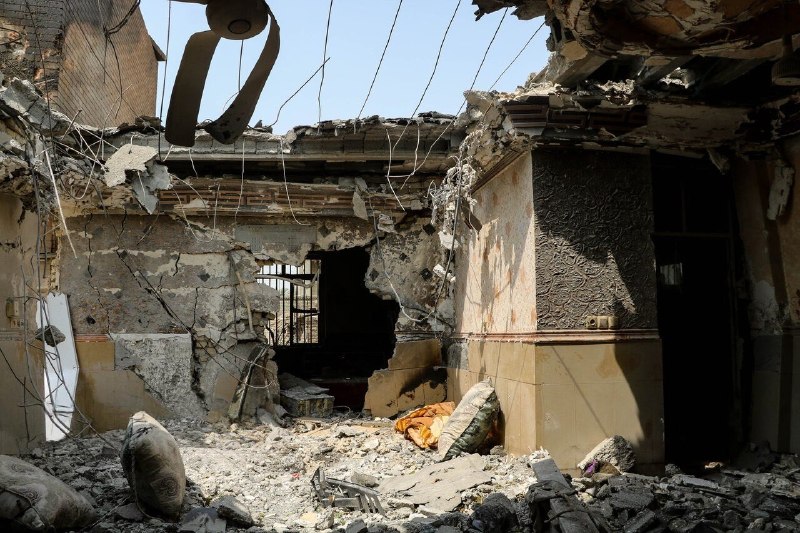
By 03:31 UTC on 23 June 2026, the framing of the US–Iran file had changed on its axis. Donald Trump, on a phone call he described to reporters and on a separate Fox News interview, said he had spoken with Iranian counterparts overnight; if Iran closes the Strait of Hormuz, the United States would, in his words, "blow the s— out of them," and Washington could become the chokepoint's "Guardian Angel" and take 20 percent of the oil. Twelve hours earlier, at 01:45 UTC, Iran's chief negotiator Mohammad Bagher Ghalibaf told Al Jazeera that the strait "will never return to the way it was before the war," and that the US and Iran could "work together" to reopen it. By 02:33 UTC, the BRICS News channel on Telegram carried a parallel Iranian line: Iran would maintain control of the strait in any permanent deal. The chokepoint — 21 miles wide at its narrowest, with two-mile shipping lanes in each direction — is no longer a backdrop to the diplomacy. It is the diplomacy.
What is now on the table is not a narrow nuclear file but a maritime sovereignty file. The negotiating surface has expanded from uranium enrichment and sanctions relief to who runs the corridor through which roughly a fifth of global oil passes. That is a different contest, with different winners.
The Iranian frame: control without closure
Ghalibaf's Al Jazeera comments carry the Iranian side of the bargain in plain terms. The strait will not be "returned" to a pre-war baseline. Iran is offering, in his framing, a managed reopening — co-administered with Washington — rather than a restoration of the status quo. The BRICS News wire, citing Iranian officials, makes the same point more starkly: any permanent arrangement preserves Iranian control of the waterway.
Read together, the two messages are not contradictory. They amount to a proposal for a two-tier settlement: Iran concedes nothing on its physical grip of the strait, but agrees to a political condominium that gives the United States a formal role in stewardship. The strait stays Iranian-managed; the United States acquires standing, possibly revenue, and a face-saving line to sell domestically. Tehran keeps the lever that mattered most during the 12-day war in June — the ability to menace shipping — and trades the use of that lever, conditionally, for relief it can present as a sovereign right.
The frame is not new. It echoes the argument Tehran has made since 2019, when it seized the British-flagged Stena Impero: that Hormuz is Iranian territorial waters in functional terms, and any "international" arrangement is a concession Iran grants, not a right the world extracts. The 23 June messaging is the bargaining position Iran is taking into a negotiation whose end-state it intends to outlive.
The Trump frame: extortion dressed as protection
Trump's overnight phone call and the Fox interview operate on a different rhetorical register. The threat of overwhelming force — the US will "blow the s— out of them" if Iran closes the strait — sets a maximalist floor. The "Guardian Angel" line and the 20 percent oil offer are the ceiling, or the carrot. Between the two, the implicit US ask is that Iran hand over effective control of the chokepoint to an American-protected regime, with the United States drawing a permanent revenue stream from the throughput.
The offer is unusual in form. The United States has, in living memory, never proposed a formal revenue-sharing arrangement on a foreign waterway in which it does not claim sovereignty. The closest historical analogue is the post-1945 settlements in which the United States ran, or shared the running of, the Panama Canal — a comparison that is unlikely to be lost on either side of the Persian Gulf. The 20 percent figure, floated verbally and not yet committed in writing, is also a number with diplomatic gravity. Twenty percent of Hormuz oil, at the volumes currently transiting, would amount to tens of billions of dollars annually, dwarfing the direct economic value of any sanctions package.
The Trump frame therefore reframes the chokepoint from a public good into a private revenue stream. If the United States becomes the strait's "Guardian Angel," the role is paid for by the cargo that passes through. That is a different doctrine of sea-lane security than the one the US Navy has practised since 1945, when the cost of escort was absorbed by the US budget and justified as a global public good. The 23 June proposition moves the cost — and a fifth of the benefit — onto shippers and importing states.
The structural frame: chokepoint politics as the new arms control
Set the two positions side by side, and what is being negotiated is recognisably a successor arrangement to the nuclear file. For two decades, the central bargain between the United States and Iran was: Iran constrains its enrichment programme, the United States constrains its sanctions and accepts an Iranian civilian nuclear capability. That file collapsed; the 12-day war in June closed it. Something has to replace it, and what is being constructed — in real time, in the open — is a deal whose central commodity is control of a chokepoint rather than control of a centrifuge.
This is the larger pattern. As the global order fragments, the objects of negotiation are shifting from disarmament (the twentieth-century mode) to corridors, chokeps, and throughputs (the twenty-first-century mode). Taiwan is a similar fight in microcosm: a narrow waterway under contested sovereignty, vital to chip supply. The Black Sea grain corridor was the same fight, more briefly, in 2022–23. Hormuz is the largest such object currently in play. The pattern is consistent: where there is a piece of geography on which global commerce depends, the question is no longer whether it is international, but who runs it, on whose terms, and for whose revenue.
The 23 June exchanges also expose a hierarchy of rhetoric between the two sides. Iran's public position is a constitutional claim — "we keep the strait" — backed by a managed-reopening offer that costs Tehran little. The US public position is a combination of threat and a market proposition: pay us, and we will keep it open. Both sides are, in effect, selling the same chokepoint to the same audience — the world's oil importers — with different price tags and different claims to legitimacy. Iran's price is sovereignty; America's is protection money.
What is missing from the visible record
Several pieces of the picture are not in the public thread. No text of a draft agreement has been published; the 20 percent figure exists only as a Trump line on Fox News, not as a tabled offer. The BRICS News report of Iranian control in any "permanent deal" is not yet matched by an Iranian foreign ministry readout in English. The Ghalibaf comments to Al Jazeera are the most authoritative Iranian statement, but the article does not specify whether the negotiator was speaking for the office of the president, the supreme national security council, or the office of the Supreme Leader. There is also no public accounting of what concessions Iran is asking for in return — what the price of "managed reopening" actually is in sanctions relief, frozen assets, or arms.
Nor is there a public read of how the Gulf states — Saudi Arabia, the UAE, Oman, Iraq — are responding to a deal in which the strait they also border would be jointly administered by Washington and Tehran. The Strait of Hormuz touches the territorial waters of all four. A two-power arrangement negotiated over their heads would be historically unusual, and their absence from the visible record is itself a fact.
The stakes: who wins, who loses
If the trajectory holds and a US–Iran condominium over the strait emerges, the winners are legible. Iran keeps the lever that gives it standing in any future crisis; the United States acquires a permanent revenue stream and a doctrinal claim to "guardian" status over the most important oil lane on earth. American refiners and shippers gain tariff-free access. Tehran's regional rivals — Israel and Saudi Arabia most clearly — gain a chokepoint they do not control but on which they depend.
The losers are also legible. The global importer — China, India, Japan, South Korea, the European Union — pays twice: once at the wellhead, and once as a tribute to whichever power runs the lane. Smaller Gulf states, whose sovereignty over their own strait-coast is overwritten by a US–Iran deal, lose agency. The doctrine of the sea lane as a global public good — the doctrine the US Navy has upheld, at its own cost, since 1945 — is replaced by a doctrine of the sea lane as a private revenue stream. The shift, if it holds, is structural, not tactical.
What remains uncertain is whether the 23 June language is the opening bid of a real negotiation or the noise of a phase. The threats are loud, the figures are round, the deadlines are not yet on the page. But the object of the fight is now plain, and the object is not the nuclear programme. It is the water.
— Desk note: Monexus frames this story as a chokepoint negotiation first, with the nuclear file as the closed chapter it succeeded. The 23 June material is treated in chronological order, with the Iranian position sourced to Al Jazeera and BRICS News and the US position sourced to Trump's own statements as reported by Unusual Whales. No analyst outside those wire sources is quoted by name; the structural argument is this publication's own, built on the public record.
Wire provenance
This editorial synthesis draws on the following public wire/social posts:
- https://t.me/bricsnews
- https://t.me/s/ajbreaking
- https://x.com/unusual_whales/status/2069136275576442880
- https://x.com/unusual_whales/status/2069136841450926081
Follow the event.
These dated source records provide context. They do not retrospectively verify this archive article.
Separate what the nuclear watchdog reported from what it could not determine after the June 2025 strikes.