'It's not a compliment': Tamannaah on the male gaze in South Indian cinema
The actor says women in South Indian film are still appraised for their bodies on set and on screen — a complaint the industry has heard before, but rarely answered.
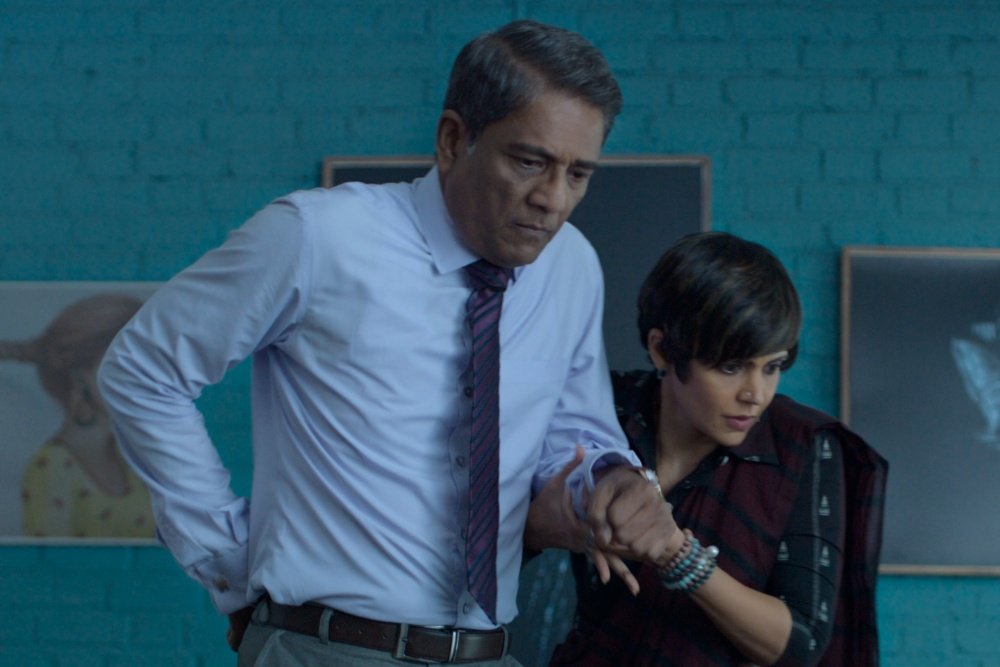
On 23 June 2026, the actor Tamannaah Bhatia used an interview with The Indian Express to put a phrase to a phenomenon South Indian film crews have, in private, described for years. Asked how she handles being looked at on set, she drew a line. "It is not a compliment," she said. The remark landed because it named, plainly, what industry veterans say is an open secret: that women in Tamil, Telugu, Kannada and Malayalam cinema are still being appraised, on set and in publicity, for their bodies rather than their craft.
The interview is not a one-actor outburst. It arrives inside a longer South Indian conversation — visible across Telugu and Tamil film press junkets since at least 2023 — about who gets to define a heroine's value: the audience, the trade press, or the production team. Tamannaah's intervention matters because she has spent more than a decade in front of those cameras and because the South film industry is now the centre of gravity of Indian commercial cinema, grossing more than its Hindi-language counterpart in several recent quarters.
What she actually said
In the Indian Express interview, Tamannaah described a pattern she says she has watched repeat itself across languages and budgets. Crew members and journalists, she suggested, frame remarks about an actor's body as a form of professional observation — a way of talking about "the product." She rejects the framing. The distinction she drew is the one a generation of South Indian actresses have tried, less successfully, to enforce on press tours: there is a difference between noting a performance and assessing a woman's body, and the second is not the first.
The interview did not name specific productions or individuals. That is part of what gives it weight — and part of what limits it. The trade press that covers South Indian film is small enough that everyone in it knows who is being talked about. By speaking in general terms, Tamannaah gives other women in the industry permission to confirm the pattern without yet being asked to specify the offenders.
The counter-read — and why it does not hold
The industry-friendly counter is well-rehearsed. Heroines in commercial Indian cinema are, by design, sites of spectacle: the song-and-dance sequence, the slow-motion entry, the costume change. To be looked at is the job. Directors argue, sometimes fairly, that on-set wardrobe and choreography are artistic decisions, and that the audience — particularly the family audience that drives first-weekend collections — has a stake in how a heroine is presented.
That defence explains the spectacle. It does not explain the speech. The Indian Express interview is not a complaint about screen time or song length. It is a complaint about the language used on set and in interviews — the way "looking" is dressed up as professional critique. A defence that says "but cinema is visual" does not respond to a complaint that the words used to describe the visuals are the problem.
A second counter, more sympathetic, holds that the industry is changing: that newer directors and streaming-era productions, with their smaller crews and on-set intimacy protocols, are producing a different culture. Tamannaah would presumably agree. The point of her remark is that the older culture has not, in fact, receded — it has merely learned to describe itself in softer language.
The structural picture
What makes the conversation difficult is that South Indian film is, structurally, a star-driven, producer-financed industry with relatively weak on-set labour protections and a small, clubby press corps. The same handful of trade journalists cover set visits across Tamil, Telugu, Kannada and Malayalam productions. Heroines who speak up risk not just one production's displeasure but a slow squeeze out of the most-covered projects.
A 2024 piece in The News Minute — a South Indian digital outlet that has done more granular reporting on these issues than the national dailies — documented how a small number of Telugu and Tamil trade outlets routinely reduce actresses to body-related coverage in the very paragraphs that also assess their films. The pattern is structural: it is not the work of a few bad actors but of a press economy that rewards the simpler, more viral frame.
The wider frame is regional. South Indian film is now the most-watched Indian cinema, with Telugu and Tamil productions regularly grossing in the hundreds of crores and touring diasporic markets from the Gulf to North America. As the industry has grown, the audience has changed, and the on-set culture has not kept pace. The Telugu and Tamil press cycles of 2023–25, in which a handful of actresses publicly objected to specific interview questions, marked the start of a friction that has not resolved.
Stakes — and what would have to change
The stakes for the industry are concrete. Audiences in the Gulf and in the South Indian diaspora, both of which now drive a meaningful share of opening-weekend gross, are more sensitised to on-set culture than the domestic family audience of a decade ago. A South Indian industry that cannot protect its leading women from a routine workplace indignity is an industry asking for an avoidable reputational hit.
What would have to change is modest to describe and difficult to deliver. Production houses would need to publish, and enforce, on-set conduct guidelines that apply to crew, press handlers and on-set media visitors. Trade outlets would need a basic rule: cover the work, not the body. And the small handful of veteran actresses who have the standing to enforce those rules would need to be supported, in public, by the male stars and producers who currently set the tone.
What remains uncertain
The interview is general where it could be specific. The Indian Express piece does not name productions, outlets or individuals. That is fair to Tamannaah — she is the one taking the reputational risk — but it leaves the underlying complaint at the level of pattern, not case. The pattern is recognisable. The cases are known to people in the industry. Until at least one production house or trade outlet is named in a verifiable way, the conversation will keep circling the same point.
There is also a real risk that the remark is read as a one-actor complaint, which is the read the industry prefers. The Indian Express gives Tamannaah the space to be more than that. Whether other actresses, and the production houses that employ them, choose to make the conversation structural is the open question. The interview, on its own, will not do it. But it is the kind of plain speaking that, in South Indian cinema, has often been the precondition for the slower work that follows.
How Monexus framed this: The Indian Express treated the interview as a celebrity profile beat. Monexus treats it as a workplace-culture story about the South Indian film industry's on-set norms and the small, clubby press economy that enforces them.