Tehran's quiet judicial ritual, and what it tells us about the Islamic Republic's messaging playbook
On 23 June 2026, Iran's parliament speaker marked Judiciary Week with a heavily choreographed tribute. Read past the ritual, and the political signal is harder to miss.
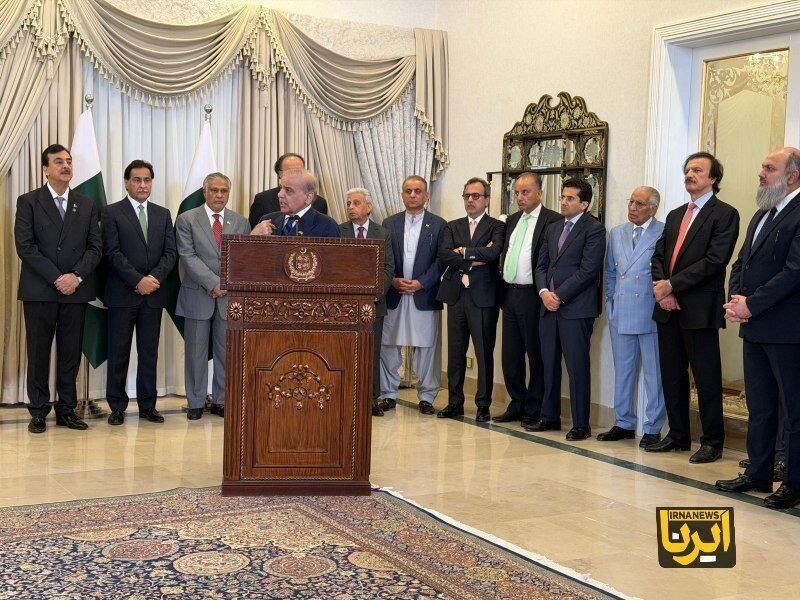
At 16:29 UTC on 23 June 2026, Iranian state outlets carried a message from parliament speaker Mohammad Bagher Ghalibaf marking the country's annual Judiciary Week. The text, distributed by both Mehr News and the English-language service of Tasnim, honoured the memory of Ayatollah Mohammad Beheshti — the judiciary chief killed in the 1981 IRP headquarters bombing — and praised the current bench for "effective steps… to increase public trust" during what the speaker described as a "period of transformation and excellence." The vocabulary was familiar; the timing, in a week shadowed by unresolved questions over Iran's domestic surveillance toolkit and the judicial handling of protest-related cases, was not.
The point of the exercise was not information. It was a routine act of political theatre — a self-portrait of a state that wants to be read as functional, judicial, and unified. Iran-watchers should treat it as such, and then ask what the ritual leaves out.
The choreography of a week
Judiciary Week in Iran is an annual fixture, anchored to the assassination of Beheshti and a group of officials who died alongside him in June 1981. It gives the ruling system an opportunity to project institutional continuity at a moment when the actual institution is under quiet strain. The Ghalibaf message follows the genre closely: it leads with martyrdom, moves through a checklist of administrative reforms, and ends on the language of public trust.
Two features stand out in the 2026 edition. First, the explicit framing of a "period of transformation and excellence" — language the speaker has used in previous addresses to describe the Raisi-era judicial overhaul and its continuation under his successor. Second, the choice of platform: the same message carried simultaneously by Mehr, a state-affiliated wire, and by Tasnim's English desk, which functions in part as a foreign-facing translation layer for the Islamic Republic's preferred narratives. Coordination of that kind is a tell. It means the text was meant to travel.
What the message does not say
The omissions are more revealing than the content. There is no mention of the cases that have most exercised international human rights monitors in the past twelve months — the use of the death penalty in connection with the 2022–23 protest movement, the post-amputation prosecutions, the televised confessionals, or the conditions under which detainees are held. There is no reference to the International Criminal Court process, no acknowledgement of the UN Special Rapporteur's mandates, and no engagement with the foreign-ministry track that has spent the past year insisting that Iran's judiciary is independent of the security services.
Ghalibaf, a former IRGC air force commander who now sits at the apex of the elected legislature, is in a position to address at least some of these questions if he wishes to. That he did not is itself the signal. The message is calibrated for a domestic conservative audience that wants affirmation, and a foreign audience that consumes Iranian messaging mainly for what it is not saying.
The structural pattern, in plain language
Iran's political communication apparatus runs on a particular rhythm: a domestic-facing channel producing a heroising text, an English-language channel repackaging it for external consumption, and a near-synchronous silence on the items most damaging to the state's international position. The pattern is not unique to the judiciary. It recurs in coverage of human rights dialogues, nuclear negotiations, and the periodic announcements of prisoner amnesties — moments in which a public statement is made precisely so that the most inconvenient counter-statements need not be.
The structural point is that messaging of this kind is rarely the place to look for change. It is the place to look for confirmation that the actors involved believe their preferred framing still travels well. When a state begins to lose confidence in its own narrative, the scripts tend to get louder and more repetitive before they get quieter and more substantive. The 2026 Judiciary Week message fits comfortably on the earlier side of that arc.
Stakes, and what to watch
For readers in the West, the practical question is whether the ritual carries any operational information. The honest answer is: not much in the short term. Ghalibaf is a long-established political figure with known positions; the judiciary's institutional direction has not been credibly contested in any of the official organs in the past year. What the message does confirm is that the political centre of gravity around the judiciary is stable, that the executive and the legislature remain publicly aligned on the "transformation and excellence" framing, and that the items the message does not name are the same items the Iranian state has chosen not to name consistently for some time.
The uncertainty is at the margins. There is no source material in the public record of the past 24 hours that indicates a near-term change in the judiciary's political alignment, and no evidence of an internal split serious enough to surface in a public message of this kind. The sources do not specify whether the upcoming parliamentary term — when the domestic calendar next allows a real rebalancing — will test that alignment. That remains the variable worth watching.
Desk note: Monexus read the two official wires carrying the message and reported on the framing, the silences, and the structural pattern, rather than reproducing the message's own claims about institutional reform. Coverage of Iranian state messaging is most useful when it reads the form as carefully as the text.
Wire provenance
This editorial synthesis draws on the following public wire/social posts:
- https://t.me/mehrnews/
- https://t.me/tasnimnews_en/