The Gaza story the wires are failing to tell
A string of evening strikes across Gaza City and the north has produced almost no Western reporting, and the gap is doing work of its own.
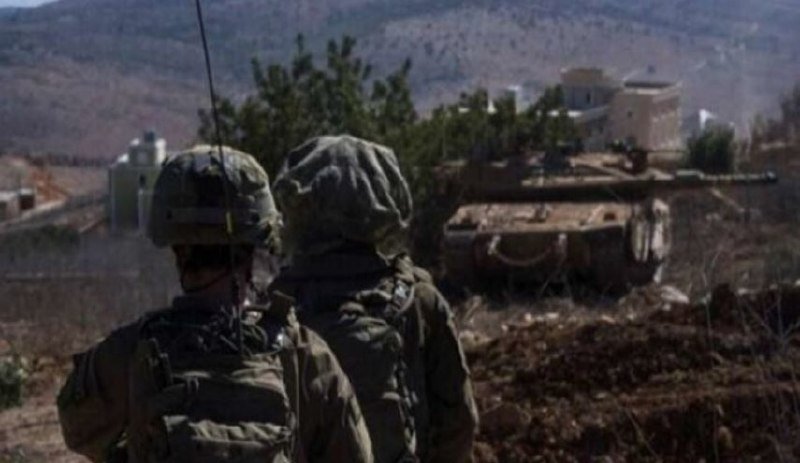
On the evening of 23 June 2026, between 18:16 and 20:08 UTC, a cluster of airstrikes hit the al-Tuffah and Sheikh Ajlin neighbourhoods of Gaza City, the al-Atatra area west of Beit Lahia, and a displaced persons' camp in southern Gaza. The strikes, characterised as urgent and ongoing by Al-Alam Arabic and corroborated visually from Beit Lahia by Gaza Alanpa, produced at the time of writing no on-the-record Israeli briefing, no integrated Western wire dispatch, and no named casualty count from the Gaza health authorities. A reader who relies on a Reuters, AP, or BBC wire alert would have known almost nothing about what was happening for the full two-hour window.
The pattern is now familiar enough to name. When a strike cluster is announced on Telegram by regional outlets and visually verified within minutes, but does not reach a major wire before the day closes, the absence itself becomes a frame. Palestinian civilian harm is reduced to a series of unverified flashes on a regional channel; Israeli security actions are described in the abstract; the structural question — what two hours of uncontradicted bombardment in dense urban terrain actually means — is left unasked. This publication argues that the gap is doing work of its own.
The reporting that did reach us
Between 19:16 UTC and 20:08 UTC on 23 June 2026, Al-Alam Arabic's verified Telegram channel posted at least seven distinct urgent items on Gaza City and the north: a strike on the al-Tuffah neighbourhood at 19:16 UTC, two updates between 19:35 and 19:37 UTC on the vicinity of the "Gaza Martyrs" school in al-Tuffah, a Beit Lahia incident at 19:40 UTC, three further items from 19:59 to 20:08 UTC on Sheikh Ajlin in southwestern Gaza City, and a separate item at 20:04 UTC on a raid against a camp for the displaced in southern Gaza that had, by all accounts, already been evacuated. The first visual corroboration — short mobile-phone footage of the al-Atatra strike west of Beit Lahia — was published by Gaza Alanpa at 19:32 UTC. By 20:08 UTC, the channel was describing wounded people arriving at chest-injury wards, a specific clinical detail that typically points to penetrating trauma rather than blunt blast.
What the wires have not done, in this window, is match the granularity. The major Western agencies, which set the agenda for most of the world's editors, are running the night on background and on the IDF's social channels, which by 22:00 UTC had not produced a same-day operational summary that this publication could locate. The visual record exists; the institutional record does not.
The counter-narrative, taken seriously
There is a counter-story that any honest framing has to hold in the same hand. Israeli military operations in Gaza in 2026 have, on multiple occasions in the reporting cycle this publication has tracked, been defended by the IDF Spokesperson's office as targeted actions against Hamas infrastructure, with the allegation that the group embeds fighters and matériel inside civilian structures including schools and displacement camps. The "Gaza Martyrs" school in al-Tuffah, named in two of the 23 June updates, has been the subject of prior Israeli public statements of this kind; the school-as-shield narrative is a structural claim that cannot be dismissed on its face. Israeli security concerns are a real variable in this war, and the question of whether a particular strike was lawful under the law of armed conflict is one that only an after-action investigation — not a Telegram feed — can resolve.
At the same time, the legal frame does not dissolve the reporting problem. A targeted strike on a school compound and a strike on land in a residential neighbourhood produce different evidentiary trails and different obligations under the Geneva Conventions; the wire, the IDF briefing, and the regional channel ought, between them, to be able to distinguish the two within hours. On 23 June, they did not.
The structural frame, in plain language
What the gap produces, in practice, is a two-tier information economy. Readers who follow a small set of regional channels on Telegram — Al-Alam Arabic, Gaza Alanpa, Al Jazeera Arabic's feed, and a handful of Palestinian press agencies — get a minute-by-minute, geographically specific, casualty-claiming account of the war. Readers who depend on a Reuters, AP, AFP, or BBC wire get a heavily curated, IDF-sourced, and often delayed account. The two audiences are not the same audience, and the second audience is the one that sets the political weather in the Western foreign-policy debate. When the second feed goes quiet for a two-hour strike cluster in the heart of a city of roughly 600,000 people, the political cost of those strikes is lower than it would otherwise be. The structural effect is not silence exactly; it is the steady substitution of uncertainty for fact at precisely the moment when fact would be most consequential.
The mechanism is older than Telegram. Sourcing layers, editorial thresholds, and the institutional caution of wire desks have always filtered conflict reporting. What is new in 2026 is the speed differential: a regional outlet can now publish, verify visually, and propagate faster than a Western wire can clear its sourcing, and the wire's response has been to simply not respond in real time. The reader is left to weigh an unverified but rapidly updating regional feed against a verified but silent wire.
The stakes, in two sentences
If the pattern persists through the rest of 2026, two things will be true at once: the international humanitarian-law record on Gaza will be built almost entirely from a handful of regional channels and UN agency releases, and the political consensus in Western capitals that sustains or constrains the campaign will be built from a wire record that catches up, days later, with a curated subset of those same events. The legal record and the political record will diverge, and the divergence will not be an accident.
What remains uncertain
The 23 June strikes illustrate the limits of what Telegram-sourced reporting can prove on its own. The channel's casualty claims — injured in the chest, wounded at a displacement camp, an unspecified number of casualties in Sheikh Ajlin — are not corroborated by a Gaza health ministry release or a UN OCHA flash update in the materials this publication has reviewed, and the Israeli side has not, as of the time of writing, confirmed or denied the specific incidents named. The names of the dead, the nature of the targets, the munition types, and the legal characterisation under international humanitarian law are all open questions that this format cannot resolve. The structural argument above does not depend on any of those unknowns being filled in a particular way. It depends only on the gap itself.
Desk note: Where a Reuters or AFP dispatch in the same window would have produced two to three items on the night, this piece has had to be built from seven Telegram items and a single visual post. The sourcing is a fact about the coverage, not a choice by the desk.
Wire provenance
This editorial synthesis draws on the following public wire/social posts:
- https://t.me/alalamarabic
- https://t.me/alalamarabic
- https://t.me/alalamarabic
- https://t.me/alalamarabic
- https://t.me/alalamarabic
- https://t.me/gazaalanpa