The Northern Gaza Lens: What the Beit Lahia Footage Actually Shows
Three Telegram dispatches from 23 June 2026 frame the fighting around Beit Lahia in two registers — Israeli operational language and Palestinian civilian-language. The asymmetry tells you almost everything about how the war is being read.
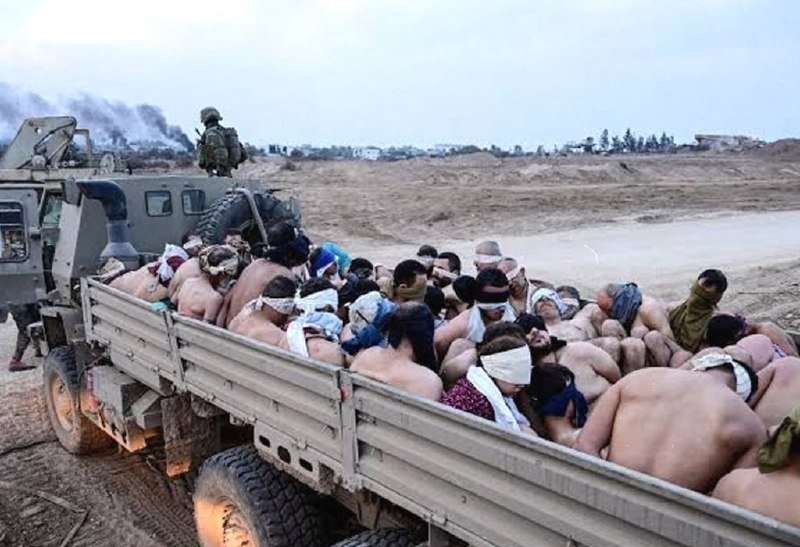
On the evening of 23 June 2026, a thin band of Telegram channels — gazaalanpa, the Arabic-language outlet run from inside Gaza by journalist Anas Al-Sharif, and alalamarabic, the Arabic service of Iranian state broadcaster Al-Alam — became, for several hours, the only newsrooms filing in real time from the al-Atatra neighbourhood west of Beit Lahia in the northern Gaza Strip. At 19:32 UTC, gazaalanpa posted the first seconds of footage after Israeli airstrikes hit the area. At 19:40 UTC, alalamarabic reported casualties from Israeli ground fire inside Beit Lahia. By 20:50 UTC, gazaalanpa was describing Israeli armour advancing on the Al-Attatra roundabout, with residents being forced to move again. None of the major Western wires had a confirmed correspondent in the area; the framing on this stretch of the war is being set by these and similar channels, with all the caveats that implies.
The framing matters more than the footage. Two registers are running side by side, and the contrast is the story.
The Israeli operational register
Israeli military spokespeople describe operations in the northern Gaza Strip as precision action against Hamas infrastructure, with civilian harm treated as either antecedent evacuation, collateral under international humanitarian law, or — in the harder version of the line — a consequence of Hamas's embedding inside civilian space. The Israeli frame is institutional and technical: named battalions, named tunnel shafts, named weapons caches, named killed commanders. The cadence is verbose on the weapon, sparse on the people underneath it. Hostage welfare is folded in at predictable intervals. Civilian casualty figures, when they appear at all, are attributed to the Hamas-run health apparatus in Gaza and immediately disputed. Israeli media — Ynet, the Jerusalem Post, Haaretz's straight-news desk, Times of Israel — carry the briefings and the rebuttals; critical Israeli coverage, when it runs, tends to run later and is itself framed as a national-security deviation.
That register is what most English-language readers, including most policymakers, hear first. It has the institutional gravity of a state behind it.
The Palestinian civilian register
What the channels file is structurally different. At 19:32 UTC on 23 June, the language is "the first moments after Israeli airstrikes targeted the al-Atatra area." At 19:40 UTC it is "injured by Israeli march fire in the town of Beit Lahia." At 20:50 UTC it is "tanks are advancing around the Al-Attatra roundabout, with large-scale displacement from the area." The unit of reporting is not the munition or the brigade; it is the body in the road and the family walking out. There are no named commanders, no tactical justifications, no legal language. There is movement of metal and movement of people. The verb tenses are present continuous. The locations are precise — a roundabout, a neighbourhood — because the people filing have to be precise to stay alive.
This is the register that most English-language readers, including most policymakers, do not hear at all. When it surfaces in Western coverage it tends to surface paraphrased, days late, hedged with sourcing language that the Israeli frame does not have to clear.
What the asymmetry actually does
Two consequences follow. First, the burden of proof falls on the people dying, not on the people firing. Israeli claims about target selection circulate without independent verification because the institutions behind them are presumed institutional; Palestinian claims about what hit them require a chain of open-source corroboration before a Western editor will print them at all. That is not a moral judgment — it is a description of how the gatekeeping works. Second, the operational register wins the argument about scale by default. When a strike is named as a strike on a tunnel shaft, it is a successful operation. When the same strike is described as an airstrike on a neighbourhood, it is a war crime. Both descriptions can be true; only one is structurally available to most readers in real time.
A reader who wants a defensible picture has to read both registers, hold the asymmetry in their head, and refuse the convenience of whichever one confirms what they already believed.
Stakes
The northern Gaza Strip has been the slow-motion file of this war — a campaign of repeated incursion, withdrawal, and re-incursion that the Israeli security establishment frames as denying Hamas reconstitution, and that Gazan medical authorities and international aid organisations describe as engineered displacement of civilians into shrinking enclaves. Whether the operation around Beit Lahia on 23 June 2026 is the start of a new ground phase or a continuation of the existing one, the information environment around it has not changed: the Western wire pipeline is thin, the Telegram pipeline is dense, and the gap between them is where the political consensus gets made.
What the sources do not settle
The three Telegram items in the wire are sufficient to establish that Israeli forces were striking and advancing around al-Atatra and Beit Lahia on the evening of 23 June 2026, that Palestinian civilians were being injured and displaced, and that the immediate reporting was filed by channels without embedded institutional backing. They do not establish the number of Palestinian casualties, the number of displaced residents, the specific Hamas infrastructure targeted, or whether the operation is consistent with the stated Israeli objective. They do not establish the welfare of Israeli hostages in the area. A reader who treats this piece as a definitive account of the Beit Lahia operation is misreading it. It is a piece about which voices get to frame a war in real time, and at what cost.
This article argues that the most consequential casualty of the northern Gaza campaign is not on the ground but in the information environment around it. Monexus treats the Telegram dispatches as primary sourcing with full transparency about provenance, rather than recycling the wire paraphrase that strips them of register and timestamp.
Wire provenance
This editorial synthesis draws on the following public wire/social posts:
- https://t.me/gazaalanpa
- https://t.me/gazaalanpa
- https://t.me/alalamarabic
Follow the event.
These dated source records provide context. They do not retrospectively verify this archive article.
Separate what the nuclear watchdog reported from what it could not determine after the June 2025 strikes.