Buybacks, ballroom, and a tape-side riff: parsing Trump's 23 June 2026 stock-buyback comment
A single unscripted line on stock buybacks, dropped into the same news cycle as a White House dance-floor clip, is being read as policy signal by some desks and as theatre by others. The merits sit on a longer ledger.
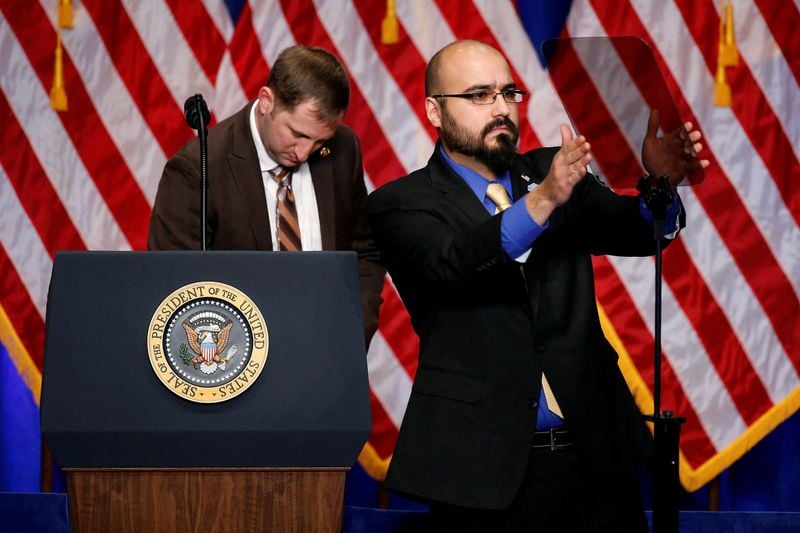
On the afternoon of 23 June 2026, in remarks captured and re-circulated by the X account @unusual_whales, the US president described stock buybacks as a "fake way to raise a price." The line landed inside a news cycle already crowded with imagery from the same day — a ballroom-flooring clip circulated by Clash Report, in which the president tells the room that his "very elegant wife" asks him not to dance because "it's not presidential," and that he answers that "people love it when I dance." The Russian-language wire UNIAN framed the package in distinctly satirical terms, observing that the president "once again wanted to show how he is having fun," calling it "of course… a joke" while noting that "it looks quite strange." Read narrowly, the buyback line is a throwaway. Read against the rest of the day's tape, it is the kind of off-the-cuff remark that markets desks and corporate-governance shops have learned to underwrite as policy signal.
The thesis worth holding through the noise: buybacks are no longer a neutral background fact of US equity markets. They are the dominant mechanism by which corporate cash is converted into per-share earnings, and any signal — even an unscripted one — from the executive branch that frames the practice as fake is treated by price-makers as a softening of the regime. Whether or not the comment is the opening of a regulatory campaign, it sharpens the framing debate that has already cost the practice its bipartisan cover. Investors should price the language. They should also remember that language, on this administration's record, has often been a poor predictor of policy delivery.
The line, in context
The buyback comment surfaced first on 23 June 2026 at 12:17 UTC, posted by @unusual_whales, an account that has carved out a niche reposting on-camera market-relevant remarks with minimal editorial framing. The exact wording — that buybacks are a "fake way to raise a price" — is short, declarative, and aimed at retail rather than at policy wonks. It is the kind of remark that travels well because it is easy to quote, easy to mock, and easy to weaponise in either direction. A progressive senator can attach it to a tax bill. A buyback-sceptical Trump-aligned commentator can frame it as a long-overdue truth. A corporate-finance lobbyist can quote it back at the White House the next morning.
The dance-floor clip, by contrast, is purely atmospheric. UNIAN's Russian-language post at 19:24 UTC captured the meta-frame — the president "wanted to show how he is having fun" — without adding a substantive policy claim. The two clips do not contradict each other. They sit on the same day's edit: a presidency that treats the news cycle as a performative surface and that occasionally lets a real policy opinion slip through the surface in passing.
The reason markets desks care is that buybacks are not a minor instrument. They are, by any accounting, the most important discretionary use of corporate cash in the United States. S&P 500 net buybacks have run in the hundreds of billions of dollars per year for the better part of a decade, eclipsing dividends as the dominant return-of-capital channel. The mechanism is mechanical: a company uses cash to repurchase its own shares, reducing share count, raising earnings per share without raising earnings, and providing a bid under the stock. The result, on long enough horizons, is that buybacks have done more work than dividends in keeping US equity indices above trend. Whether that work is "fake" or not is the question the comment raises, and it is the question this publication finds worth examining on the merits.
The case that buybacks are, in fact, real
The cleanest defence of buybacks rests on three propositions. First, a company that returns capital to shareholders is doing what shareholders asked it to do with the cash; if management had better uses, it would deploy capital there instead, and the absence of better uses is itself information. Second, the alternative — letting cash accumulate on the balance sheet — produces negative real returns in a low-rate environment and invites capital-allocation mistakes. Third, per-share metrics are not a con trick: a smaller share count genuinely does entitle each remaining shareholder to a larger slice of the same underlying earnings stream, and the market has every right to capitalise that larger slice at the same multiple. The economist's argument is that buybacks internalise the cost of equity capital and force managers to treat retained earnings as a competing use of cash rather than as a free option.
That defence is not hypothetical. The largest US technology companies have used buybacks to offset dilution from stock-based compensation, returning capital while still funding research and capital expenditure. The same companies, in the same period, have led capex cycles in artificial-intelligence infrastructure that no academic model a decade ago would have predicted. The cash returned via buybacks did not, in those cases, foreclose on real investment; it sat alongside it. Even critics of buybacks concede that the empirical case against the practice is weaker than the rhetorical case against it. Buybacks are not, in the literal sense, fake.
The defence also has a behavioural corollary. When managers buy back stock at the wrong price — above intrinsic value — they destroy capital. When they buy back at the right price, they create it. The variance is wide. The average effect, across decades and across the cross-section, is positive on most reasonable calibrations. The Trump comment, read as a description of mechanism, is therefore wrong on the economics.
The case that the comment is half-right
The economics, though, is not the whole story, and this is where the dismissive reading earns its keep. Buybacks are real on the accounting; they are contested on the governance. Three concerns sit underneath the rhetoric.
The first is timing. Public-company executives have, on the academic literature, a documented tendency to time buybacks opportunistically — buying more after positive news and less before negative news — in a way that flatters their own compensation, which is typically denominated in equity and tied to per-share metrics. The practice is not illegal; the disclosure regime is thin. The result is that some share of buyback volume is, in the language of the comment, exactly what it says it is: a price-raising exercise with a thin connection to underlying value.
The second is substitution. Buybacks are, in part, a substitute for wages and for capital expenditure. The arithmetic is contested — every dollar of buyback spending is not a dollar that would otherwise have gone to a worker — but the political intuition is not without empirical purchase: when the dominant return-of-capital channel shifts from dividends to buybacks, the implicit bargain between labour and capital shifts too. The Trump comment lands in a political ecosystem where that bargain has already been renegotiated against labour, and the line functions as much as a permission slip for further renegotiation as it does as a description of buyback economics.
The third is fiscal. The 2017 excise tax on buybacks, levied at 1 percent under the Inflation Reduction Act framework that survived subsequent administrations, is the policy instrument already on the books. A higher rate — the policy conversation that has been live since at least 2024 in Senate Democratic and some bipartisan circles — would change the calculus without banning the practice. The comment is consistent with moving that rate up. It is also consistent with doing nothing.
What the rest of the tape tells us
Markets desks read unscripted remarks in three layers. The first layer is the literal claim. The second is the implied policy posture. The third is the political cover. The literal claim here — that buybacks are fake — is easy to discount; the economics are too well-established to be moved by a single line. The implied posture is more interesting: a president who publicly frames the practice as fake is a president who has given allies permission to regulate it. The political cover is the most actionable: any member of Congress who wants to raise the buyback excise tax or restrict buybacks by firms receiving federal funds now has a presidential quote to attach to the bill.
The contradiction inside the comment is worth naming. The administration has, on the broader record, framed itself as pro-market, pro-equity, and sceptical of over-regulation. A buyback crackdown is a regulation. The commentary that frames the practice as "fake" sits awkwardly next to commentary that frames any restriction as anti-business. The two framings are reconciled only by the political logic that the practice is corporate, not small-investor, in its beneficiaries — a framing that lets the administration cast regulation as populist.
The dance-floor clip, on the same day, is not directly relevant to the buyback question. It is, however, indirectly relevant to the question of how the administration signals. The ballroom clip is the kind of material that a more disciplined White House would not let circulate; its circulation suggests a communications operation that is comfortable with both the substantive remark and the performative flourish on the same day. Markets have learned to read these signals as a package.
The structural frame
The buyback question sits inside a larger shift in how US equity markets are governed. Through the 1980s and 1990s, the dominant discipline on US corporations was the takeover market — a hostile bid was the credible threat that kept managers honest. After the late-1990s wave of takeovers ran its course and antitrust enforcement stiffened, the credible threat migrated. It is now, in the 2020s, the share-buyback window. A manager who misses earnings expectations and watches the stock fall ten percent faces, on the next quarter's call, a board that asks whether the company will use its cash to repurchase shares and shore the price. The buyback is the takeover market's replacement, and it works in much the same way.
That structural reality is what a serious buyback debate would address. The Trump comment, taken seriously, would open the door to a discussion of what replaces the buyback as the credible threat — what new discipline sits on top of corporate cash deployment when the existing discipline is dismantled. There is no such discipline waiting in the wings. Capital expenditure is one candidate, but capex is volatile and lumpy, and it cannot be willed into existence by a presidential remark. Wage growth is another candidate, but it is the result of bargaining power, not of corporate discretion. Antitrust enforcement is a third candidate, but it operates on market structure rather than on individual firm behaviour. None of these replacements is ready to take the buyback's place, and the comment — for all its populist framing — does not address the replacement question.
The reader should also hold in mind that the same administration's signature domestic economic moves, including tariffs and the industrial-policy interventions that have shaped 2025 and 2026, have been justified on national-security and supply-chain grounds rather than on shareholder-value grounds. The buyback question is the residual case where shareholder value is the framing — and where the administration's instinct, on this comment at least, is to treat shareholder value as a fiction. The two instincts do not have to be consistent. They are, however, worth naming.
What remains uncertain
Three things are not knowable from the day's tape. First, whether the comment is the opening of an actual policy campaign or a one-line riff. The administration's record on converting off-the-cuff remarks into policy is mixed; tariffs were signalled in plain language for years before they were implemented, and several other signature moments were over-read by markets desks before being quietly walked back. Second, the comment does not specify which instrument — a higher excise tax, a restriction on firms receiving federal contracts, a SEC disclosure regime, or an outright ban — is being signalled. Each instrument has a different market consequence, and each has a different coalition behind it. Third, the political reaction inside the administration, from the Treasury, from the SEC, and from the congressional committees that would have to write the law, is not on the tape. The comment is unilateral; the policy, if any, would not be.
The responsible read is that the line is real, that it costs buybacks some of their bipartisan cover, and that the conversion of the line into policy is contingent on decisions not yet made. Investors should not over-trade the headline. They should, however, underwrite the possibility that the policy conversation has shifted, and price the contingent risk that a serious buyback-restriction proposal surfaces in the second half of 2026.
Stakes
If the line is followed by action, the immediate winners are fiscal: a higher excise tax captures revenue from the largest US corporations at the moment their cash deployment is most visible. The proximate losers are equity holders, who absorb a portion of the tax and a portion of the repricing of buyback-driven per-share growth. The structural losers are managers who have used buybacks as their principal instrument for converting retained earnings into a record of competence — a category that, on the cross-section, is large. The structural winners are workers, in the narrow sense that a redirected dollar is, on the margin, more likely to flow into wages or capex than it is under the buyback regime. The duration of any of these effects depends entirely on the policy instrument and on whether the administration chooses to follow the line with action. The duration of the framing effect is shorter. Buybacks are once again a contested practice, and the cost of capital for the largest US corporations has, on this comment alone, ticked up by a small but real amount.
The deeper stake is governance. The US corporate sector has, for forty years, organised itself around a particular theory of what a corporation is for — a theory in which the shareholder is residual claimant, capital allocation is managerial discretion, and the buyback is the discipline. That theory has critics, but it also has results: it has produced the deepest, most liquid, most innovative equity market in the world. A serious challenge to the theory would require a serious alternative, and the alternative is not on the table. The line is, on the merits, half-right and half-wrong. As policy signal, it is something to underwrite. As governance reset, it is incomplete.
Desk note: this piece sits between a markets read and a governance read. The wire coverage on 23 June 2026 treated the buyback line as a throwaway remark and the dance-floor clip as the day's viral moment. Monexus treats the buyback line as the more consequential of the two, on the grounds that policy language ages longer than imagery.
Wire provenance
This editorial synthesis draws on the following public wire/social posts:
- https://t.me/uniannet
- https://t.me/ClashReport
- https://t.me/ClashReport
- https://x.com/unusual_whales/status/