Trump's Iran deal pitch: 'education' for critics and a 300% inflation line — what we know, and what we don't
On 23 June 2026 the US president defended a freshly announced understanding with Tehran, telling critics they 'have to be educated' — even friends — and arguing Iran's 300% inflation makes a deal inevitable. The substance of the inspection commitment remains under-specified.
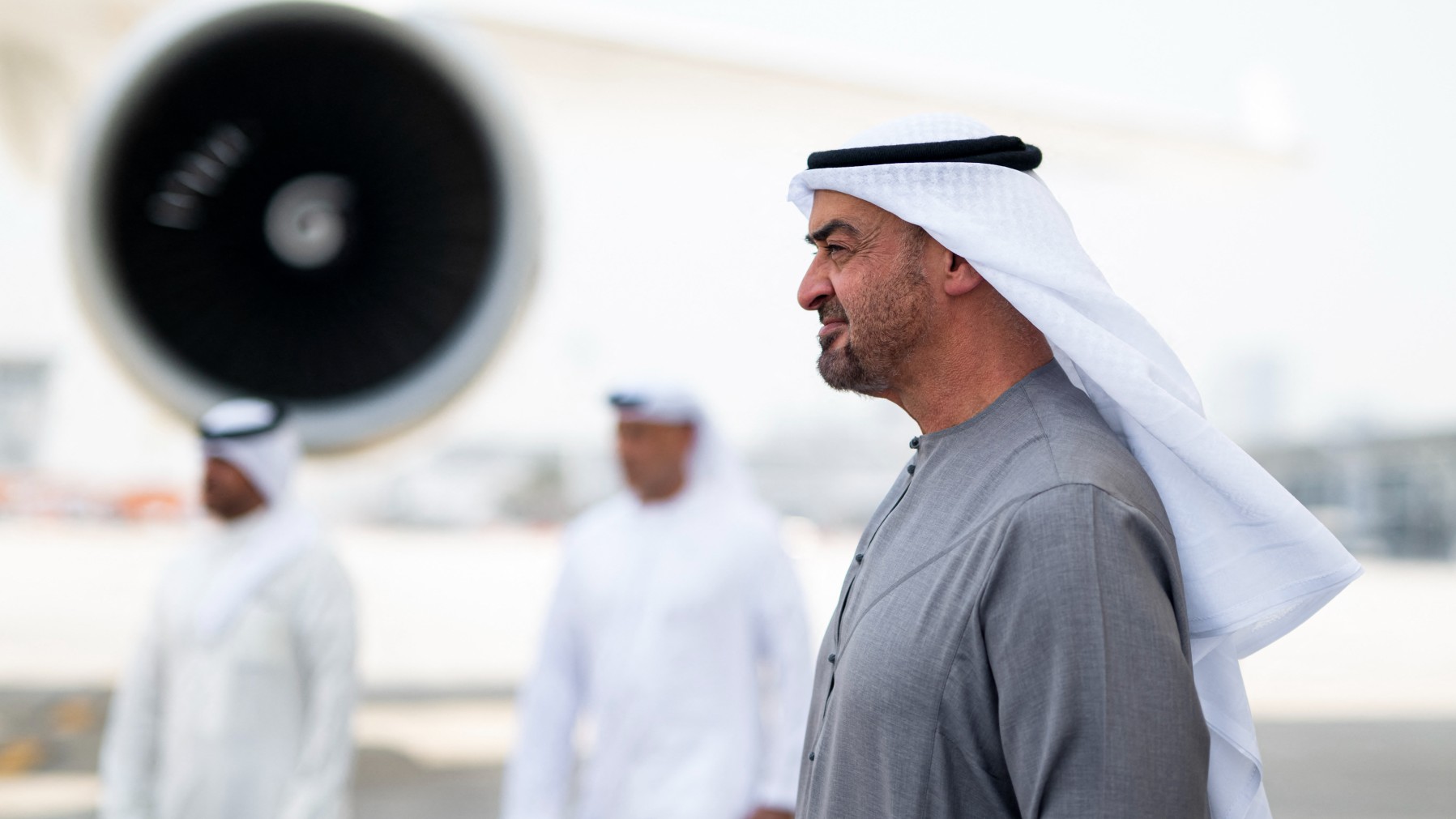
At 17:27 UTC on 23 June 2026, aboard the aircraft carrying him between engagements, Donald Trump told reporters that any critic of his new understanding with Iran — including personal friends — would have to be 'educated' on why the deal made sense. Six minutes later, at 17:33 UTC, the same remarks were circulating through Tehran-aligned channels in a translated clip. By that point the political shape of the week was set: a US president publicly hawking an unverified nuclear-inspection concession from Tehran, and an administration pushing a sanctions-reprieve argument anchored to a striking domestic statistic — Iranian inflation at '300%' — that, if accurate, describes an economy in freefall rather than a negotiating partner from a position of strength.
The thread of public claims, captured across at least four distribution points on 23 June, is short but dense. The president says Iran has agreed to nuclear inspections. The president says Iran is desperate — hungry, short of medicine, with prices rising at a pace that would be politically explosive in any Western capital. The president says critics must be 'educated.' None of those claims is, on the public record available here, accompanied by a published text, a counterpart statement from Tehran, or a confirmed site list. The deal, as advertised from the American side, exists as a series of presidential assertions rather than as a document.
What was actually said
The first verifiable claim came at 11:17 UTC, when Trump told reporters that Iran had agreed to nuclear inspections. The remark was repeated almost verbatim at 15:17 UTC and again at 16:15 UTC, the latter phrasing it as an announcement rather than an expectation. By 17:27 UTC the rhetoric had hardened into a sales pitch. 'Anybody that's been critical of the deal has to be educated, even if they are friends of mine,' Trump said, according to a clip circulated by Clash Report, a Telegram channel that aggregates Western and Middle Eastern political footage. A minute later, in a separate exchange captured by the same channel, Trump expanded the case: Iran, he said, has 'a hunger problem,' 'a food problem,' 'a medicine problem,' and 'inflation is at 300%.' By 17:33 UTC the same clip was being rebroadcast with Farsi-language framing by Fars News-aligned channels on Telegram, a reminder that Tehran's state-aligned media ecosystem treats the US president's own words as raw material for domestic messaging, even when those words are critical of the Iranian state.
Three observations stand out from the sequence. First, the substantive content of the inspection commitment is not in the public thread: no sites named, no IAEA reference, no timeline. Second, the inflationary figure — 300% — was used as the central rhetorical pillar, not as background colour. And third, the audience for the 'education' line is domestic: Trump was responding to in-Washington criticism, including, by implication, from Republican voices who have long treated any accommodation with Tehran as a concession. The phrasing is the giveaway. He is not persuading adversaries; he is disciplining allies.
The 300% figure — credible, contestable, consequential
The most consequential factual claim in the president's pitch is also the one most open to dispute. Iran's official inflation rate, as reported through 2025 by the Central Bank of the Islamic Republic of Iran, has run well above 30% on the headline consumer price index; independent estimates, including those from the Statistical Centre of Iran and from economists working with Tehran University data, have placed food-price inflation considerably higher. A figure of 300%, applied to a broader basket or to a specific food or currency sub-index in a particular month, is not, on its face, implausible for a country operating under extensive sanctions, with a managed currency, and with repeated supply shocks tied to the rial's parallel-market collapse. But it is not the same as the headline rate, and the absence of context in the president's remarks — 'inflation is at 300%' — leaves the listener to guess at the basket, the period, and the methodology.
That ambiguity matters. If the figure is accurate in the strong sense — general consumer prices rising at 300% year-on-year — then Iran is in a hyperinflationary crisis, the policy cost of any further sanctions tightening is minimal, and Tehran's negotiating leverage is in fact low, which is consistent with the president's argument. If the figure refers to a narrower index, or is a peak monthly reading rather than an annualised one, then the picture is grim but not terminal, and the leverage calculation shifts. The structural reading sits in between: a sanctions-battered economy, a managed currency under repeated parallel-market pressure, a state that has demonstrated the administrative capacity to ration and to substitute, but a population that has paid a sustained price in living standards. The 300% number, whether exactly right or loosely right, is not propaganda in the crude sense. It is also not a basis on its own to conclude what Tehran will or will not accept at the negotiating table.
Counter-narrative: from Tehran and from Washington
Two competing reads of the moment are already in motion, and a serious account has to give both their due. The Tehran-aligned read, as carried by Fars and other state outlets, frames Trump's pitch as confirmation that maximum pressure has failed and that the United States is now seeking relief from a confrontation it cannot sustain. The pitch, on that reading, is a sign of American need, not Iranian. The Washington-hawkish read, voiced inside the United States by critics the president explicitly addressed, argues the opposite: that any inspection concession purchased at the price of sanctions relief is by definition insufficient, that Iran has used past inspections as cover, and that 'education' is a euphemism for capitulation. Both readings are partial. The first overstates Tehran's leverage and understates the inspection gap. The second overstates the inspectability of any deal and understates the regime's actual fiscal and supply-chain strain.
A third structural read, less partisan, is that this is the rhythm of the file since 2002. An American president declares a deal; the details are contested; the text either materialises in the form of a Joint Comprehensive Plan of Action or its absence becomes the story. The point is not that this moment will follow that template, but that the public-record shape — assertions, counter-assertions, no document — is familiar.
What 'inspections' would have to mean to matter
If the claim that Iran has 'agreed to nuclear inspections' is to be treated as more than a rhetorical flourish, three conditions have to hold in the coming weeks. First, the International Atomic Energy Agency has to say something. The IAEA's standing in this file is technical but dispositive: it is the body that verifies, or fails to verify, the kind of access any inspection regime depends on. Second, the scope of the access has to be defined. Inspections at declared sites are routine. Inspections at undeclared sites, including those identified by the IAEA in past quarterly reports, are the contested zone, and they are the zone in which past deals have lived or died. Third, sanctions architecture has to be sequenced against verification — a relief schedule tied to specific access milestones, in the pattern that defined the 2015 framework and that its successor arrangements have struggled to replicate. None of these three conditions is visible in the public record attached to the 23 June remarks. That is not, on its own, evidence that they will not materialise. It is evidence that, on the day of announcement, the deal is a thesis, not a text.
Stakes
For Tehran, the stakes are survival-economic. A binding inspection regime that unlocks sanctions relief would, even at the margin, reduce the supply-chain pressure that has driven repeated rounds of price increases and rationing. A deal that announces inspections without unlocking relief would worsen the domestic position, by exposing the regime to political cost without delivering the offset. For Washington, the stakes are credibility. The 'education' line is the public posture of a president telling his own political coalition that the deal is good enough — but the coalition includes people who treat any deal as a defeat by definition, and the president is no longer insulated from that wing. For the broader Middle East, the stakes are regional: Israel, Saudi Arabia, and the Gulf states have watched this file for two decades, and each has a view on what an Iran deal should cost. None of those views is in the public thread attached to the president's remarks. Their absence, on the day of announcement, is itself the story.
What remains uncertain
The public record attached to these remarks is, by any measure, thin. The inspection commitment is a presidential assertion, not a published text. The 300% figure is uncontextualised — no basket, no period, no source cited. No IAEA statement is in evidence. No Iranian official reaction, beyond the existence of the Fars clip carrying the same remarks in translation, is in evidence. No Gulf state, Israeli, or European Union reaction is in evidence. A deal pitched on 'education' has to be educated into being, and the documentary substrate to do that has not, as of the close of 23 June 2026 UTC, appeared. Until it does, the responsible read is that a US president has described a deal he says exists, and the rest of the world is being asked to take his word for it.
Desk note: this article foregrounds the American-side claims because the public thread attached to these remarks is American-side. Where Iranian, IAEA, or allied-state corroboration is required, the absence is named rather than papered over.
Wire provenance
This editorial synthesis draws on the following public wire/social posts:
- https://t.me/farsna
- https://t.me/ClashReport
- https://t.me/ClashReport
Follow the event.
These dated source records provide context. They do not retrospectively verify this archive article.
Separate what the nuclear watchdog reported from what it could not determine after the June 2025 strikes.