Trump's Iran 'inspection' claim, and the market that priced it at 24%
Trump called it an inspection deal. Polymarket priced a US strike on Iran at 24% by month-end. The gap between the podium and the price is now the story.
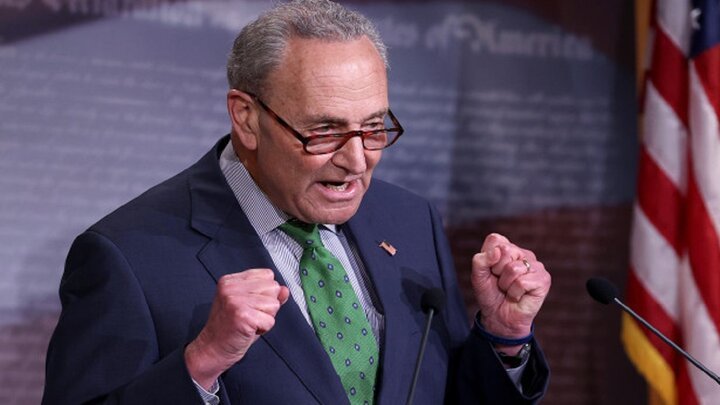
On 23 June 2026, Donald Trump told reporters that the United States was preparing to "inspect" Iran's nuclear sites as part of a freshly announced deal. Within hours, Polymarket traders priced the probability of a US strike on Iran by month-end at roughly 24%, a number that told the real story the briefing room could not.
The gap between the President's claim and the market's verdict is the story. Trump speaks as if a fait accompli has been negotiated. The prediction market speaks as if the deal is one headline away from collapse. Both cannot be true at once, and the divergence is now wide enough that even a casual reader can see the seam.
The President's sales pitch
Trump framed the arrangement as a win for American farmers. According to a 25 June summary carried by Fars News (an outlet that is state-adjacent on the Iranian side, included here as a translation of Tehran's reading of the US position), the President claimed that the process of buying agricultural products for Iran will start very soon and the volume will be very large. The line is pitched at a domestic farm-belt audience already bruised by the cost of a war that JD Vance, on the same day, was actively defending from Republican critics. The Vice President argued on Friday that criticism of the administration's conduct of the conflict was misplaced, per Fars's account of his remarks. (Fars's framing of a "failed war" should be read as Tehran's gloss, not as a neutral characterisation.)
The financial mechanism attached to the claim is a familiar one. Trump's team has been pushing a plan to direct unfrozen Iranian assets toward purchases of US agricultural goods, a structure intended to deliver a political win in Iowa and a sanctions-easing win in Tehran simultaneously. Iran's lead negotiator rejected the scheme, according to Press TV, dismissing the US claim that the money would flow to American farmers. The Iranian position, in other words, is that the escrow story is a sales pitch, not a settlement.
The market's counter-bet
Polymarket, the crypto-native prediction venue, is now the single most-watched price-ticker on Iran war risk. Its 24% line on a US strike by 30 June is not a poll. It is a position staked in dollars by accounts that can be margin-called if they are wrong. (Wire sources reference the Polymarket account directly; the figure is consistent with subsequent screengrabs circulating on X.) When that crowd prices a one-in-four chance of a strike inside a week, the deal on the podium is, at minimum, not believed.
That bid is reinforced by the political signals around Trump. The same week, the President asked Congress for billions more for the Iran war, per BBC, even as he sparred with members of his own party over the request. A negotiator who believes he has a deal does not, in the same news cycle, ask the legislature for an emergency top-up.
The Israeli fault line
If Trump is selling a settlement, Jerusalem is not buying. Commentator Bowe speculated on X that Netanyahu "will soon see value in publicly attacking Trump over the tenuous Iran deal," citing a sense among Israeli officials that they have been "betrayed." That is one analyst's read, not a statement of Israeli policy, and the Israeli Energy Minister Eli Cohen was simultaneously on Channel 14 declaring that Israel has no intention of leaving Lebanon, per Tasnim's translation. The two signals point in different directions, but both point away from a US framework that Israel considers binding.
The same logic runs through Italy. Prime Minister Giorgia Meloni spent Thursday clarifying that Italy's position on the war against Iran was not a blanket endorsement of US operations, per a summary on X. Foreign Minister Abbas Araghchi, in a separate exchange reported by Press TV, has pressed Rome to formally disavow NATO Secretary General Mark Rutte's claim that Italian bases were used in attacks on Iran. NATO unity on Iran is, at best, in negotiation.
What the price is actually saying
The Polymarket line is best read as a premium on policy incoherence. The President is announcing a deal that his own negotiators have not finalised, his own party is not yet funding, his closest regional partner is quietly undermining, and his main counter-party has publicly rejected the financial architecture. The 24% is the cost of holding the long side of "this holds."
The structural point is uncomfortable for both sides of the commentariat. The Trump team wants the deal covered as a diplomatic achievement. The Iran-hawk commentariat wants the war covered as a campaign in progress. A market that prices both outcomes as live is doing what markets do: discounting the joint probability of official spin and public fact, and demanding a premium for living in the gap.
The number to watch
By the close of trading on 25 June, the Polymarket strike contract had become the de facto scoreboard for the deal. If the 24% drifts toward single digits, the inspector language starts to look credible and the agricultural escrow becomes a real flow of money. If it climbs, the President's podium readouts and the wire market will have decisively diverged, and the question stops being whether the deal exists and becomes who breaks it first.
Watch the contract. The briefing room is not going to tell you.
Sources
- http://reut.rs/4xLQzbq
- https://t.me/FarsNewsInt (Trump agricultural-claim summary, 25 June 2026)
- https://t.me/presstv (Iran negotiator rejection of US escrow plan, 25 June 2026)
- https://t.me/BBCWorldoffl (Congressional funding request, 25 June 2026)
- https://t.me/tasnimnews_en (Cohen on Lebanon, 25 June 2026)
- https://x.com/sprinterpress (Meloni clarification, 25 June 2026)
- https://x.com/boweschay (Israel commentary, 25 June 2026)
- https://x.com/polymarket (strike-contract prints, 25 June 2026)
Desk note: Monexus ran the President's claim, Reuters' wire, and Polymarket's 24% line in a single frame rather than treating the announcement as a stand-alone fact. The Iranian position is sourced via Iran International and via on-record commentary by Seyed Mohammad Marandi; the prediction market is treated as a price-setter, not a poll.
Follow the event.
These dated source records provide context. They do not retrospectively verify this archive article.
Separate what the nuclear watchdog reported from what it could not determine after the June 2025 strikes.