Trump's 60-day sanctions waiver buys time, not leverage
A 60-day sanctions waiver and an off-the-cuff answer on Iranian rearmament suggest the US is improvising its way into a deal it cannot enforce.
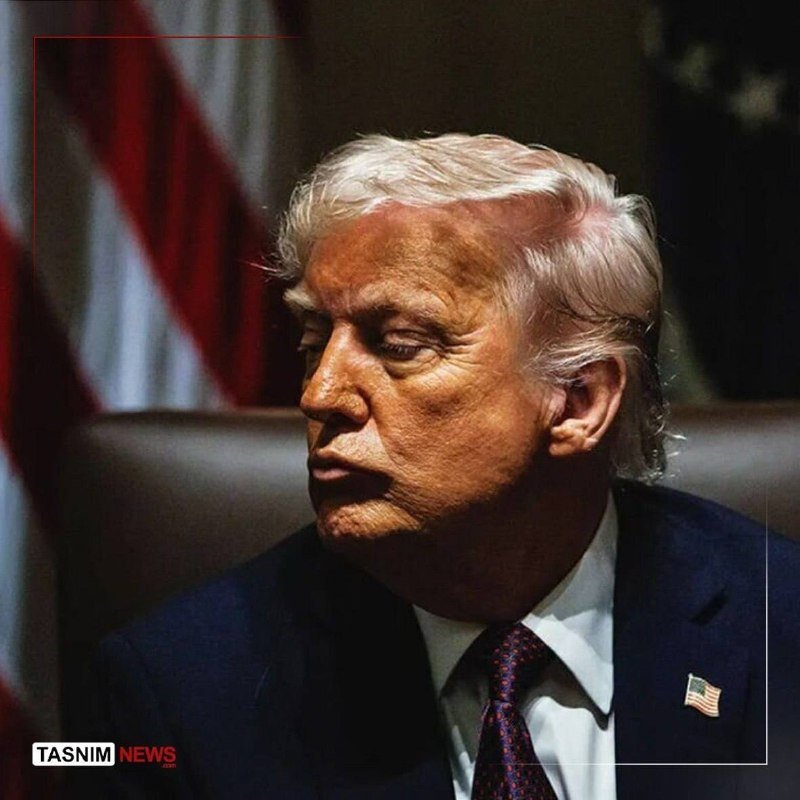
At 06:30 UTC on 23 June 2026, Reuters reported that the United States has waived sanctions on Iran for 60 days from 22 June, following the first round of talks under what the wire described as a "nascent peace deal." President Donald Trump told reporters he would "do what I have to do" if Iran did not stick to the arrangement. Hours later, a separate exchange — circulated on Telegram by Abu Ali Express at 06:49 UTC — showed Trump struggling to answer a straightforward question about whether oil revenue would be used by Tehran to rebuild its military. The two clips, read together, capture the policy in miniature: a deal whose enforcement mechanism is a press-conference threat.
The waiver is the first concrete output of a diplomatic track that has so far produced more rhetoric than architecture. A 60-day window is long enough to ship several cargoes of crude and short enough that any Iranian revenue surge will be visible to satellite-accounting outfits and OPEC-watchers in real time. It is also short enough that Tehran's planning horizon is the next shipment, not the next decade. The Trump administration is buying optionality, not leverage — and the gap between those two things is where deals of this kind tend to break.
The waiver, in plain terms
A sanctions waiver, in this context, is a temporary permission slip. Foreign buyers who would otherwise face US secondary sanctions can transact with Iranian counterparties — primarily in the oil sector — for a defined window. The 60-day duration signals that Washington wants the diplomatic channel kept open without committing to a structural reopening of the Iranian export market. Reuters framed the move as the first test of a "nascent peace deal"; the language is deliberately soft, because the deal itself is soft. There is no published text, no IAEA verification protocol, no reciprocal demilitarisation schedule that this publication has seen in the reporting. What exists is a timeline and a threat.
Trump's own description — "do what I have to do" — is the closest thing to an enforcement clause. It is the kind of sentence that reads as strength in a rally hall and as a hole in a brief to the Joint Chiefs.
The rearmament problem that won't go away
This is what makes the second clip so revealing. Asked point-blank by a journalist whether he could guarantee that Iranian oil profits would not be redirected to military reconstitution, Trump's answer, as paraphrased by Abu Ali Express, was visibly inadequate. The clip circulated because it is plainly inadequate. Even if one accepts that the president was being guarded rather than confused, the exchange exposes a structural fact: any sanctions relief that returns hard currency to Tehran is, by default, a contribution to whichever line item the Islamic Republic chooses to fund. The Iranian defence budget is not a separable account. There is no escrow mechanism proposed in the reporting, no third-party audit of oil receipts, no carve-out for military-linked entities.
Iranian state-aligned outlets will, predictably, frame the waiver as a victory — proof that maximum pressure has been broken and that Tehran can extract economic concessions through calibrated escalation. The Western critical reading is the inverse: that the United States is conceding revenue to a regime that has not paid a tangible cost in return, and is hoping good faith carries the file. The honest reading is that both can be true simultaneously, and that the 60-day clock is the only forcing function either side has agreed to.
Allies, and the price of a free ride
The third thread item, also from Reuters at 06:15 UTC, concerns the British prime minister. Trump publicly described Keir Starmer as "not Churchill," criticising London for failing to support the US position in its conflict with Iran and arguing the stance had weakened the American hand. The line matters for two reasons. First, it tells European governments what cooperation will and will not be rewarded: rhetorical alignment, yes; independent posture, no. Second, it confirms that the US is conducting this diplomacy with a thin coalition. A sanctions regime whose enforcement depends on European shipping insurers, Greek tanker owners, and Gulf refining capacity cannot survive a transatlantic public row without losing operational coherence.
Starmer's government has been the most Atlanticist of any recent British administration on the security file. If the US side feels short-changed by London, the bar for allied support is now explicitly higher than full diplomatic cover. That is not a stable equilibrium for a sanctions architecture whose bite has always come from allied compliance.
What 60 days actually buys
The structural pattern here is familiar: a coercive economic lever gets partially released in exchange for a verbal commitment, the partial release generates revenue for the sanctioned party, the sanctioned party spends that revenue in ways the lever's wielder dislikes, and the lever is re-tightened — usually with a different justification — at the end of the window. The 60-day clock, in other words, is not the beginning of a peace process. It is a test of whether either side can behave as if the next 60 days are not the last 60 days. Tehran's incentives point to a surge of exports followed by a return to negotiation; Washington's point to a surge of demand for compliance followed by a return to threat.
What remains genuinely uncertain is whether the Iranian side treats the waiver as the floor or the ceiling of what it can extract. The reporting does not specify whether Tehran has offered anything observable in return — a cap on enrichment, a release of detained Western nationals, a quantified rollback of proxy capabilities — or whether the deal is, for now, a one-sided concession dressed as reciprocity. Until that ledger is published, the 60-day window is a confidence-building measure for one side and a revenue-raising measure for the other. Both can call it diplomacy. The wire services are calling it nascent. That is the most generous available word.
Monexus framed this around the gap between a deal's announcement and its architecture, where most of the actual risk lives — and noted the allied-management question that the wire has so far underweighted.
Wire provenance
This editorial synthesis draws on the following public wire/social posts:
- https://t.me/abualiexpress