Trump's religious-ideology lens on Iran and Venezuela signals how the White House reads the world
A 23 June 2026 round of remarks from the US president casts Iran and Venezuela in a single religious-ideological frame — and signals that Washington is sorting adversaries by theology before talks resume.
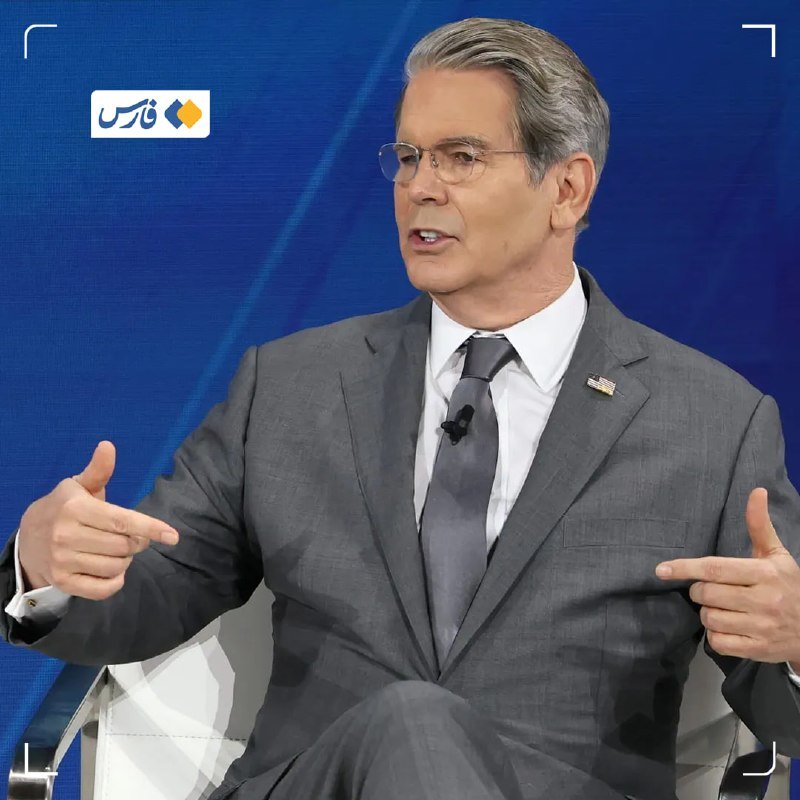
On 23 June 2026, the US president offered a frame for two of Washington's most awkward diplomatic files at once. In remarks captured on video and relayed by the Open Source Intel account and Iran's Fars News International, the president argued that "Iran has a very different ideology" from Venezuela, and that "the ideology of the Muslims is slightly different from the ideology of the Catholics." He paired the observation with a more familiar transactional warning: "If Iran is reasonable, if they're smart. Otherwise, we'll have to finish the job." The juxtaposition is the story. A hostile state in one hemisphere is being measured against a hostile state in another, and the yardstick is confession, not constitutional design, sanctions architecture, or alliance posture.
The remarks matter because they reveal how the White House is sorting adversaries ahead of a possible new round of talks. Both Iran and Venezuela are under heavy US pressure; both are governed by leaders Washington has designated as illegitimate. Reading them through a religious-ideology lens is a tell. It says that the administration treats ideological distance as a working assumption about where negotiation can land — and that religion, in this White House's vocabulary, is doing the work that Cold War-era "civilisational" framings once did.
What was actually said
The exact quotes are limited, but they are consistent across the clips. In the first video, captured and circulated by the Open Source Intel account, the president says of Iran: "Iran has been great — If Iran is reasonable, if they're smart. Otherwise, we'll have to finish the job." In a second clip from the same account, the president frames the comparison: "The ideology of the Muslims is slightly different than the ideology of the Catholics." A third clip from the same feed extends the pattern with a domestic aside: "If you look at New York, we have all communists running…" — a reminder that the president's diagnostic lens is not reserved for foreign governments. Fars News International, Iran's state-aligned international outlet, broadcast the same quotes in two separate posts within minutes of each other, identifying the framing as "Iran has a very different ideology than Venezuela." Clash Report circulated a near-identical line from the same address. The cross-source consistency is unusually clean; the quotes, even filtered through Telegram clips, point to a single set-piece remark rather than a misquote.
Why pair Iran and Venezuela at all
The two countries are not natural diplomatic companions. Iran is a near-eastern, Persian-speaking, Shi'a-majority theocratic republic with a decades-long nuclear file. Venezuela is a Latin American, Spanish-speaking, Catholic-majority federalism-in-retreat under sustained US sanctions since 2017. To set them side by side is to make a meta-claim: that the White House reads both through a single logic. The logic on display is not alliance structure, not oil-market mechanics, not migration patterns. It is the kind of civilisational sorting that, in the hands of a more conventional administration, would be expressed through the language of regimes, alliances and threat categories. Here it is expressed through confession.
That choice has analytical costs. It elides the fact that Iran's regional position — Hezbollah, the Houthis, Iraqi militias — is materially different from Caracas's, which is largely bilateral and hemispheric. It also flattens the very real distinctions between the two governments' domestic ideologies. A reader trying to follow US policy on the basis of these remarks would come away with a map in which religion is the principal variable. The map is not wrong about everything, but it is wrong about a great deal.
What this tells us about the diplomacy
The transactional tail — "if they're smart, otherwise we'll have to finish the job" — is the part most likely to land in Tehran. Iranian state media did not bury the quotes. Fars News ran them, with attribution, twice in seven minutes. That is itself a signal. Tehran is interested in the framing because it gives its negotiators something to push back against. If Washington is operating on the assumption that ideological distance from Caracas equals readiness to deal, Iran has an incentive to demonstrate that distance in public — and to make clear that any deal must be on its own terms, not on a Venezuela-shaped template. Caracas, for its part, is not in the room. The fact that the comparison was drawn in public, with no Venezuelan counterpart in the frame, says something about which file is currently live and which is not.
The honest read is this. The remarks do not constitute a policy. They are not a negotiation document. They are a window into the conceptual scaffolding the administration is using to organise a portfolio of adversaries, and into the role that civilisational language now plays inside that scaffolding. For diplomats in Tehran, Caracas, and the Gulf, that is a usable piece of information. For everyone else, it is a warning that the next round of public framing may be even more confused than this one.
Stakes
The practical stakes are modest for now. There is no indication in the available material that a new military action against Iran is imminent; the conditional is the giveaway. But the conceptual stakes are larger. A foreign policy organised around religious-ideology yardsticks tends to over-estimate the value of symbolic concessions and under-estimate structural ones. It also tends to treat negotiating partners as representatives of a system rather than as agents inside one. If that frame hardens, the next round of talks — whenever it comes — will be arriving with less analytic room to land than the last.
This article was filed from open-source video clips and state-aligned Telegram channels; the underlying remarks are short, but the cross-source consistency is high. The transcripts do not include the full surrounding exchange, and the diplomatic follow-up has not yet been reported.
Wire provenance
This editorial synthesis draws on the following public wire/social posts:
- https://twitter.com/Osint613/status/2069505694261190803/video/1
- https://twitter.com/Osint613/status/2069502481801912455/video/1
- https://t.me/FarsNewsInt
- https://t.me/ClashReport