Tuchel's late calls and Partey's return: England-Ghana opener tightens by the hour
With England still waiting on a starting XI and Ghana clearing Thomas Partey to play, the Group H opener in Toronto has acquired the texture of a finals match rather than a curtain-raiser.
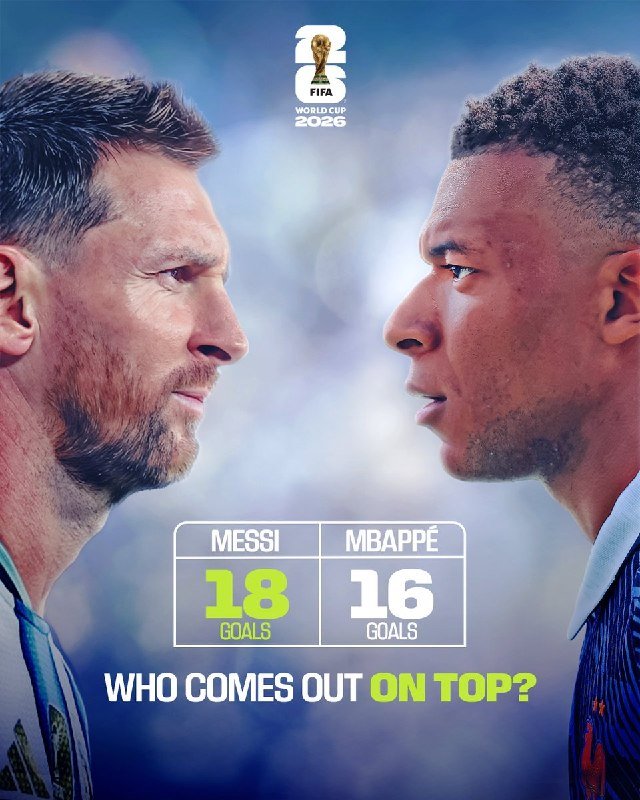
England's opening game of the 2026 World Cup against Ghana, scheduled for 23 June in Toronto, has the makings of an event rather than a fixture. By 22 June, the English camp was still withholding its starting XI. Thomas Tuchel, the head coach, has become accustomed to late calls. According to Sky Sports reporting on 22 June at 17:48 UTC, Tuchel is leaving team selections later than ever at this tournament, preferring to finalise his XI on matchday rather than the day before.
The 2026 World Cup is a tournament in which England begin as one of the favourites, but where margins between the elite and the merely competent have narrowed. Ghana, returning to the finals after missing Qatar, arrive with a player who only learned on Monday that he would be available at all.
A coach who treats selection day as matchday
Tuchel's caution is not new, but it has hardened. Sky Sports noted on 22 June that the German has always preferred to sleep on team news, yet in this cycle he has pushed the cut-off point further forward. The reasons are practical. Squad fitness data at a 48-team tournament is dense and shifting; minor knocks have to be weighed against the demands of a six-match path to the final. A coach with Tuchel's tactical range — three-at-the-back, four-at-the-back, half-space overloads — also has more variants to choose between than his predecessors did.
There is, however, a countervailing cost. Late announcements reduce preparation time for the players named, compress media briefing windows, and hand opponents more time to plan against a confirmed shape. Sky Sports reported on 22 June at 17:48 UTC that England staff had prepared multiple line-ups and were still weighing personnel in midfield and at left-back. The Premier League's congested end-of-season calendar means several squad members arrived at the camp with heavy legs; that calculation alone could keep the announcement window open until close to kick-off.
Partey's reprieve, and the diplomatic background
Ghana's Thomas Partey said on 22 June at 19:50 UTC that he is ready to face England after being denied entry to Canada for the original opener. The midfielder, one of the Black Stars' most experienced players, was forced to resolve immigration paperwork in a compressed window. His availability alters Ghana's options in central midfield, where Otto Addo's side are otherwise thin.
The episode is small, but it illustrates a feature of the expanded tournament: administrative friction across three host nations. Canada, the United States and Mexico have been tightening entry protocols ahead of the finals, and squad administrators have had to clear players' paperwork in advance. Ghana's federation navigated the issue without appealing for postponement. Addo told reporters on 22 June that the squad had "moved past it" and was focused on England.
Hydration breaks, and the texture of a summer tournament
A separate thread from BBC Sport on 23 June at 01:39 UTC reported that Tuchel has made plain he is not a fan of the in-game cooling breaks that FIFA has permitted at the tournament. The breaks, designed to manage player welfare in expected high-heat conditions across U.S. venues, interrupt rhythm and reward the side that has prepared for the stoppage rather than for continuous play.
Tuchel's view, as carried by BBC Sport on 23 June, is that the breaks advantage the better-resourced sides who can rehearse the restart, and that they distort what should be a clean contest. The objection is not frivolous: at this World Cup, with matches scheduled across multiple climate zones, the cooling rule will fall unevenly across the schedule. Critics counter that player welfare trumps tactical continuity, and that an exhausted substitute in stoppage time is a worse outcome than an interrupted first half.
What to watch in Toronto
The opening ninety minutes will offer three readings. First, whether Tuchel's late XI reflects a settled best eleven or a hedge against fitness questions — the bench composition will tell. Second, whether Partey's re-entry translates into Ghana's preferred shape, with the midfielder sitting deep or pushing higher to support the press. Third, whether the hydration rule — if invoked — disrupts England's rest-defence structure, which has been a Tuchel signature.
What remains genuinely uncertain is the condition of England's squad. The wire coverage so far has been sparing on injury specifics. Monexus has not seen independent confirmation on the status of players such as Jude Bellingham or Phil Foden beyond general squad-list inclusion; team-news will resolve those questions within hours of kick-off. The same applies to Ghana's left flank, where Addo's options have been described as limited without further detail in the available reporting.
The structural frame is straightforward. England arrive as a side whose depth is supposed to outlast any single elimination. Ghana arrive as a side whose ceiling depends on concentration. The cooling break is a small variable; Partey's availability is a larger one; Tuchel's late card is, for now, the largest unknown of the three.
Desk note: Monexus framed this as a procedural story — selection, immigration, rule interpretation — rather than a hype piece. The wires have emphasised spectacle; the actual decisions being made on Monday night are narrower and more consequential.