When the language of a UN finding sets the terms of the debate
A UN commission has concluded that Israel deliberately targeted Palestinian children. The political reception of that finding will reveal more about the diplomacy of language than about Gaza itself.
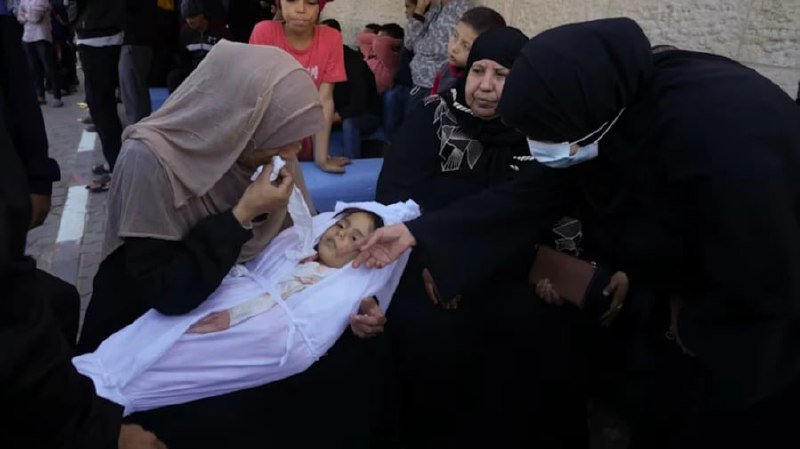
On the morning of 23 June 2026, a UN commission of inquiry's finding stopped being a document and became a political event. According to Tasnim News English and Reuters, the body concluded that Israeli authorities and security forces deliberately targeted Palestinian children, resulting in genocide, crimes against humanity and war crimes in Gaza, and war crimes in the occupied West Bank. Within hours the same finding was being described as historic, as long overdue, as inflammatory, and as a procedural overreach — often by people who had not yet read it.
The contested object is not really the report. It is who gets to define the words inside it, and which definitions survive contact with the editorial page, the foreign ministry briefing, and the cable-news chyron. That is the actual story.
The finding, in plain terms
The commission's language is unambiguous on its face. It uses three distinct legal categories — genocide, crimes against humanity, war crimes — and assigns them to specific conduct and a specific theatre. The Reuters summary distributed on 23 June 2026, at 08:45 UTC, describes the targeting of Palestinian children as deliberate and ties it to war crimes in Gaza and in the occupied West Bank. The Tasnim English wire at 09:35 UTC frames the same conclusion as the UN "acknowledging" mass killing of children by the "Zionists" in Palestine — a politically loaded synonym that the original commission does not use.
Two outlets, same underlying document, two registers of language. The finding is shared; the framing is not.
The counter-narrative that will follow
Western-aligned coverage, to the extent it engages the substance at all, is likely to stress three counter-arguments. First, that commissions of inquiry are not courts and do not have the power to adjudicate the legal labels they deploy. Second, that the same body has been criticised in previous mandates for methodology and source selection — a fair point in the abstract that should be tested against this specific report rather than waved in. Third, that the political timing of the release, with active negotiations over a ceasefire and hostage framework, makes the language destabilising.
Each of those arguments has a kernel. None of them rebuts a finding that Israeli authorities have restricted aid, displaced civilians at scale, and struck infrastructure repeatedly described as protected under the law of armed conflict. The honest reading is that the legal characterisation can be contested while the underlying record cannot be wished away — and the contested-versus-the-underlying distinction is the one most coverage will quietly erase.
Why the language itself is the fight
Calling conduct a war crime, a crime against humanity, or an act of genocide is not a matter of adjectives. Each label carries a specific legal regime, a specific duty for third states under the 1948 Convention on the Prevention and Punishment of the Crime of Genocide, and a specific exposure for individual officials. Governments that want to maintain cooperation with Israel while denying the existence of a genocide do not do so by contesting battlefield facts; they do so by contesting taxonomy. The contest over the word "genocide" is the contest over whether the obligation to prevent and to prosecute attaches.
That is why editorial choices around "targeting," "deliberate," "mass killing," "ethnic cleansing," and "genocide" matter more than they look. The wire piece that uses "targeting of children" without legal characterisation is not neutral; it has simply chosen the lowest-cost verb. The headline that uses the most legally loaded term available has chosen the highest. Each choice forecloses a different set of policy responses. Pretending the choices are stylistic is itself a political position.
Stakes over the next weeks
Three things will follow. Foreign ministries — including those that have already recognised a Palestinian state — will be asked whether the commission's legal characterisation triggers any obligation under their domestic implementing legislation for the genocide convention. Aid ministries will be asked whether continued transfers of certain categories of equipment are still defensible under their own export-control statutes. And the negotiating room around a ceasefire will discover that the language on the table has shifted underneath it: a framework described in early 2026 as a "hostage deal" is now being argued about against the backdrop of an official UN finding that uses the word "genocide."
The losers, if the trajectory holds, are the civilians whose protected status under the law of armed conflict was supposed to be the floor rather than the ceiling. The winners are whichever governments and editorial houses are best at keeping the contested word off the front page, where it can be argued about in plain language rather than in the procedural murk of footnotes.
What remains uncertain
The full commission report has not yet been independently audited against the underlying evidentiary record by this publication. The wire summaries cited above reproduce the commission's characterisation and a parallel Iranian-state framing of it; they do not substitute for reading the document itself. The number of children directly and deliberately killed, the temporal scope of the "deliberate" finding, and the commission's reasoning on the West Bank findings are not fully visible in the available wire extracts. Treat the legal labels as contested until you have read the primary text — and treat the contested framing, on every side, as the actual subject of the news.
Desk note: This piece leads with the Reuters characterisation and treats Tasnim's parallel framing as counter-narrative material, in keeping with our standing rule on Iranian state-adjacent sources. The argument is about how the finding is being framed, not about endorsing any one framing.
Wire provenance
This editorial synthesis draws on the following public wire/social posts:
- https://t.me/tasnimnews_en