Western unity is straining, and Iran is reading the room
Two Telegram dispatches from the same hour — one on fraying Western cohesion, another on Iran's refusal to grant IAEA access to military sites — point to a single calculation in Tehran: a fragmented West is a permissive West.
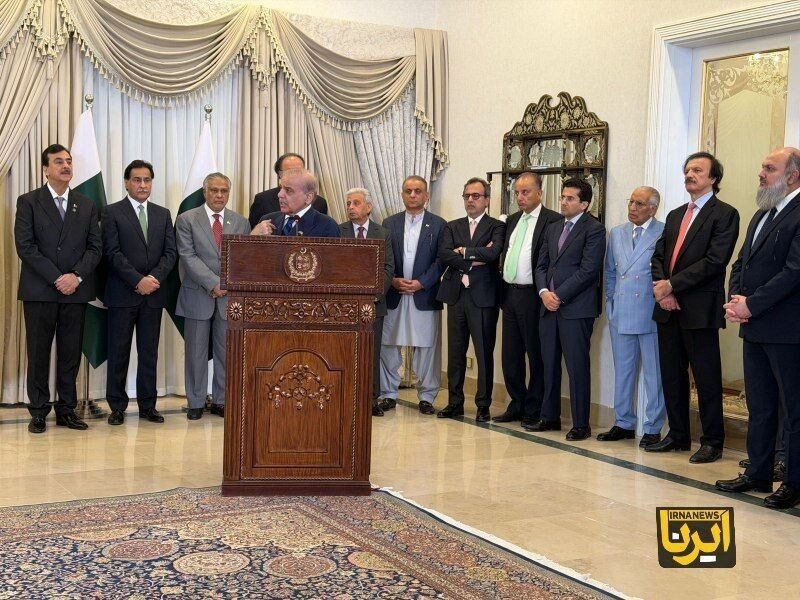
At 19:18 UTC on 23 June 2026, the OSINTdefender channel posted a blunt summary of the state of the Western alliance: its unity is "increasingly strained," with leaders and governments pulling in conflicting directions under pressure that has "challenged traditional alliances" — a compact diagnosis of the moment, not a forecast. Eight minutes earlier, the same channel flagged that Iran has not allowed international inspectors into its military sites. Read in sequence, the two dispatches are not two stories. They are the same story, and Tehran is reading it correctly.
The thesis is unfashionable only because it is unfriendly to the people who need to hear it: when the West speaks with one voice on non-proliferation, inspection access becomes a non-negotiable condition. When the West speaks with three or four voices, inspection access becomes a bargaining chip. Iran has spent two decades learning which version of the West it is dealing with on any given week. This week, it is dealing with the second one.
The fracture lines are now visible
The OSINTdefender summary captures a pattern that has been building for at least a year and a half: the United States, the EU's heavyweight capitals, the UK, and the Nordic–Baltic bloc have visibly diverged on how much fiscal, military, and diplomatic bandwidth to spend on the Middle East versus their own rearmament, versus the Indo-Pacific, versus domestic political survival. Trade frictions, defense-spending targets, energy exposure to the Gulf, and divergent threat perceptions inside the EU have turned coordination meetings into managed disagreements. The dispatch does not name the specific leaders or governments whose positions are "conflicting," and the underlying wire reporting on which such summaries typically rest is not attached to the post itself. That is the first epistemic caveat of the day: the channel is editorialising a mood it reads from open sources, and the mood is real even if the specific national finger-pointing is left to the reader.
The structural point survives the caveat. A sanctions regime, an inspection regime, and a deterrence posture all depend on the assumption that the enforcing coalition can hold a line long enough for the cost on the target to compound. Once that assumption cracks — once a major capital openly hedges, or quietly under-enforces — the target's optimal strategy shifts from negotiation to endurance. Iran is in an endurance posture.
What the IAEA file looks like in June 2026
The second OSINTdefender post, timestamped 19:10 UTC, is shorter and sharper: "Iran has not allowed international inspectors to access its military sites." This is the continuation of a posture that has been on slow burn since the collapse of the JCPOA framework's broader compliance ratchet. Iranian governments — across administrations — have argued that military sites are sovereign and that the IAEA's mandate covers declared nuclear facilities, not defence installations writ large. Western governments have argued, with equal consistency, that credible non-proliferation requires access to the full chain of sites where undeclared activities could plausibly occur. Both positions are sincere. Neither is sufficient on its own.
The channel does not specify which sites, which inspectors, or which date the access request was denied. Without those specifics, the post functions as a status indicator rather than a news event. The Iranian government has not, in this thread, offered its own justification; MFA statements, ambassador remarks, or coverage in Iranian state media would supply that counter-frame and ought to be read alongside the post before a reader concludes that the denial is a deliberate provocation rather than a continuation of a long-disputed interpretation of the IAEA's legal mandate. Monexus treats both readings as live.
Why Tehran times its refusals to Western disunity
The connection between the two posts is not coincidence in the rhetorical sense — neither post cites the other — but it is coordination in the strategic sense. A foreign ministry that wants to harden a position on inspection access calculates not just how Washington will react, but how Washington can react given that Berlin, Paris, Rome, Warsaw, and the Gulf monarchies are simultaneously asking for things from the United States that compete for its attention. A refusal that would have triggered a unified demarche in 2018 triggers a series of separate, sequenced, lower-leverage statements in 2026. That is the bargain Tehran is making: pay in diplomatic capital by absorbing individual rebukes, save in strategic capital by deferring the multilateral answer.
This is not a new insight about Iranian statecraft. It is, however, newly relevant because the denominator — the cohesion of the coalition that historically enforced the non-proliferation norm on Iran — has been falling. The OSINTdefender dispatch on Western strain is, in effect, the discount rate Tehran applies to every Western warning it receives.
The stakes, plainly stated
If the trajectory continues, three things follow. First, the inspection regime degrades by accretion rather than rupture — one denied access request, then another, then a third — which is harder to reverse than a single dramatic withdrawal because no single act is large enough to trigger a coalition response. Second, Iran's regional partners and proxies calibrate their own behaviour to the same discount rate, which is one mechanism by which transatlantic disunity exports into the Levant and the Gulf. Third, the longer the open disagreement among Western capitals persists, the more expensive the eventual re-unification becomes, in both political and material terms.
What remains genuinely uncertain is whether the disunity the channel describes is a transient phase — a coordination problem that resolves after an election, a budget cycle, or a crisis — or a structural rebalancing in which the United States and its European partners simply disagree about priorities for a sustained period. The thread does not adjudicate. Nor can this publication, on the basis of two open-source posts from a single channel in a single hour. What the thread does establish is the timing: the two dispatches sit inside the same news cycle, and a serious reader should treat them as a pair rather than as parallel trivia. Tehran, plainly, is.
Desk note: Monexus framed the two OSINTdefender posts as a single strategic picture rather than two unrelated items. The Western-alliance language is reported in the channel's own words; the Iran–IAEA language is reported as a status indicator with an explicit caveat that the post does not name sites, dates, or the Iranian government's stated justification.
Wire provenance
This editorial synthesis draws on the following public wire/social posts:
- https://t.me/s/OSINTdefender
- https://t.me/s/OSINTdefender
- https://en.wikipedia.org/wiki/International_Atomic_Energy_Agency
- https://en.wikipedia.org/wiki/Joint_Comprehensive_Plan_of_Action
Follow the event.
These dated source records provide context. They do not retrospectively verify this archive article.
Separate what the nuclear watchdog reported from what it could not determine after the June 2025 strikes.