Messi, thunderstorms and the round of 32: World Cup 2026's opening weekend rewrites the ledger
Argentina's captain surpassed the all-time World Cup scoring record against Austria on 22 June, hours before France's tie with Iraq in Philadelphia was suspended at half-time for severe weather — a 24-hour window that captured both the pageantry and the fragility of a 48-team tournament.
At 00:38 UTC on 23 June 2026, ESPN's tournament desk ran a familiar World Cup exercise into reverse: rather than eulogising the 16 teams sent home, the network's preview inventory listed the 32 sides still standing, and asked, in a frame already growing stale by the hour, why each could plausibly lift the trophy in July. The moment captured how compressed the new World Cup has become. Forty-eight nations, expanded group play, and a round of 32 that only finished selecting itself in the small hours of Tuesday morning. By the time ESPN published, Lionel Messi had already redrawn the competition's most durable statistical record.
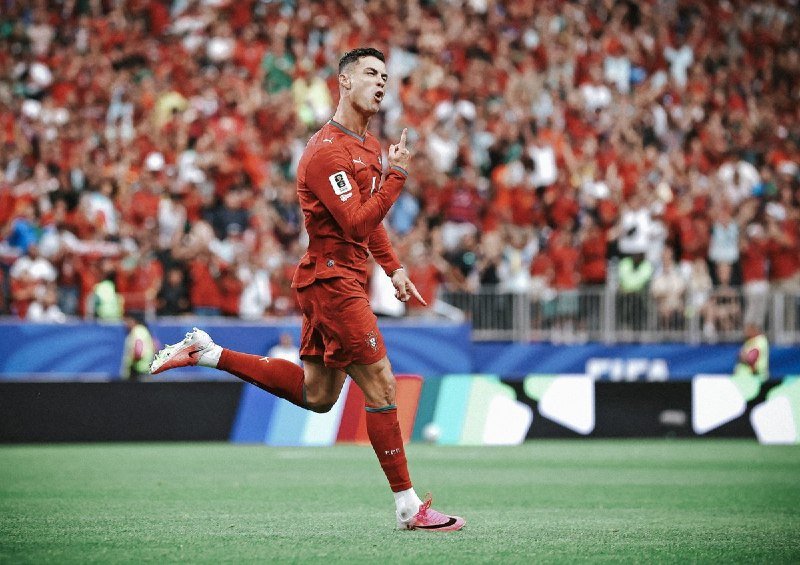
The headline story of the opening weekend was written in Austin, Texas, where a 38-year-old Argentine captain struck twice in the first half against Austria to become the leading scorer in World Cup history with 17 tournament goals, surpassing the previous mark held by Miroslav Klose. The first, a one-timer inside the opening 45 minutes, was the historic one; the second, a more routine finish before the interval, made the scoreline emphatic and gave Argentina a 2-0 victory in their second Group-stage fixture, according to a wire report circulated by the Epoch Times at 23:30 UTC on 22 June. It was a record with an asterisk-shaped problem for statisticians: it includes goals scored across five tournaments by a forward whose longevity in the sport has no obvious modern precedent, and it is a record now held by a player in his late thirties still operating at a high-tempo starting role for the defending champions.
The other half of the weekend's narrative was meteorological rather than historical. In Philadelphia, the Group-stage match between France and Iraq was suspended and the stadium evacuated at half-time because of a violent thunderstorm, France 24's English service reported at 23:11 UTC on 22 June, with the French-language desk of the same outlet confirming the detail two hours later. The two accounts agreed on the operative facts: a storm cell produced thunderclaps severe enough to trigger the venue's standard evacuation protocol, and the match was halted with the scoreline in the balance. France 24 did not specify the score at suspension in the items reviewed. What the reporting made plain was the operational fragility of a 48-team tournament being staged across eleven North American host cities: weather windows that, in a 32-team era, would have been absorbed by a more compact calendar now have to be navigated across three host countries, multiple climate zones, and a fixture list that allows almost no slack.
ESPN's case for each of the 32 remaining teams running the table followed a predictable template. The traditional powers — France, England, Brazil, Argentina, Spain, Germany — were framed as carrying the deepest squad depth, the most settled tactical identities, and the least to fear from a single bad day. The second tier, including the United States, Mexico, the Netherlands, Portugal, and Japan, were presented as plausible finalists with a path that ran through favourable knockout draws and a recovery window before the quarter-finals. The third tier, including Asian and African sides who progressed further than in any prior men's World Cup, were given the kindest case any of them have received from an American network during group play. The piece's essential argument, that the round of 32 is more open than the round of 16 used to be, doubles as a self-justification of the expansion itself: a tournament in which 16 teams exit at the group stage cannot pretend to crown a champion whose path was unimpeachable.
The structural reality underneath these narratives is that the men's World Cup has become the first truly mega-tournament in global sport. Forty-eight teams means 104 matches, played across 39 days, in venues ranging from the climate-controlled controlled environment of NFL-grade stadiums in the United States to the more open-air grounds in Mexico. The round of 32, contested for the first time in a senior men's World Cup, is the first device FIFA has introduced that genuinely gives mid-ranked federations a second life. A team that finishes third in a four-team group can, in principle, advance. That is a smaller change than it sounds: third place still has to win a knockout tie to reach the round of 16. But the existence of the round of 32 changes the maths of squad rotation, of tournament pacing, and of how managers deploy their best players in dead-rubber group games — choices that, in a 32-team tournament, simply did not exist.
What remains uncertain is whether the round of 32 produces a better champion. The sources reviewed do not contain a methodology for answering that. They do, however, contain evidence that the tournament's opening weekend has already produced a record-breaking goal from the player widely considered the most talented of his generation, and a stadium evacuation that exposed how thinly the new calendar is stretched. The two events are not, on their face, connected. But they are both symptoms of a competition that has decided, as a matter of governance, that bigger is the desired form, and is now discovering the costs of that decision in real time. Monexus will continue to monitor the tournament as the round of 32 plays out, with particular attention to which mid-ranked sides survive their first knockout tie and how weather contingencies are managed at outdoor host venues.
Wire provenance
This editorial synthesis draws on the following public wire/social posts:
- https://t.me/epochtimes/
- https://t.me/france24_en/
- https://t.me/france24_fr/