Bulls take Caleb Wilson at No. 4, betting upside over polish
Chicago used the fourth pick on North Carolina's Caleb Wilson, a forward whose tools exceeded his college production. The bet is on trajectory, not résumé.
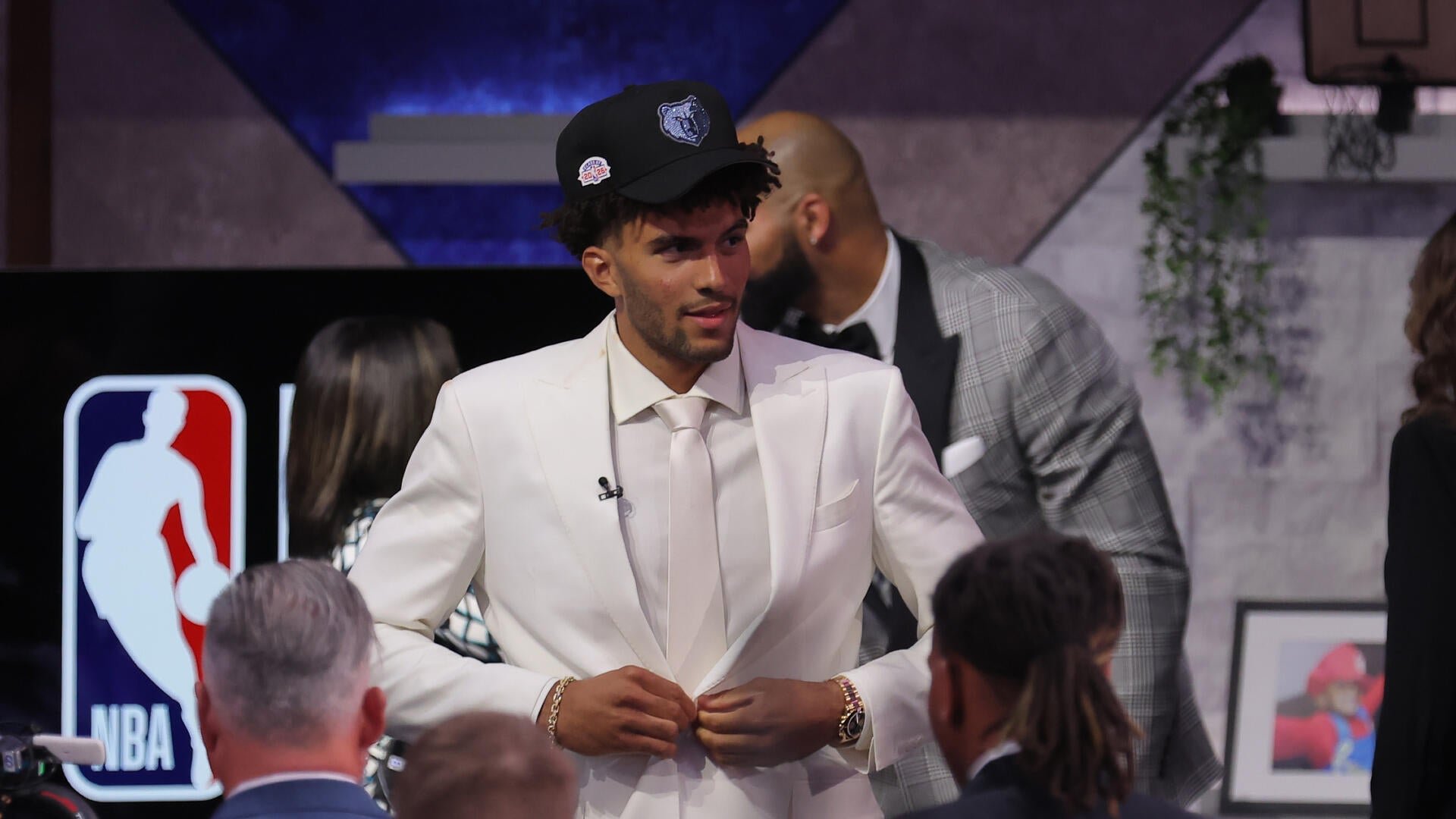
The Chicago Bulls selected North Carolina forward Caleb Wilson with the fourth overall pick in the 2026 NBA Draft on the night of 23–24 June 2026, an ESPN dispatch filed at 01:37 UTC on 24 June confirmed. The choice, telegraphed in the closing hours of the pre-draft cycle, formalised a front-office conviction that Wilson's physical tools and ceiling outweigh the modest statistical footprint he left at Chapel Hill.
That is the bet Chicago is making, and it is a recognisable one. In a league where wings and forwards with switchable defensive potential get drafted ahead of more polished collegians every summer, the Bulls have placed their chips on a player whom scouts have labelled, in ESPN's phrasing, "perhaps the best athlete with one of the highest upsides in this year's draft." The remainder of the question is whether the franchise can build a coherent context around him before the next contract window.
The pick, in context
Wilson arrives in Chicago as part of a wider frontcourt reshuffle rather than a stand-alone gamble. The Bulls have spent the better part of two seasons cycling through complementary bigs — pieces selected to fill specific lineup gaps rather than to anchor a long-term identity. Taking Wilson fourth signals a willingness to spend premium draft capital on a player whose value is more about what he could become in years three through five than what he produced in year one at North Carolina.
There is a structural reason organisations keep reaching for upside in this slot. By the time a team is picking in the top five, the calculus has usually shifted away from plugging an immediate hole. The cost of a top-five pick is high enough that rostering a marginal rotation player for a full rookie contract is, on paper, a poor return. The implied mandate is to find a player whose second-contract value justifies the slot — and the cleanest route to that outcome is athletic ceiling. Wilson's profile, centred on fluidity for his size, defensive range, and an offensive game that has expanded faster than his counting stats, fits that mandate.
The counter-narrative
There is a competing read, and it deserves air. Selecting a player whose college production lagged his physical profile is a known failure mode. Front offices that lean too heavily on athletic testing and pre-draft scrimmage footage have, with regularity, wound up with players who cannot translate tools into winning basketball. The counter-narrative to the upside thesis is straightforward: college results are an imperfect but real signal, and a forward who did not dominate at North Carolina is being asked to do something harder at the next level, against longer and more sophisticated athletes, on a team with limited margin for developmental patience.
The Chicago front office has insisted, in pre-draft availability windows reported by the ESPN wire, that it has done additional due diligence on Wilson — that the work behind the scenes accounts for the gap between his résumé and his scouting dossier. Whether that conviction is genuine conviction or post-hoc rationalisation will not be visible for at least a full rookie season, and probably not until year two.
The structural frame
What Chicago is doing is the same move roughly a third of the league makes in this range of the draft each year: trading certainty for trajectory. In a league where the cap sheet rewards the second contract more than the first, where the biggest paydays go to players who develop into top-of-the-lineup contributors rather than rotation pieces, front offices have an institutional incentive to swing for ceiling. The draft slot itself reinforces the pattern. A team picking fourth is rarely a title favourite, and rarely a bottom-feeder — it is most often a franchise stuck in the awkward middle, with too much talent to tank cleanly and not enough to contend. The picks that most often return All-Star value from that position are the ones that look, on draft night, slightly surprising.
There is also a media layer worth naming. The pre-draft cycle has compressed into a tight window in which scouting information, agent messaging, and team leaks circulate at a tempo that rewards narrative fluency. A player whose strengths photograph well and whose weaknesses can be plausibly framed as developmental gaps will rise in the consensus; a player whose strengths are subtle and whose weaknesses are visible on a single-game scout pass tends to fall. Wilson, by the available reporting, was the former.
Stakes and the road ahead
For Wilson, the stakes are conventional but high. Rookie-scale contracts buy organisations patience, but the patience window is shorter than fans remember. By the end of year two, the front office will need to know whether the player it drafted is on a path toward a second-contract role, and the league's competitive tax system makes that judgment sharper than it used to be. A team that gets this pick wrong does not merely lose a contributor; it loses a stretch of roster flexibility that the cap rules make hard to recover.
For Chicago, the question is whether the surrounding roster can give Wilson the runway he needs. The Bulls have spent the last several seasons searching for a roster shape that holds up in the Eastern Conference's middle band, and the draft pick alone will not solve that search. What it can do is buy the franchise an answer at a position of need, with a player whose developmental ceiling justifies the patience the team is now committing to.
For the rest of the league watching the fourth pick go in this direction, the lesson is the same one the draft teaches every year. Upside picks are not free. They are loans against future evaluation, denominated in cap space and roster patience, with interest rates that compound quickly. Chicago has signed the loan. The repayment schedule starts in October.
This article was prepared by Monexus desk staff from wire reporting and verified draft-night correspondence. Where the sources did not specify roster-planning detail, the analysis above is editorial inference rather than reported fact.
Wire provenance
This editorial synthesis draws on the following public wire/social posts:
- https://t.me/NBA/2026draft-pick4
- https://en.wikipedia.org/wiki/2026_NBA_draft
- https://en.wikipedia.org/wiki/Caleb_Wilson_(basketball)