A fragile Gaza ceasefire is being tested in real time — and the framing is already drifting
Three Telegram dispatches in twenty-four minutes show a ceasefire that was supposed to hold being probed on three fronts at once — and a media environment that is already deciding which probes count.
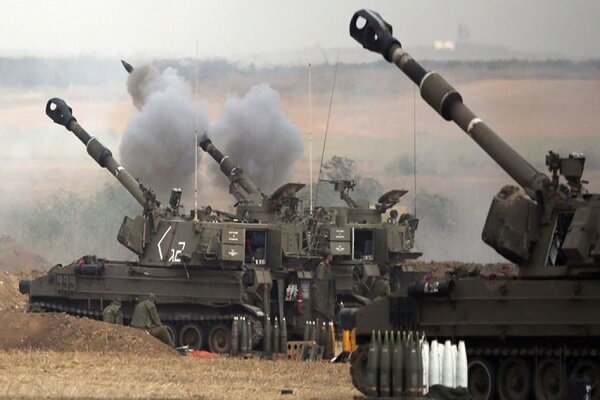
At 10:39 UTC on 24 June 2026, Israeli media reported that two Hamas militants had advanced through IDF-held southern Gaza and reached the Kerem Shalom border crossing, with at least one of the two reported killed. Twenty-four minutes later, the same mapping account logged an IDF claim that four rocket launchers, set up by Palestinian armed groups after the ceasefire and prepared to fire into Israel, had been struck overnight. By 11:03 UTC, an IDF-affiliated channel had packaged the launcher strikes into a single alert, with the framing already baked in: positions "established after the ceasefire." Three dispatches, one morning, one collapsing narrative.
This is what a ceasefire under stress looks like when both sides have an interest in defining the stress. The reading a reader ends the day with depends almost entirely on which of those three timestamps they saw first — and which outlet chose to amplify which of them.
The launcher story, in the IDF's telling
The dominant Western-wire frame, as relayed by the IDF's own channels, is structurally simple. A ceasefire exists. Rockets were being prepared to violate it. Israeli forces struck and dismantled the launch positions. The framing words matter: "established after the ceasefire," "prepared to fire rockets at Israeli civilian" — a sequence that places agency for the breach on the armed group and recasts the Israeli response as preventative, not retaliatory. By the time the 11:03 UTC alert reaches a screen, the timeline is fixed in the reader's head: ceasefire, violation, strike.
The same facts, reported without that sequencing, describe something different: four fixed launch positions identified, struck, and announced in a single overnight window, with the word "dismantled" doing a lot of quiet work.
The Kerem Shalom incident, in the same wire
The Kerem Shalom story is harder to sequence cleanly, and that is probably why it travels less. Israeli media — not the IDF spokesperson — is the source. The militants are described as having "managed to advance through IDF-occupied" southern Gaza, a phrasing that concedes ground the launcher story does not: that there is a perimeter, that it was crossed, and that armed fighters reached a crossing that is also a humanitarian lifeline. One reported killed; the other status not specified in the dispatch. The mapping account logs the incident at 10:39 UTC; no casualty count, no claim of weapons recovered, no follow-up is in the thread.
Read the two stories in either order and the implicit message changes. Read the launcher strike first and Kerem Shalom looks like a confirmation that armed groups are still trying. Read Kerem Shalom first and the launcher strike starts to look like an Israeli force that may be re-establishing the security architecture the ceasefire was supposed to be holding in suspension.
What the framing decides
The interesting question is not which of these accounts is true — both can be, and the thread does not let a reader resolve the contradiction. It is that the same twenty-four-minute window contains a successful cross-perimeter infiltration and a successful preemptive strike, and the reporting infrastructure has already decided which is the lede and which is the footnote. The launcher story gets the IDF framing, the timestamp, the "established after the ceasefire" clause. The Kerem Shalom story gets "reportedly managed to advance" and a thin sourcing chain. The hierarchy is not malicious; it is structural. Official channels with prepared English copy move faster than open-source mappers, and preemptive strikes are easier to script than infiltrations that have already happened.
The structural pattern here is familiar: a fragile arrangement is being tested in real time, and the test itself becomes the unit of information. The question of whether the ceasefire is holding is answered by the next dispatch, not by aggregate analysis. In that environment, the side that issues more frequent, cleaner statements gets to define the day's baseline.
Stakes and what remains uncertain
The stakes are concrete. If the launcher account is the dominant read of 24 June 2026, the political pressure on the Israeli government to maintain the arrangement eases, and pressure on Hamas and other armed groups to restrain rocket preparation increases. If the Kerem Shalom account gains weight, the calculus inverts: questions about IDF posture in the south, about humanitarian access at a crossing that is also a flashpoint, and about the credibility of the ceasefire architecture itself move up the agenda. Both can be true in the same morning. The thread does not yet let a reader choose between them on the evidence.
Two things remain genuinely uncertain on the public record. The first is the second militant at Kerem Shalom — captured, killed, or still at large is not specified in the dispatch. The second is the exact operational status of the four launch positions at the moment of the strike: whether they were loaded, whether timer mechanisms were in place, whether armed personnel were present. "Prepared to fire" is a framing verb, not a forensic finding. Until independent imagery or weapons-technical analysis lands, the reader is being asked to take one side's sequencing of the night on faith.
That is the position Monexus finds itself reporting from this morning: not which side is right, but which version of the night is being amplified, and what gets harder to see because of the order in which the wire pushed it.
Desk note: Where wire packages lead with the IDF spokesperson's prepared framing, this publication runs both stories in the order they crossed the wire, and flags the sourcing chain on the Kerem Shalom incident as Israeli-media-only pending corroboration.
Wire provenance
This editorial synthesis draws on the following public wire/social posts:
- https://t.me/wfwitness
- https://t.me/AMK_Mapping
- https://t.me/AMK_Mapping