Robot detonations and quadcopter strikes: a single Tuesday in eastern Gaza City
Three short wires in one evening describe a pattern of small, technical engagements around Gaza City and Khan Yunis. Reading them together is more revealing than any one of them in isolation.
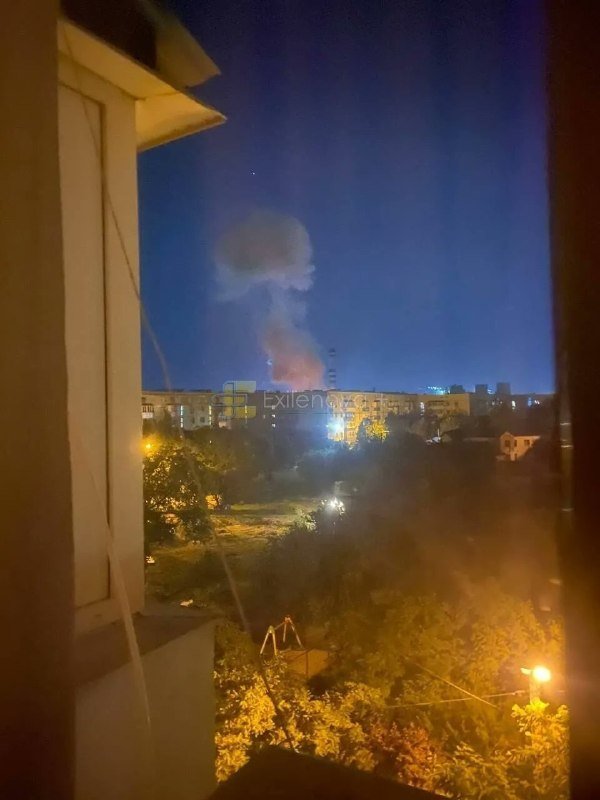
By 22:26 UTC on 23 June 2026, three short wires had already moved through regional channels describing a single Tuesday evening in the eastern neighbourhoods of Gaza City and the southern governorate of Khan Yunis. The first item reported a quadcopter drone dropping an explosive device around the Smurf Junction, east of Gaza City. The second reported a Palestinian death from injuries sustained in an Israeli bombing that hit Khan Yunis earlier that evening. The third, at 22:40 UTC, reported that the Israeli army had detonated explosive robots east of Gaza City. None of the three messages, on their own, says much. Read together, they describe a tactical register that has hardened over the past year: short, technical engagements carried out by machines, reported by survivors and intermediaries, in a media environment that catches them only in fragments.
The thesis this piece advances is narrower than the headlines it sometimes appears alongside. The pattern visible in one evening's traffic is not an argument about the war's trajectory, its legality, or its eventual endpoint. It is an argument about the unit of reporting. When a single engagement involves a small munition dropped from a quadcopter, a robot rolled into position and detonated, and a separate strike on a building in Khan Yunis, the international wire system often captures only the third. The first two surface, when they surface at all, through local intermediaries and regional channels like Al-Alam's Arabic feed, which is where these three items originated. The fact that the only places a reader can verify them tonight is a Telegram channel associated with an Iranian-aligned outlet is itself part of the story.
What the three wires actually say
The first item, posted at 22:26 UTC, attributes the report of a quadcopter dropping an explosive around Smurf Junction to "Palestinian sources" carried by the channel. The second, at 22:36 UTC, reports a fatality in Khan Yunis from injuries sustained in an Israeli bombing on Tuesday evening — the same Tuesday. The third, at 22:40 UTC, reports the detonation of "explosive robots" by the Israeli army east of Gaza City. None names a specific operator, weapon serial, or unit. None cites the IDF Spokesperson, an Israeli wire, or a UN agency monitoring mechanism. All three are sourced through "Palestinian sources" relayed by a single outlet that carries the framing conventions of the regional political alignment its parent broadcaster represents. They are signals, not corroborated reports.
What they suggest, with appropriate caution
The pattern across the three items is consistent with reporting that has emerged intermittently over the past year from a range of outlets, including Western wire services: small, technically precise engagements in dense urban terrain, increasingly carried out by remotely operated or autonomous systems rather than crewed aircraft or artillery. Quadcopter-dropped munitions have appeared in coverage from Reuters and the BBC describing Israeli operations in Gaza; remote detonation devices have been documented in similar reporting. The wires published on this specific evening do not, by themselves, prove that such operations have become routine. They are evidence that on this Tuesday, in these two governorates, they were used.
The honest caveat is that "Palestinian sources" is the sourcing standard of last resort in this conflict. The international wires that have institutional relationships with both Israeli and Palestinian authorities — Reuters, the Associated Press, AFP — operate verification routines that local channels do not. When a fatality is reported through this kind of relay, the safer editorial move is to note the report, attribute it precisely, and resist any number that cannot be cross-checked. The Monexus approach on this file is to treat the three items as leads worth flagging to readers, not as confirmed accounts.
A structural read, in plain prose
The deeper question the three wires raise is what the public record looks like when the most granular tactical reality is increasingly delivered by machines. Each event here is small: a single munition, a single robot, a single fatality. None on its own would justify a wire dispatch in a pre-2014 media environment. Together, they describe a war whose day-to-day texture is no longer fully legible to the international press corps that is supposed to cover it. The corollary is a slow drift in the epistemic balance of authority — away from wire desks with embedded reporters, and toward local intermediaries, regional broadcasters, and channels that combine reporting with editorial alignment. A reader trying to understand a single Tuesday in eastern Gaza City has to read a Telegram channel that would not, in earlier years, have been on the verification chain at all.
Stakes for readers, and what remains uncertain
If the trajectory continues, the practical consequence is that the gap between what militaries do in dense urban terrain and what external audiences can verify will widen. The technical engagements of the war — drone drops, robotic detonations, precision strikes on individual buildings — will be reported first by local and regional voices, with the major wires arriving later, often relying on the same upstream sources. The political weight of those reports will then depend less on their verification and more on the political alignment of the channel that carried them. That is a worse information environment for everyone, including readers who are following the conflict closely and want to know what actually happened on a given evening in Khan Yunis or eastern Gaza City.
The honest limit on this analysis is also the honest limit on the three wires: none has been independently verified by an outlet with a documented presence on the ground and editorial controls separate from the conflict's parties. The sources do not specify the identity of the fatality in Khan Yunis, the unit that carried out the strike, the type of robot deployed, or the specific munition dropped by the quadcopter. Each of those gaps is, at this stage, a question rather than a fact. Monexus's read of the three items is that they are best treated as a snapshot of how the war is now reported at the tactical edge, with the appropriate epistemic caution that implies.
Desk note: Monexus's framing here departs from the major wires by treating these three items as a single evidentiary moment rather than three discrete incidents, and by foregrounding the reporting channel itself as part of the story. We have avoided asserting casualty counts, unit identities, or weapon specifications that the source items do not contain.
Wire provenance
This editorial synthesis draws on the following public wire/social posts:
- https://t.me/alalamarabic
- https://t.me/alalamarabic
- https://t.me/alalamarabic